Performance optimization is crucial for contemporary .NET Core applications, aiming to enhance user experience, minimize response times, and efficiently manage system resources. This article delves into ten advanced techniques tailored to elevate your application’s performance. By leveraging key performance metrics and continuous monitoring, developers can identify critical aspects impacting system performance. Techniques include optimizing server configurations, fine-tuning CPU utilization, and improving database operations to boost overall efficiency. Implementing lazy loading and background jobs helps manage load conditions and resource utilization effectively. With a focus on industry standards and direct optimizations in application code, developers can significantly reduce response times and achieve severe improvements in system performance. Practical examples illustrate how these methods optimize performance, supported by metrics that highlight improvements in latency, memory usage, and overall system efficiency.
Profiling and Monitoring
Discovering performance problems and improving .NET Core apps requires frequent profiling and monitoring. Using performance testing tools, developers can obtain essential performance metrics and system interpretation data to identify areas needing improvement and bottlenecks.
Key Techniques:
Performance Evaluation: It is essential to regularly conduct performance testing under-different load scenarios to evaluate your application’s efficiency and real-world functionality. By simulating high traffic and diverse user interactions, tools like Apache JMeter (for backend/API performance) and browser-based performance profilers (like those built into Chrome DevTools or the Lighthouse extension) enable you to identify performance bottlenecks early in the development cycle. A proactive approach allows you to pinpoint and optimize CPU utilization, memory consumption, network latency, and other critical performance metrics, leading to a more responsive and scalable application.
Continuous Monitoring: For real-time tracking of system performance, it is vital to utilize continuous monitoring tools like Application Insights or Prometheus. These tools enable proactive tactics for performance optimization with crucial insights into memory allocation, CPU utilization, and overall system efficiency. Organizations can optimize their apps for optimal performance and responsiveness under various workload conditions by frequently tracking these indicators. Profiling tools such as DotTrace and ANTS Performance Profiler provide extensive performance measurements and can flag the underlying cause of performance degradation. They support targeted optimization efforts that allow developers to identify specific components of the code of application that directly link to performance problems.
Asynchronous Programming and Parallel Processing for Optimal Performance
Harnessing the power of asynchronous programming and parallel processing can drastically improve the responsiveness and efficiency of your .NET Core applications.
Key Techniques:
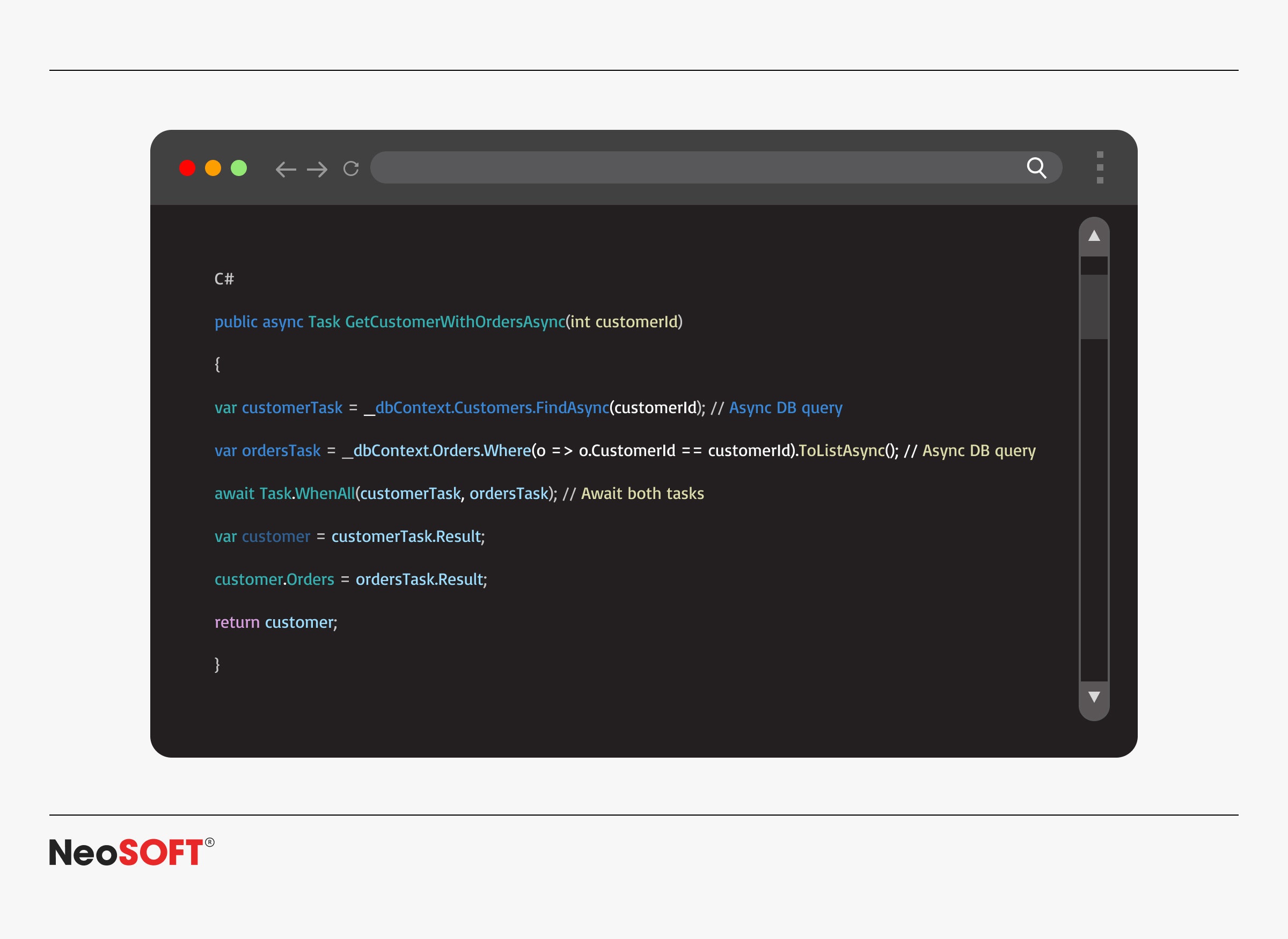
Async/Await (I/O-Bound Operations): Use async and await for tasks like network requests or database queries where your application is waiting on external systems. With this technique, the I/O activities are finished in the background, freeing up your programme to execute other tasks.
Task Parallel Library (TPL) (CPU-Bound Operations): To fully use your hardware, divide jobs that need a lot of calculations or processing among several threads by using Thread-Parallel Learning (TPL). TPL simplifies parallel processing and enables you to write more efficient, concurrent code.
Example:
Optimizing Database Operations
Database interactions frequently have a big impact on how well an application runs. Enhancing the way your application communicates with the database can lead to major improvements in scalability and general responsiveness.
Key Techniques:
Indexing: Create indexes on frequently queried columns to speed up data retrieval.
Efficient Queries: Write optimized SQL queries to minimize the load on your database. Avoid excessive joins, unnecessary subqueries, and inefficient patterns.
Caching: To minimise database round trips and enhance response times, caching frequently reads data in memory (using MemoryCache) or distributes caching solutions like Redis or NCache.
Batching: To cut down on the expense of making repeated queries, think about batching the identical activities your application does.
Connection Pooling: Save time and money by leveraging pre-existing database connections instead than establishing new ones for every query.
Caching Strategies
Key Techniques:
In-Memory Caching: Utilizing tools such as Memory Cache is essential for performance optimization in applications requiring efficient database management handling. This technique reduces response time by storing frequently accessed data locally, minimizing CPU utilization and enhancing system efficiency. By facilitating lazy loading and initialization, in-memory caching ensures optimal use of resources and supports fine-tuning of critical operations, ultimately improving application performance and overall system efficiency.
Example:
Consider a Dot Net Core application that frequently queries customer data. For faster load times and improved performance, index the customer ID field and implement lazy loading for related orders.
Distributed Caching: Deploying solutions like Redis or NCache is advantageous for larger applications needing robust performance optimization and efficient resource management. These solutions enable scalable data caching across multiple servers, improving load times and system reliability. Distributed caching enhances application scalability and provides consistent performance advantages under various load conditions by supporting load balancing and ensuring high availability. Integrating these techniques optimizes database performance and facilitates system optimization for enhanced user experience.
Load Balancing
Load balancing is a crucial component of speed optimization for applications handling large amounts of traffic. By dividing incoming requests equally among several servers, load balancing reduces response times and assures optimal resource use.
Key Techniques:
Server Configurations: Correctly setting load balancers like Nginx or AWS Elastic Load Balancing effectively distributes traffic, maximizing speed and improving reliability. Load balancers prevent bottlenecks by dividing incoming requests among multiple servers, speeding up response times and ensuring availability even under fluctuating loads. This approach is crucial for maintaining a responsive and reliable application environment.
Lateral Scaling: Adding servers to manage increased demand load (horizontal scaling) can improve performance. By distributing the workload across multiple servers, lateral scaling enables the application to handle higher traffic volumes efficiently without compromising performance. This scalability approach supports seamless growth and adaptability to fluctuating user demands, ensuring optimal system performance and responsiveness.
Efficient Memory Management
Efficient memory management is crucial for maintaining system performance. Proper memory handling can reduce bottlenecks, prevent memory leaks, and improve the stability of Dot Net Core applications.
Key Techniques:
Garbage Collection: Optimize garbage collection settings to ensure Dot Net Core applications manage memory efficiently. Fine-tune the Dot Net Core garbage collector (GC) to improve performance by adjusting generation sizes and collection frequency. This strategy reduces garbage collection-related interruptions, ensuring enhanced application responsiveness and effective resource utilization. By optimizing CPU utilization and memory management, developers maintain overall system performance and mitigate memory allocation-related issues.
Pooling: Implementing object pooling to reuse objects instead of creating new ones reduces memory allocation overhead in Dot Net Core applications. This technique is particularly beneficial for managing database management and optimizing performance by minimizing the resource usage associated with object creation and destruction. Object pooling supports fine-tuning of critical processes and enhances system efficiency by facilitating sloppy start up and lazy loading of objects. By optimizing code of application through object reuse, developers can achieve improved performance and ensure efficient use of available resources, thereby enhancing the scalability and stability of their applications.
Optimizing Application Code
Fine-tuning code of application is fundamental to performance optimization. Ensuring the code is efficient, follows best practices, and minimizes resource usage can lead to significant performance gains.
Key Techniques:
Code Review: Regular code reviews help identify inefficient code and potential performance bottlenecks within Dot Net Core applications. Code reviews and refactoring maximize efficiency and performance by pinpointing areas for optimization. Developers ensure smooth program operation and continuous satisfaction of performance metrics by maintaining clean and optimized code. This proactive approach to code optimization supports a high-performing and scalable application.
Optimized Algorithms: To maximize performance in Dot Net Core applications, implement optimized algorithms and leverage efficient data structures. Using algorithms with lower temporal complexity improves system responsiveness and reduces computational overhead. Employing efficient data structures like balanced trees and hash tables ensures efficient database operations and optimizes resource utilization. This systematic approach improves application speed and user experience.
Reducing Latency with Content Delivery Networks (CDNs)
Key Techniques:
CDN Integration: By shortening the distance that data must travel, integrating content delivery networks (CDNs) like Cloudflare or Akamai to offer static files greatly increases load speeds. By distributing information from servers nearest to users, information delivery networks (CDNs) store data in many geographic locations, reducing latency and improving overall system efficiency. This method optimizes resource utilization and increases scalability by offloading traffic from origin servers and speeding up content delivery.
Edge Servers: Using edge servers to cache content closer to end-users further reduces latency and enhances system performance. By strategically placing them in multiple locations to store and distribute cached content, edge servers ensure speedier access for users in different regions. Edge servers enhance responsiveness and dependability by reducing the number of network hops and distance data travels. This is especially beneficial for dynamic content and applications that need real-time data delivery. Integrating edge caching with CDN solutions enhances overall application performance and user experience.
Implementing Background Jobs
Delegating arduous tasks to background jobs might enhance your application’s responsiveness to complete asynchronous tasks and ensure the main application thread can respond to user queries.
Key Techniques:
Task Scheduling: You may handle background operations with task scheduling libraries like Hangfire, which allow you to plan tasks at particular periods or intervals. This method frees up work from the main application thread and ensures smoother operation by effectively handling non-time-sensitive activities. Developers may improve overall system responsiveness and resource efficiency while enhancing application workflow efficiency by automating task execution.
Asynchronous Processing: Implementing asynchronous processing is required to optimize efficiency and resource utilization for non-critical processes. Asynchronous processing ensures that operations like I/O-bound tasks don’t impede the programme’s responsiveness by severing the task execution from the main application thread. The application may process additional requests in parallel, increasing throughput and enhancing user experience. Asynchronous programming models, supported by frameworks like Dot Net Core’s async/await pattern, facilitate efficient multitasking and improve the scalability of applications handling diverse workloads.
Example:
A Dot Net Core application that sends email notifications can offload this task to a background job, ensuring user interactions remain fast and responsive.
Utilizing Lazy Initialization
A performance-optimization method called indolent start-up postpones object creation until it is essential. This approach helps reduce initial load times and optimize resource usage.
Key Techniques:
Lazy: Lazy initialization is the purpose of Dot Net Core’s Lazy class. Performance can be enhanced and memory consumption can be decreased by using Lazy to postpone object construction until it is necessary. By allocating resources only when required, this technique maximises resource use and improves system performance.
Deferred Execution: Implementing deferred execution for expensive operations can prevent unnecessary resource consumption, optimizing overall system performance. By postponing the execution of operations until they are explicitly needed, developers can minimize CPU utilization and improve response times. This technique is particularly beneficial for handling database operations or other CPU-bound tasks, where delaying execution until the last possible moment can lead to significant performance benefits and efficient resource management.
Example:
Using Lazy for initializing large data structures in a Dot Net Core application can significantly reduce memory usage and improve start-up times.
Additional Techniques for Enhanced Performance
Beyond the primary ten techniques, some additional methods and tools can further enhance performance in Dot Net Core applications. These techniques address specific aspects of system performance and can provide targeted improvements.
Reducing Network Latency
Especially for apps that depend on external APIs or services, network latency can have a major negative effect on performance. Latency may be decreased and response times can be increased by using strategies including reducing HTTP requests, compressing replies, and optimising API use.
Client-Side Optimization
A crucial element in the total speed of web applications is client-side performance optimisation. By using browser caching, optimising images, and minifying CSS and JavaScript files, one may significantly decrease load times and enhance user experience.
Using gRPC
In a microservices architecture, the high-performance RPC framework gRPC may greatly increase the speed of communication between services. Using gRPC, you can achieve lower latency and higher throughput than traditional RESTful APIs.
Implementing Circuit Breakers
Circuit breakers are a design pattern that helps improve distributed systems’ resilience and performance. By implementing circuit breakers, you can prevent cascading failures and ensure that your application can handle service outages gracefully.
Conclusion
Advanced .NET performance optimization techniques enhance the performance and responsiveness of your .NET Core applications. Investing in these optimization efforts ensures that your application meets and exceeds industry standards for performance and reliability, providing a superior overall user experience.
By focusing on these areas, your development team can ensure your application performs optimally under various load conditions, delivering the performance advantages end-users expect. The continuous performance optimization process, including profiling, asynchronous programming, and efficient resource management, is vital for the sustained success of Dot Net Core applications.
Autonomous AI agents are changing how users interact with software and do business in almost every sector of the economy. With no human operator needed, these intelligent systems are meant to function autonomously, making decisions and completing tasks. They are essential resources for companies to keep ahead of the competition in the modern day corporate environment due to their ability to increase output, lower costs, and expedite operations.
From chatbots that provide round-the-clock support to customers to more sophisticated systems that manage intricate tasks including supply chain and logistics management, AI systems are playing a bigger role in contemporary technological ecosystems.
This article will look into the profound influence, potential opportunities, and important concerns presented by intelligent agents. By investigating autonomous agents and their strengths, we will have a better understanding of autonomous agents and how they can reshape human lives and workflows, improve customer experiences, and dramatically impact digital innovation in the future.
Understanding Autonomous AI Agents
Examples of Autonomous AI agents
As we explore the world of AI-driven autonomous agents, it becomes evident that they are already disrupting traditional business practices across the board. Goal-based agents act to achieve their goals, adapt their actions accordingly, and choose among multiple possibilities to reach a goal state.
Chatbots have altered customer assistance and consumer engagement by providing quick responses and personalized interactions through generative AI-powered communication, making them indispensable tools for businesses seeking successful customer care solutions
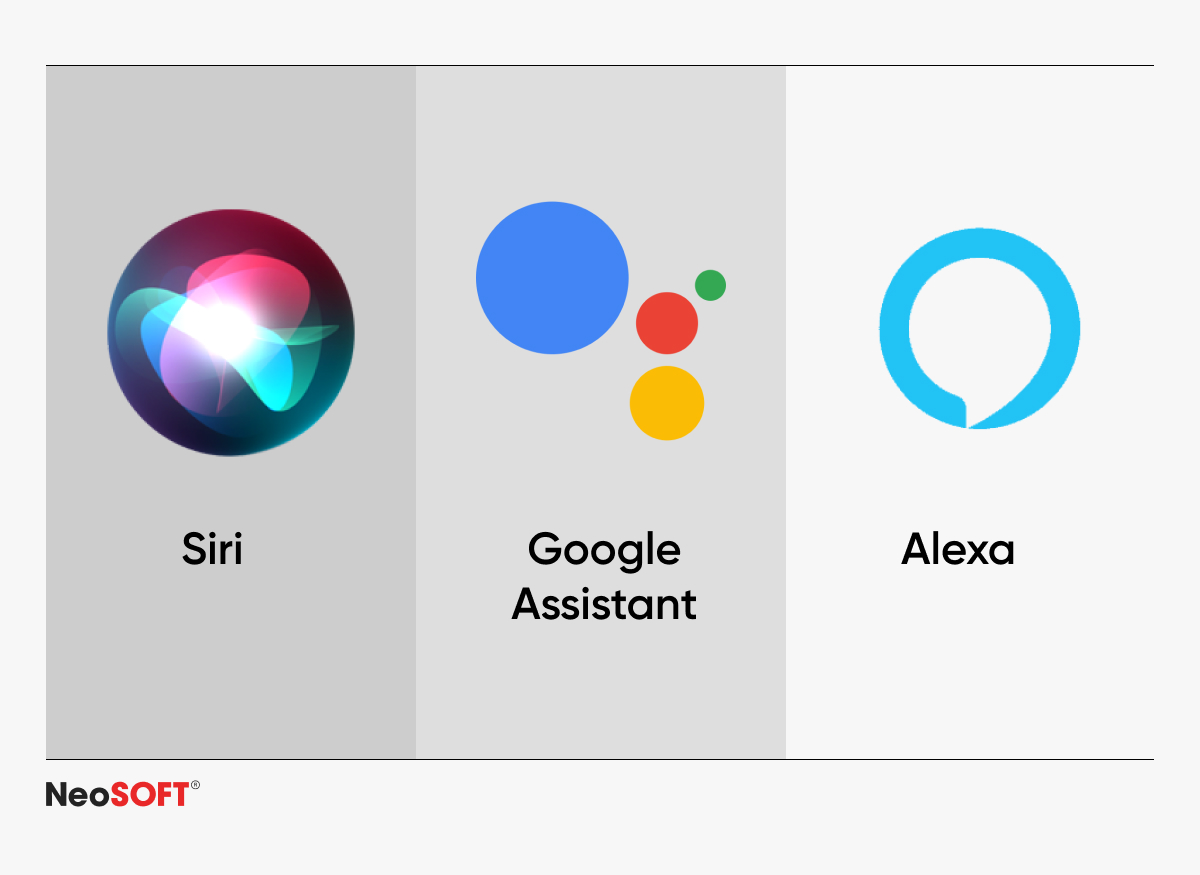
Virtual assistants like Alexa, Siri, and Google Assistant demonstrate how deeply artificial intelligence has permeated many people’s daily lives. Providing ease through voice-activated commands ranging from scheduling to controlling other agents like paired smart home devices, AI-powered personal assistants have directly impacted personal productivity and efficient living.
Robotic Process Automation (RPA) has transformed how companies work by automating repetitive processes such as data entry with AI-driven efficiency and precision, demonstrating its ability to streamline operations and save costs.
Self-driving cars, a major advancement in transportation technology, employ artificial intelligence to traverse diverse terrains, significantly improving travel safety and transforming the global logistics and mobility industries.
By adapting games to user inputs, developing dynamic challenges and realistic environments that respond swiftly to player choices, and raising the bar for gaming immersion, autonomous AI agents in video games improve player experiences.
Pillars of AI Technology: Core Enabling Technologies
Autonomous AI agents use a variety of core technologies to function efficiently across domains. AI agents use these innovations to interact with and respond to their dynamic environments autonomously, without human intervention, thus improving productivity and efficiency in numerous industries.
Machine Learning (ML) and Deep Learning, the foundational technologies of intelligent AI agents, can learn from enormous datasets, recognizing patterns and making predictions or judgments. These technologies drive applications ranging from customized recommendations on web platforms to self-driving cars and intelligent personal assistants, constantly enhancing their performance using iterative learning procedures.
Natural Language Processing (NLP) allows an AI system to perceive, interpret, and synthesize large language models, allowing for smooth interactions with other agents like virtual personal assistants and language translation applications. This technology enables intelligent agents to understand context, sentiment, and intent from written input, increasing user engagement and satisfaction.
Reinforcement Learning enables intelligent agents to learn ideal behaviors by experimenting with the input from their actions in a specific setting. This learning agent is essential for training autonomous agents in activities such as gameplay, robotic control, and resource management, where they learn to maximize rewards while reducing costs over time.
Model-Based Reflex Agents use internal models of the environment to make decisions, handle partially observable environments, update their internal model state based on percepts, and predict behaviors of multiple agents within the environment.
Computer Vision allows intelligent AI systems to identify and analyze visual information by observing their environment through sensors, enabling object identification and facial recognition. By processing photos and videos, agents may make real-time judgments based on visual signals, helping to advance healthcare diagnostics, surveillance and monitoring, and industrial automation.
Infrastructure Essentials
Autonomous AI agents require a strong infrastructure that can accommodate their expansive capabilities, allow them to process data rapidly, and make real-time choices in complex systems. This infrastructure must be both adaptable and scalable to meet the dynamic needs and growing complexity of AI applications across industries.
Cloud computing offers the necessary scale and processing power for autonomous learning agents to analyze big datasets and run more complex tasks. Intelligent agents can use cloud platforms to gain on-demand access to enormous quantities of storage and computing capacity, ensuring effective data handling and continual learning.
Edge computing enables intelligent agents to process data locally at the source, allowing for real-time analysis and decision-making. This lowers latency and bandwidth utilization, making it perfect for applications that require quick reactions, such as driverless cars and industrial automation. IoT integration empowers autonomous agents to communicate with a network of connected devices, allowing for smooth data exchange and control. This connection enables the development of dynamic and responsive systems, hence improving smart home capabilities, healthcare evaluation, and industrial IoT applications.
Applications in Software Development
Coding and Debugging
Autonomous AI is making tremendous advances in coding and debugging, changing software development and maintenance. AI-powered code generators, like the ones below, help engineers by making intelligent code recommendations and automating tedious coding jobs.
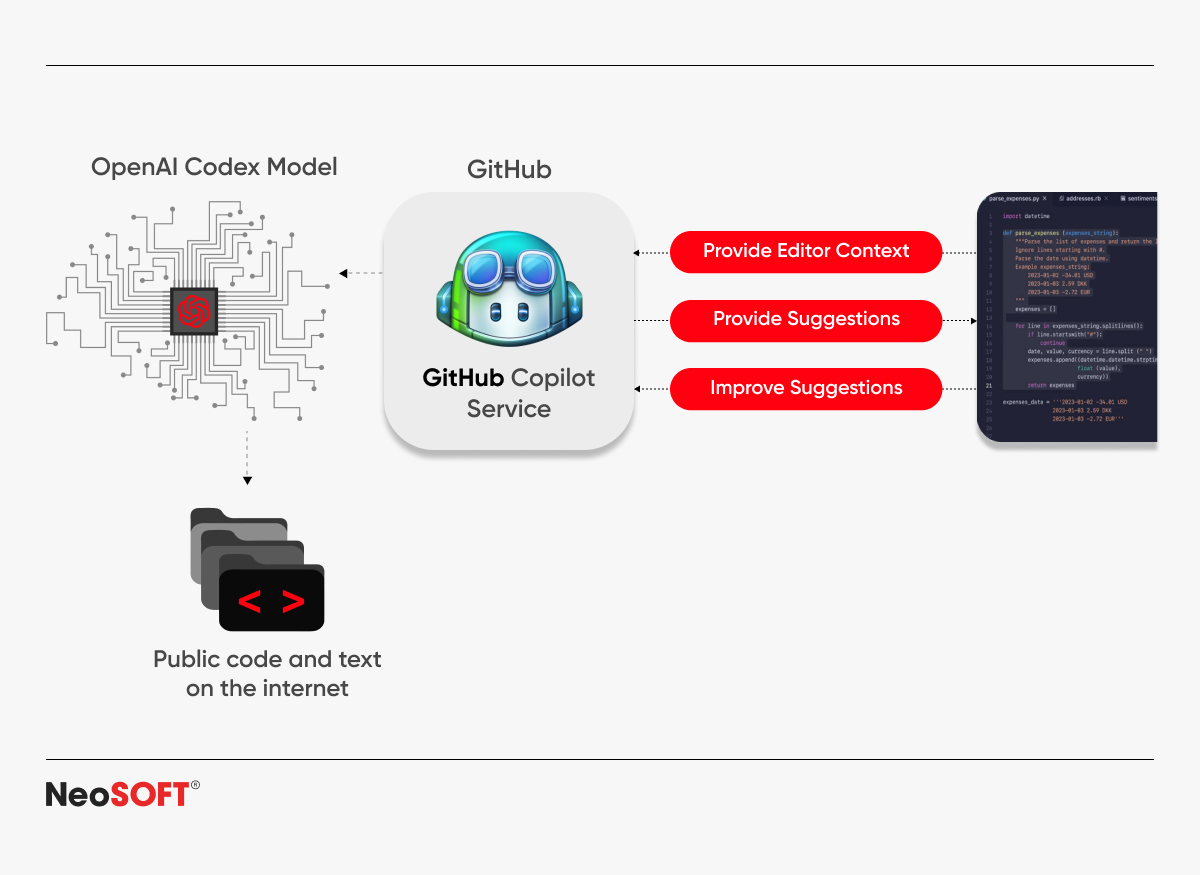
GitHub Copilot dramatically improves coding correctness and speed by utilizing machine learning models that have been trained on a sizable dataset of public code to anticipate and produce contextually relevant code snippets.
Tabnine uses deep learning models to deliver developer-provided context-based predictive code completions.
Codex by OpenAI, the underlying model for GitHub Copilot, demonstrates AI’s ability to generate extensive code snippets and perform numerous coding jobs across various programming languages.
Salesforce’s transformer-based CodeT5 model helps with code completion, summarization, and translation – yet another example of how versatile AI agents can be in software development.
DeepCode streamlines the development cycle and improves code quality by using machine learning to evaluate whole codebases, discover potential issues, and suggest improvement ideas.
Utility-based agents play a crucial role in decision-making processes by considering the expected utility of each possible action. These agents map states to a measure of utility and use utility functions to maximize the expected utility of action outcomes.
An autonomous AI agent thrives on automated testing and debugging. These intelligent agents may automatically build and execute tests to detect defects and vulnerabilities in code, resulting in greater software reliability and quality.
AI-powered bug-fixing technologies can recommend or even develop patches for identified flaws, expediting the debugging process and freeing up programmers to focus on more complicated jobs. Artificial intelligence-powered solutions improve the accuracy, inventiveness, and efficiency of the software development lifecycle.
Smart Project Management with AI
AI-powered project management software uses powerful algorithms to assess historical data, team availability, and job dependencies, allowing more accurate scheduling and resource allocation. These technologies assist teams in achieving greater productivity and efficiency in project execution by optimizing deadlines and resource allocation based on real-time insights.
Simple reflex agents operate based on predefined condition-action rules, reacting to the current percept and ignoring the history of previous percepts. They are suitable for tasks with limited complexity and fully observable environments, but reactive agents may encounter issues such as infinite loops in partially observable environments.
They automate specific tasks, mainly recurring monotonous procedures, without human intervention. This allows project managers to concentrate on strategic decision-making and promotes more efficient project workflows. This guarantees that resources are used effectively, resulting in less downtime and higher project production.
Predictive analysis in project management uses artificial intelligence to predict possible hazards and blockages before they affect project timeframes. AI models can foresee delays, resource shortages, or other challenges by assessing historical data, current project characteristics, and external factors.
This foresight enables project leaders to implement proactive steps, change plans, and limit risks, ensuring that projects remain on track and the goals are met effectively. Consequently, teams can respond quickly to new difficulties, reducing disruptions and preserving project momentum.
Automating Continuous Integration and Delivery (CI/CD)
Code integration, application deployment, and CI/CD workflow automation all depend on autonomous AI. AI-powered solutions can automatically perform tests, identify bugs, and deploy code to production settings, resulting in faster and more dependable software releases.
Simple reflex agents operating in these environments act on the basis of the current percept only, ignoring the rest of the percept history. By constantly monitoring and adjusting the CI/CD pipeline, these solutions contribute to excellent software quality and a shorter time to market for new features and upgrades.
Transforming IT Services
IT Support and Helpdesk Automation
Autonomous agents are transforming IT assistance and customer support services by automating repetitive operations and shortening response times.
Goal-based agents play a crucial role in achieving specific goals in IT support tasks. These agents achieve their goals by adapting their actions accordingly and choosing among numerous possibilities to reach the desired state. They utilize goal information to make decisions, distinguish between goal and non-goal states, and perform tasks that aim to reduce their distance from their goal.
AI-powered chatbots and digital assistants handle client concerns, giving immediate responses and troubleshooting help. These intelligent agents can address primary difficulties, walk customers through technical challenges, and escalate complex cases to human agents as needed, improving customer satisfaction and decreasing the pressure on IT support professionals.
AI-powered ticketing applications automatically classify, prioritize, and allocate support tickets, speeding up the problem-resolution process. These systems can examine past tickets and solutions to recommend solutions to recurring issues, resulting in shorter response times and increased overall effectiveness in managing IT services.
Network Management and Cybersecurity
Autonomous agents improve network administration and cybersecurity by delivering proactive and intelligent solutions.
AI-powered systems can continuously track network traffic, recognize strange trends, and identify potential security issues, such as fraud detection, in real-time. These systems can respond to threats autonomously by isolating compromised components, preventing malicious activity, notifying security teams, reducing damage and assuring quick incident resolution.
AI-powered predictive maintenance solutions review data from IT platforms to identify potential future problems and performance concerns before they arise. These techniques reduce downtime, maintain optimum performance levels, and extend the lifespan of assets, creating a more dependable and efficient software ecosystem.
Emerging Trends in Autonomous AI
As autonomous agents continue to evolve, several emerging trends are poised to shape the future technology and business landscape.
Businesses increasingly rely on artificial intelligence, with intricate algorithms assessing vast quantities of data and offering insights that positively influence business plans. An autonomous AI agent program can recognize patterns and trends, anticipate occurrences, and offer the most appropriate course of action, empowering stakeholders and executives to make better decisions.
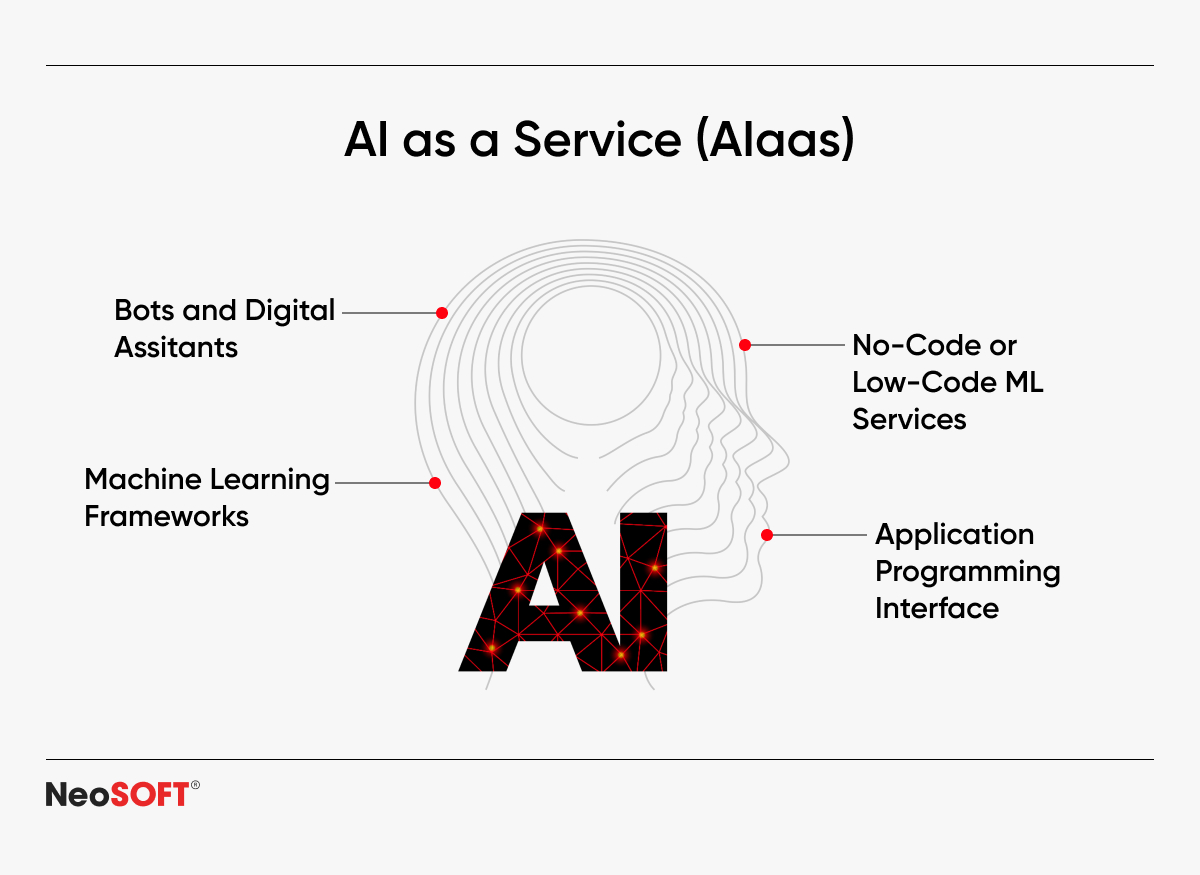
AI-as-a-Service, or AIaaS for short, is rapidly becoming popular because it allows companies to access powerful AI tools and capabilities devoid of the risk of upfront infrastructure costs. These cloud-based systems enable autonomous agents to be deployed for businesses of all kinds by providing scalable AI solutions. This supports innovation across a wide range of industries.
AI and autonomous agents’ capabilities are predicted to rapidly develop over the next decade, thanks to advances in NLP, ML, and other basic technologies. This will result in more powerful and dynamic AI agents that are capable of performing a wider range of tasks across industries, from healthcare to finance, hence increasing productivity and creativity. These improved capabilities will also stimulate the development of new applications and approaches previously thought impossible with existing technology.
In the future, human workers and AI agents will collaborate more, forming hybrid teams in which AI tackles monotonous and data-intensive jobs while people concentrate on interpersonal, creative, and strategic activities. This collaboration will improve overall efficiency, encourage creativity, and allow employees to harness AI’s capabilities while offering their unique skills. Furthermore, this collaboration will demand new training programs and practices to integrate AI into everyday tasks seamlessly.
Conclusion
Autonomous AI agents are altering the technological environment, stimulating innovation and increasing efficiency in various sectors. Their ability to learn, adapt, and execute complicated tasks independently emphasizes their significance and potential to transform industries such as software development and IT services. Looking ahead, advancements in AI capabilities and more collaboration between humans and AI agents promise to boost productivity and stimulate innovation.
We at NeoSOFT are at the forefront of the AI revolution, providing a comprehensive range of AI-powered services and solutions suited to your specific business requirements. Contact us at info@neosofttech.com for conversations and collaborations on AI projects.
Generative AI is characterized by its capacity to generate content, models, or solutions autonomously and holds profound promise across diverse sectors. Gen AI is transforming the global economy, especially industries like medicine, entertainment, and finance, by creating realistic visuals and text and building novel products.
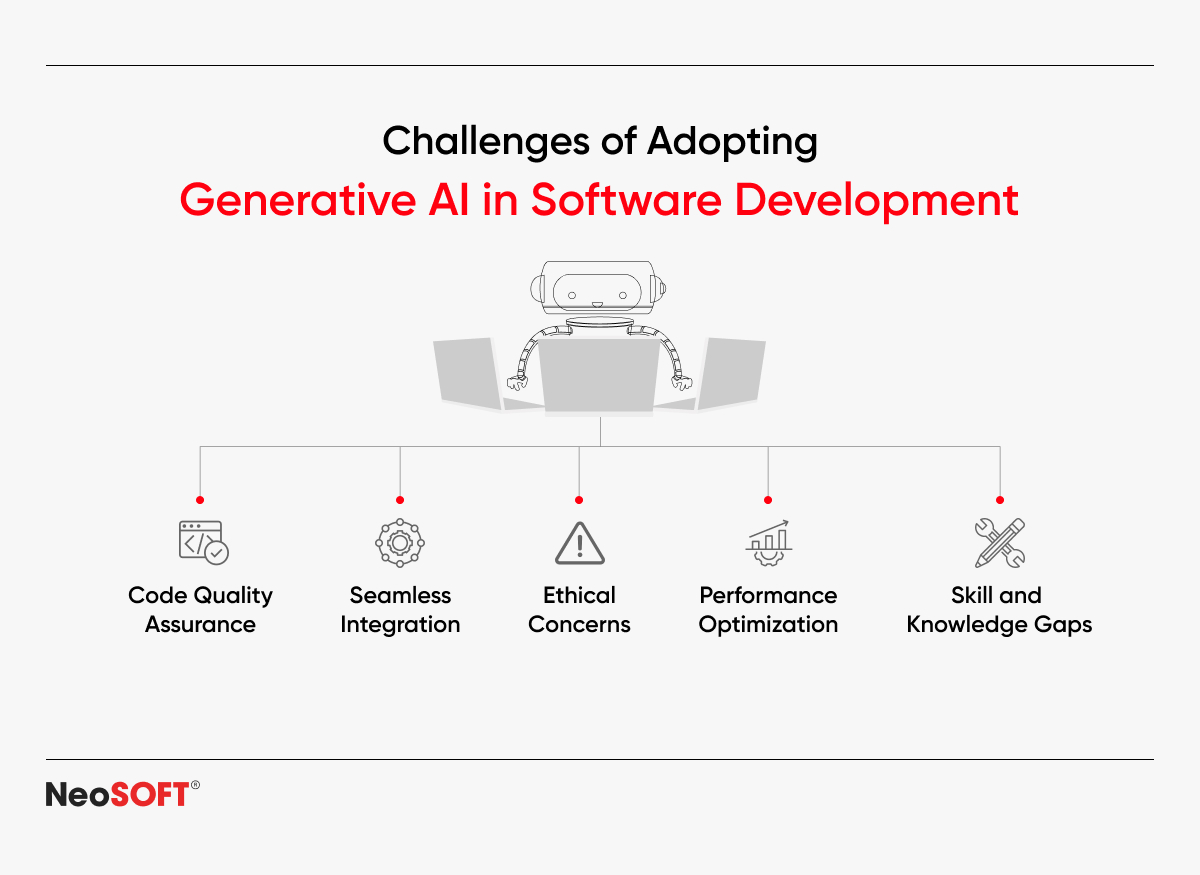
Understanding and overcoming the hurdles that accompany a Gen AI system is critical to realizing its full potential and success. Addressing technical complexities, data requirements, ethical considerations, resource quantities, and integration challenges are critical stages for enterprises to capitalize fully on Gen AI breakthroughs.
This blog is for software developers, data scientists, AI professionals and enthusiasts, in addition to leaders and decision-makers from many sectors. It provides actionable insights, tactics, and practical solutions for efficiently and responsibly overcoming potential obstacles in generative AI projects.
Challenges in Gen AI Adoption: Data Quality and Quantity
Data Quality and Quantity
High-quality data forms the bedrock of effective AI training, influencing the accuracy and reliability of generated outputs. High-quality training data ensures that generative AI models understand meaningful patterns in input data and make sound conclusions about generated content, which is critical for a myriad of use cases ranging from healthcare diagnostics to finance forecasting.
Acquiring huge, diversified datasets can be complex due to concerns about privacy, silos of existing data, and the cost of data gathering. Curating these datasets entails cleaning, annotating, and ensuring that they accurately reflect the real-world circumstances that AI applications will encounter.
Solutions:
Data augmentation – Increases dataset diversity by creating new training examples using techniques such as rotation, cropping, or adding noise. This improves the dataset without needing more data to be collected.
Synthetic data generation – Produces synthetic data that closely resembles real-world circumstances, allowing AI systems to learn from situations that would be rare or difficult to collect in actual data. This strategy is useful in areas such as autonomous driving and robotics.
Robust data pipelines – Creating effective pipelines guarantees that data flows smoothly from collection to pre-processing and model training. Automation and surveillance in these pipelines contribute to data consistency and quality across time.
Computational Power and Resources
Training generative AI models, particularly those based on deep learning architectures, need substantial computational resources. This includes robust GPUs and customized hardware accelerators that can handle the heavy computations required to process massive datasets and intricate algorithms. Deployment also requires significant resources to ensure that generative and deep learning models perform well in real-time applications.
Many companies, particularly small enterprises and start-ups, may find using high-performance computing and deep and machine learning resources prohibitively expensive. Investing in the necessary equipment, maintaining it, and covering the accompanying bills can be considerable. Furthermore, access to these resources may be limited by geographical and infrastructure constraints, leading to discrepancies in AI creation and implementation capabilities.
Solutions:
Cloud computing – Cloud platforms such as AWS, Google Cloud, and Azure offer scalable and flexible computing power on demand. Organizations can access high-performance computing capacity without significantly investing in hardware, and pay-as-you-go approaches allow for more effective cost management.
Distributed computing – Using distributed computing frameworks like Apache Spark or Hadoop, computational workloads can be distributed across numerous workstations. This strategy can speed up training timeframes and make better use of existing resources, facilitating the processing of large-scale data and sophisticated models.
Efficient algorithm design – Creating and implementing more efficient algorithms helps alleviate computing stress. Model pruning, quantization, and knowledge distillation are all techniques that help build lighter models that demand less processing power while still performing effectively. Studies into refining neural network architectures and learning methods also help reduce computing load.
Ethical and Bias Concerns
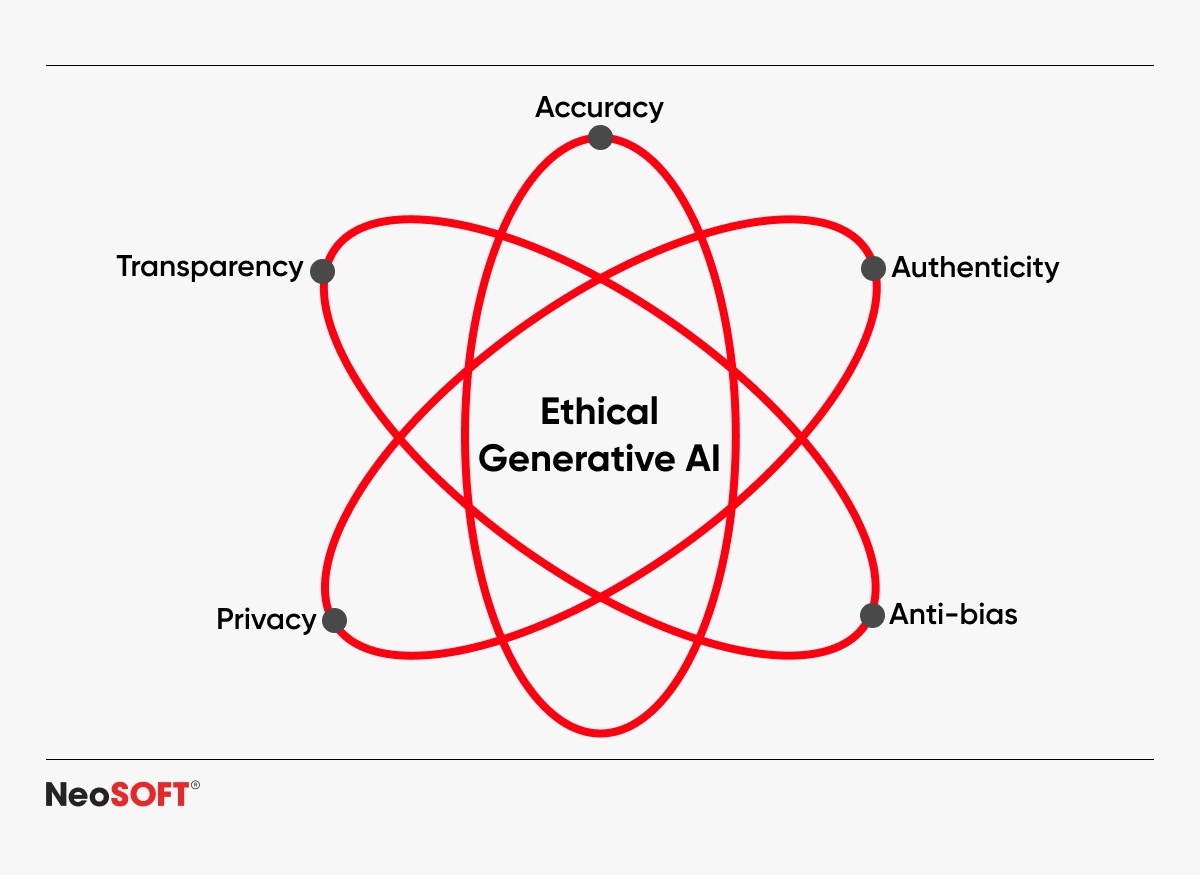
Many generative AI models may unwittingly perpetuate and amplify biases in training data, resulting in unjust or prejudicial conclusions. These concerns are especially important in applications involving critical judgments, such as recruiting, finance, and law enforcement. Moral dilemmas occur when AI-generated content, data or decisions affect people’s rights, opportunities, and privacy.
Ensuring justice and fairness in AI algorithms is critical for avoiding reinforcing social disparities. Transparency is required to understand how generative AI makes decisions, enabling stakeholders to trust the outputs. Accountability measures are required to hold developers and organizations liable for the consequences of their AI capabilities and ensure that they follow ethical norms and regulations.
Solutions:
Bias detection and mitigation techniques
Pre-processing – Techniques such as resampling, reweighting, and artificial data synthesis can help create balanced datasets with minimal bias prior to training.
In-processing – Adversarial debiasing algorithms and fairness restrictions can be utilized during the training to eliminate biases in model learning.
Post-processing – Methods such as equalized odds post-processing modify the training model outputs to make sure that all groups are treated equally.
Ethical guidelines – Developing and following comprehensive ethical criteria for AI development and deployment is critical. These rules should include fairness, transparency, responsibility, and privacy stipulations. Organizations can form ethics committees to evaluate AI programs and ensure that they follow ethical standards.
Diverse data representation – It is vital to ensure that the datasets utilized to train AI models are diverse, representing a wide variety of demographic groups. This lowers the risk of biases and increases the generalizability of AI algorithms. Collaborating with various communities and decision-makers can provide helpful perspectives and support the early detection of potential biases and ethical concerns in the development process.
Compliance and Regulatory Frameworks
Data protection legislation, such as India’s new Digital Personal Data Protection (DPDP) Act of 2023 and the EU’s General Data Protection Regulation (GDPR) of 2018, place strict restrictions on how sensitive and personal data is collected, processed, and used.
To reduce legal risks, protect data, and maintain the highest possible moral standards in the creation and application of generative AI models, compliance with these regulations is of great importance. AI-specific rules are being developed to address concerns about data transparency, responsibility, as well as bias reduction in generative AI models and ethical use of generative AI capabilities.
Solutions:
Proactive compliance strategies
Risk assessments – Conducting extensive risk assessments to identify potential legal and regulatory obligations required to deploy AI models.
Compliance frameworks – Creating robust compliance frameworks that incorporate ethical, legal, and technical concerns into AI development processes.
Regular audits – Conducting audits regularly to guarantee continuous compliance with industry requirements and standards.
Adaptive policies – Adopting agile policy creation methods that can respond swiftly to changes in regulatory frameworks and updates in developing AI models.
Integration with Existing Systems
Integrating AI technologies into old and often obsolete legacy systems can prove challenging. These systems may lack the adaptability and compatibility required to effectively incorporate advanced AI technology. This can result in data silos, inconsistent data formats, and inefficient workflows. A team acclimated to legacy systems may also be resistant to new technologies, complicating the integration process further.
Maintaining seamless interoperability between generative AI applications and pre-existing systems is vital in minimizing interruptions. This demands the assurance that the newly developed generative AI tools can properly communicate with legacy systems while reducing downtime and performance difficulties. Disruptions can cause operational inefficiencies as well as production and financial losses.
Solutions:
Modular architectures – Designing generative AI models with a modular framework enables progressive integration. Each module can operate separately and integrate with certain specific components of the existing legacy system, lowering the risk of wider disruption. Modular architectures allow more accurate troubleshooting and maintenance since errors can be isolated inside specific components.
API integrations – APIs, or application programming interfaces, connect gen AI tools and legacy systems. APIs serve as intermediaries, translating data and queries between software components to ensure compatibility. APIs can be tailored to meet specific integration requirements, making it more straightforward to connect different systems and automate procedures.
Phased implementation – Deploying AI solutions in stages rather than in just one, large-scale rollout reduces risks and facilitates gradual adoption. Begin with pilot initiatives or particular divisions before extending throughout the organization. Phased deployment allows for collecting feedback, early identification of issues, and implementing necessary adjustments, resulting in a smoother transition and increased employee acceptance.
Future Trends in Generative Artificial Intelligence
Generative AI is still evolving, thanks to the human intelligence behind rapid technological and methodological advances.
Large language models like GPT-4, Gemini, and BERT are becoming more factually accurate and contextually aware, allowing for more nuanced and complex natural language processing. These gen AI models will enable increasingly sophisticated and organic interactions in customer support technologies, such as chatbots and virtual assistants.
Multimodal artificial intelligence combines text, images, audio, and video in a single generative AI model, resulting in more complete applications and richer, more interactive user experiences. This integration enhances image generation and content creation in virtual and augmented reality.
Federated learning improves data privacy by training AI models on multiple decentralized devices, allowing sensitive data to remain local while contributing to model development. This has potential to be immensely valuable in industries like healthcare and finance, where data preservation and security are critical.
GANs continue to grow, learning to create realistic images and content that can be used in media, entertainment, and fashion, as well as introducing new AI research avenues and project opportunities for creative businesses. These innovations can completely alter the art, architecture, digital advertising and visual effects industries.
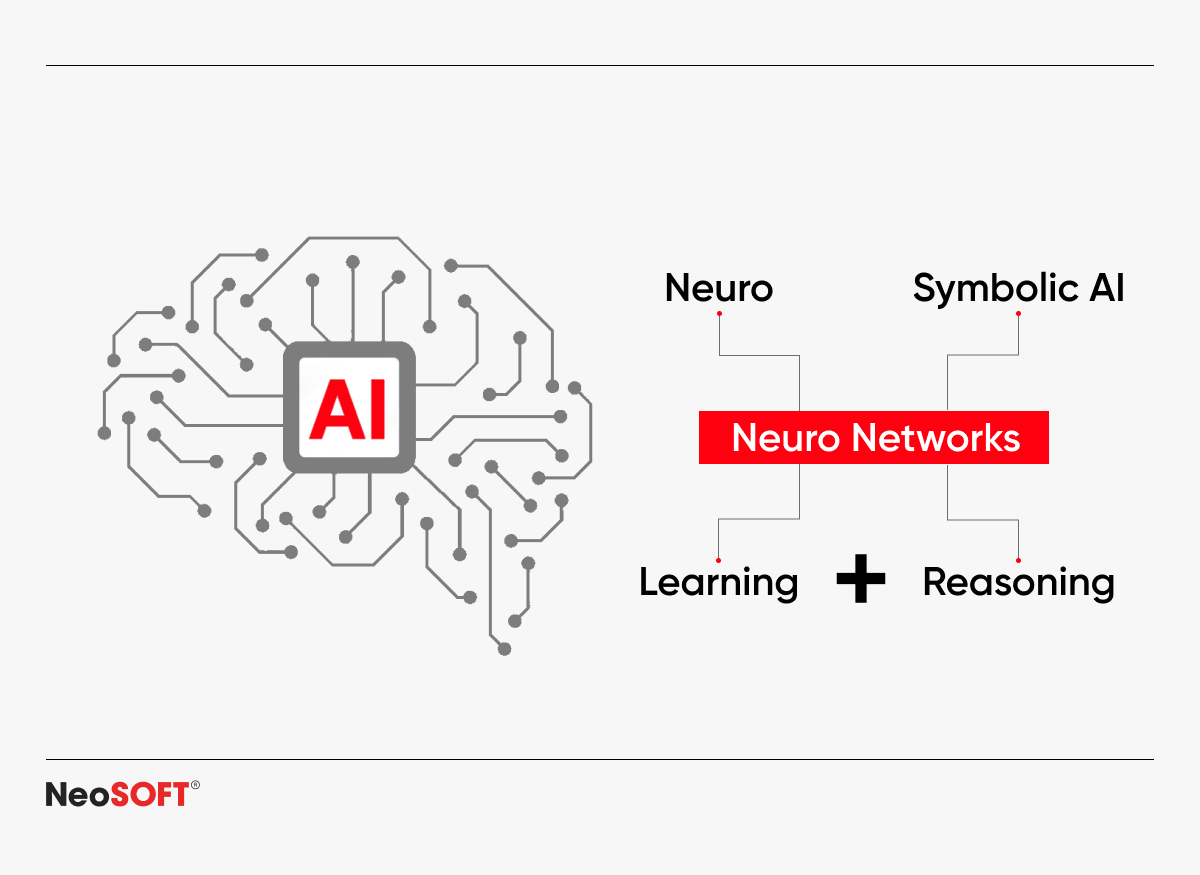
Neuro-symbolic AI combines recurrent neural networks and symbolic thinking to enhance interpretation and decision-making. This makes AI systems more reliable and transparent in challenging situations, enhancing their ability to tackle complex challenges in domains such as legal thinking and scientific research.
Conclusion
Overcoming the hurdles connected with implementing generative AI is important to realize its proven revolutionary potential. Addressing concerns about data quality, computing resources, ethical implications, regulatory compliance, and legacy system integration can result in considerable progress in a variety of industries. As these barriers are overcome, the benefits of using generative AI and machine learning models will become more widely accessible, accelerating innovation and efficiency across the board.
Our highly trained team of AI experts is ready to help you navigate generative AI issues and achieve AI success. Reach out to us today at info@neosofttech.com.
Workloads related to artificial intelligence are resource-intensive, data-hungry, and computationally demanding. Inadequate or improperly configured infrastructure might impede AI-driven innovation, causing sluggish inference and model training. On the other hand, optimized infrastructure works like a supercharger, boosting AI capabilities and producing noticeable business benefits.
Optimized infrastructure enables efficient data handling, algorithm execution, and system scalability, all critical features for ensuring AI models can perform complex computations and provide accurate insights.
In this guide, we’ll describe the key components of AI infrastructure and offer actionable insights and strategies to help you unlock the next level of AI performance.
Powering Up Your AI with Specialized Computing
The Need for Speed and Scale
Scale and speed are critical in the AI landscape. Processing large datasets, training complex models, and implementing AI applications in real-time demand substantial computational power.
Optimized infrastructure, including high-performance computing and modern data storage, enables fast iteration and deployment of AI models. This infrastructure must also be scalable, accommodating larger datasets and more complex models without compromising performance.
Investing in is a strategic decision that enhances AI capabilities, delivering faster insights, more accurate predictions, and, ultimately, more significant business impact.
HPC, GPUs, and TPUs: The Core of AI’s Powerhouse
Modern AI advancement relies on High-Performance Computing (HPC). It uses clusters—groups of connected processors—to analyze large amounts of data and quickly solve complex problems—making HPC essential for training, fine-tuning, and deploying the large-scale machine learning models that drive today’s most advanced AI applications.
HPC configurations typically involve a network of high-speed servers known as a node. These nodes often contain specialized processors like GPUs or TPUs designed to accelerate specific computing tasks. A central “scheduler” manages the distribution and coordination of these parallel computing tasks across the cluster, ensuring efficient resource utilization.
GPUs: These processors render graphics, but their parallel processing capabilities can handle large amounts of data involved in training deep learning models. With thousands of cores working simultaneously, GPUs significantly speed up the training process, making complex AI models achievable.
TPUs: Google designed TPUs specifically for AI workloads. These custom-built chips excel at the matrix and vector operations that underpin neural networks. TPUs often outperform GPUs in specific AI tasks, offering even faster training and inference times, which is crucial for real-time AI applications.
In addition to these specialized processors, HPC clusters incorporate high-performance networking, memory, storage, and file systems components. These components work together to ensure minimal data transfer delays (low latency), high data processing rates (high throughput), and the ability to scale effortlessly as computational demands increase.
With its integrated GPUs and TPUs, HPC acts as a powerhouse for AI. It supercharges demanding applications in scientific research, data analysis, and AI, expanding the frontiers of what’s achievable.
Beyond the Mainstream: FPGAs and ASICs – The AI Specialists
While GPUs and TPUs often take the spotlight in AI discussions, two other specialized chip types, FPGAs (Field-Programmable Gate Arrays) and ASICs (Application-Specific Integrated Circuits), play crucial roles in specific AI tasks. These chips excel in areas where flexibility, energy efficiency, or lightning-fast processing are paramount.
Think of FPGAs as chameleons of the hardware world. They are reconfigured and programmed even after manufacturing, making them incredibly adaptable. This flexibility is a significant asset for AI researchers and developers, allowing for rapid prototyping and testing of new algorithms and models. FPGAs are particularly well-suited for tasks like image and signal processing, cryptography, and even designing custom neural networks.
On the other hand, ASICs are like master artisans, each meticulously designed for a specific task. This specialization allows them to achieve unparalleled performance and energy efficiency. While they might take longer to develop and can be costly, ASICs shine in large-scale AI deployments, like those found in data centers or specialized edge devices.
So, while GPUs and TPUs remain the workhorses for many AI workloads, FPGAs and ASICs are the specialists, each bringing unique strengths to the table. FPGAs offer the flexibility to adapt and evolve alongside cutting-edge AI research. At the same time, ASICs provide the raw power and efficiency needed for AI applications to reach their full potential in the real world.
So, while GPUs and TPUs remain the workhorses for many AI workloads, FPGAs and ASICs are the specialists, each bringing unique strengths to the table. FPGAs offer the flexibility to adapt and evolve alongside cutting-edge AI research. At the same time, ASICs provide the raw power and efficiency needed for AI applications to reach their full potential in the real world.
The key takeaway? Choosing the correct chip for your AI project isn’t about picking the most popular option but rather understanding the specific demands of your application and selecting the tool best suited for the job. By embracing the full spectrum of AI hardware, we can unlock even greater innovation and possibilities in this rapidly evolving field.
Build for Flexibility: Scalability & the Cloud
Why Scalability is Not Negotiable
Scalability is an essential element for developers of AI infrastructure since AI projects are inherently unpredictable and require ongoing model experimentation. AI models typically need considerable computational resources, which vary substantially depending on the model parameters, the development level and the tasks’ complexity.
Experimentation is critical to developing efficient AI systems since it requires the capacity to rapidly scale resources up and down to accommodate changing workloads and parameters. With scalable infrastructure, AI initiatives may be completed on time, resulting in inefficiencies due to a lack of resources.
A scalable system ensures that the necessary data processing capability remains readily available when AI projects grow and demands shift, allowing for continuous innovation and adaptability.
The Cloud Advantage
The Cloud provides a competitive edge in AI model optimization due to its elasticity, on-demand access to specialized gear, and cost control. Elasticity in the Cloud enables enterprises to increase resources dynamically, reflecting the varying demands of AI workloads without requiring significant upfront expenditures in physical infrastructure.
Access to specialized hardware like GPUs and on-demand CPUs guarantees that AI projects can use the most efficient computational resources when needed. Further, the Cloud provides cost control by allowing users to pay only for the resources they consume, reducing spending and eliminating the costs associated with physical infrastructure upkeep and updates.
The cloud environment’s flexibility and efficiency make it perfect for creating, training and deploying high-quality AI applications.
Containerization for Streamlined AI
Containerization is a technology and process that converts applications and their dependencies into lightweight, portable components known as containers. Containers are essential in AI optimization because they improve portability and deployment pace.
Containers ensure that AI applications work reliably across environments, from development to production, with no compatibility issues. This consistency makes moving AI models from development to production easier, allowing for faster code iteration and more dependable scaling.
Containers simplify the management, configuration, training, and deployment of AI applications across several platforms by encapsulating all relevant components. They assure seamless code integration and performance optimization, decreasing deployment time and effort.
Fueling AI with Optimized Data Handling
Large Dataset Challenges
Large datasets pose substantial issues in AI and HPC systems since even the most potent gear becomes efficient with efficient data flow. They necessitate a high-level architecture and solid infrastructure to ensure that data can be accessed, processed, and transported rapidly and reliably.
Inefficient data flow can generate bottlenecks, leading to delays and negatively impacting the performance of AI models and simulations. Efficient data management and better data transmission systems are necessary to realize the full potential of advanced hardware, such as GPUs, TPUs, and FPGAs.
With a streamlined data processing pipeline, these high-performance processors’ computational capabilities underscore the critical need to manage and optimize data flow in AI and HPC endeavours.
Distributed Frameworks – Your Data Workhorses
Distributed frameworks are essential for managing and analyzing large-scale datasets in HPC and AI. A few examples are:
Apache Hadoop’s Distributed File System (HDFS) offers high-throughput data access and fault tolerance.
Apache Spark is ideal for iterative machine learning and real-time analytics because it boosts efficiency through in-memory processing.
Dask, integrating seamlessly with Python, scales from single machines to large clusters, extending familiar data structures like Pandas DataFrames and NumPy arrays for parallel processing.
These frameworks enable powerful hardware to handle vast data efficiently, driving innovation in performance engineering and efficiency in data-intensive applications.
Eliminating Lag: In-Memory and Caching
In-memory computing keeps data in memory rather than a disk to minimize latency. It speeds up access for AI model optimization strategies that require real-time answers (for example, fraud detection).
This technique is used by in-memory databases and frameworks, such as the previously mentioned Apache Spark, to accelerate data processing and analytics, enabling more flexible and rapid development cycles.
Caching is storing a large data set often accessed in a high-speed storage layer to reduce the time it takes to retrieve. It ensures that an AI model can access necessary information rapidly without constantly querying slower, underlying data set repositories.
By using less memory and lowering the time spent retrieving new data, AI systems improve their overall performance and efficiency, making them more responsive and capable of meeting high-throughput demands.
In-memory computing and caching minimize lag, boosting the AI model performance and allowing for real-time data processing and decision-making. These strategies are critical for the AI model development and optimization process, which necessitates immediate access to vast training data and the quick execution of sophisticated computations.
The Power of Distribution: Parallelization & Computation
Conquer Complexity by Sharing the Load
Consider moving a large pile of bricks on your own; it would take a long time and be physically exhausting. However, with some assistance from a group of people, each holding a few bricks at a time, the work becomes fast and easy.
Parallelization works likewise in computing. Instead of one processor managing all tasks individually, numerous processors work on different sections of the task simultaneously.
Like a team moving a pile of bricks faster than one individual, distributing complex computations across multiple systems drastically accelerates processing speed and efficiency. This strategy is essential for HPC and AI, where the swift analysis of massive datasets and intricate calculations is paramount.
Frameworks – Tools for Efficiency
Using frameworks such as TensorFlow, PyTorch, and Apache Spark MLlib improves distributed AI performance significantly.
PyTorch and TensorFlow are prominent deep-learning tools for AI model training and design. They significantly support distributed computing, allowing AI models to be trained over numerous GPUs and nodes, accelerating the learning process and enabling massive dataset processing.
Apache Spark MLlib is a highly scalable machine learning library for distributed data processing. It offers a comprehensive set of machine-learning algorithms that can be used throughout a cluster, allowing for efficient large-data processing and analysis.
These frameworks collaborate on developing and deploying AI models, making it easier to employ distributed computing resources in large-scale AI endeavours.
Optimize your Data Highways
Just as a race car needs an open track to reach top speed, AI models require high-speed data pipelines to achieve optimal performance. Bottlenecks in data transport cripple even the most advanced hardware, preventing it from reaching its full potential.
Powerful processors like GPUs and TPUs require quick, efficient data flow to function optimally. Slow data transport generates bottlenecks, delaying and lowering the overall AI model optimization.
Efficient data management and transfer systems are critical for ensuring that data transfers quickly between components, allowing the hardware to work best and produce the expected quality of outcomes.
Auto-scaling dynamically adjusts computing resources in response to workload needs, guaranteeing effective resource utilization without overprovisioning. Effective scheduling assigns jobs to the proper resources at the right moment, maximizing hardware utilization.
Proactive performance optimization also involves continuous monitoring and fine-tuning complex systems to prevent bottlenecks and ensure smooth operations. These strategies collectively keep AI and HPC systems agile and capable of adapting to changing computational needs.
Conclusion
The optimization of AI technologies and HPC infrastructure directly leads to a full or partial realization of one’s business goals. Faster innovation, achieved through efficient resource usage, model accuracy and optimization and streamlined data processing, allows companies to develop and deploy new solutions more quickly.
Increased operational efficiency lowers costs and improves output by fully utilising hardware and software resources. Using cutting-edge technology, enterprises can adapt to market developments nearly instantaneously.
Assess your current infrastructure and optimize its configuration parameters with these performance optimization principles. Evaluate how auto-scaling, practical scheduling and proactive optimization can enhance your operations.
By using AI model optimization focusing on continuous improvement and innovation, you can unlock the full potential of your AI and HPC investments, driving faster innovation, greater efficiency, and a stronger competitive position in the market.
Take the first step towards next-level AI performance—email info@neosofttech.com for a personalized roadmap to infrastructure optimization.
We use cookies on our website to give you the most relevant experience by remembering your preferences and repeat visits. By clicking “Accept All”, you consent to the use of ALL the cookies. However, you may visit "Cookie Settings" to provide a controlled consent.
This website uses cookies to improve your experience while you navigate through the website. Out of these, the cookies that are categorized as necessary are stored on your browser as they are essential for the working of basic functionalities of the website. We also use third-party cookies that help us analyze and understand how you use this website. These cookies will be stored in your browser only with your consent. You also have the option to opt-out of these cookies. But opting out of some of these cookies may affect your browsing experience.
Necessary cookies are absolutely essential for the website to function properly. These cookies ensure basic functionalities and security features of the website, anonymously.
Cookie
Duration
Description
cookielawinfo-checkbox-analytics
11 months
This cookie is set by GDPR Cookie Consent plugin. The cookie is used to store the user consent for the cookies in the category "Analytics".
cookielawinfo-checkbox-functional
11 months
The cookie is set by GDPR cookie consent to record the user consent for the cookies in the category "Functional".
cookielawinfo-checkbox-necessary
11 months
This cookie is set by GDPR Cookie Consent plugin. The cookies is used to store the user consent for the cookies in the category "Necessary".
cookielawinfo-checkbox-others
11 months
This cookie is set by GDPR Cookie Consent plugin. The cookie is used to store the user consent for the cookies in the category "Other.
cookielawinfo-checkbox-performance
11 months
This cookie is set by GDPR Cookie Consent plugin. The cookie is used to store the user consent for the cookies in the category "Performance".
viewed_cookie_policy
11 months
The cookie is set by the GDPR Cookie Consent plugin and is used to store whether or not user has consented to the use of cookies. It does not store any personal data.
Functional cookies help to perform certain functionalities like sharing the content of the website on social media platforms, collect feedbacks, and other third-party features.
Performance cookies are used to understand and analyze the key performance indexes of the website which helps in delivering a better user experience for the visitors.
Analytical cookies are used to understand how visitors interact with the website. These cookies help provide information on metrics the number of visitors, bounce rate, traffic source, etc.
Advertisement cookies are used to provide visitors with relevant ads and marketing campaigns. These cookies track visitors across websites and collect information to provide customized ads.