Trading 2.0: Unleashing Machine Learning for Smarter Market Predictions
Introduction
Artificial intelligence (AI) has transformed financial markets by enabling traders and institutions to automate trade tactics, increase precision in forecasting, and analyze complicated data. Large quantities of structured and unstructured data including stock prices, financial reports, economic indicators, and social media sentiments, are examined using machine learning (ML) models, to determine trends and take real-time decisions more efficiently.
These trading networks respond dynamically to ever-changing market scenarios, unlike traditional trading methods that rely on past price patterns, indicators of volatility, and human intuition. They identify intricate sequencing, learn from new data, and then adopt trading tactics that maximize returns while reducing risk. This blog equips a deep understanding of how AI-driven trading is rising to prominence, making financial markets data-driven, efficient, and sensitive to outside influences.
The Shift Towards AI-Driven Trading
In the past, financial trading counted on technical chart patterns, fundamental studies, and human aptitude, having restricted adaptability to unexpected market fluctuations and unanticipated disruptions.
Today, AI-powered trading seamlessly integrates real-time analytics, predictive modeling, and automated execution overcoming the above constraints, while offering traders a competitive advantage with improved speed and efficiency.
How AI is Transforming Financial Market Predictions
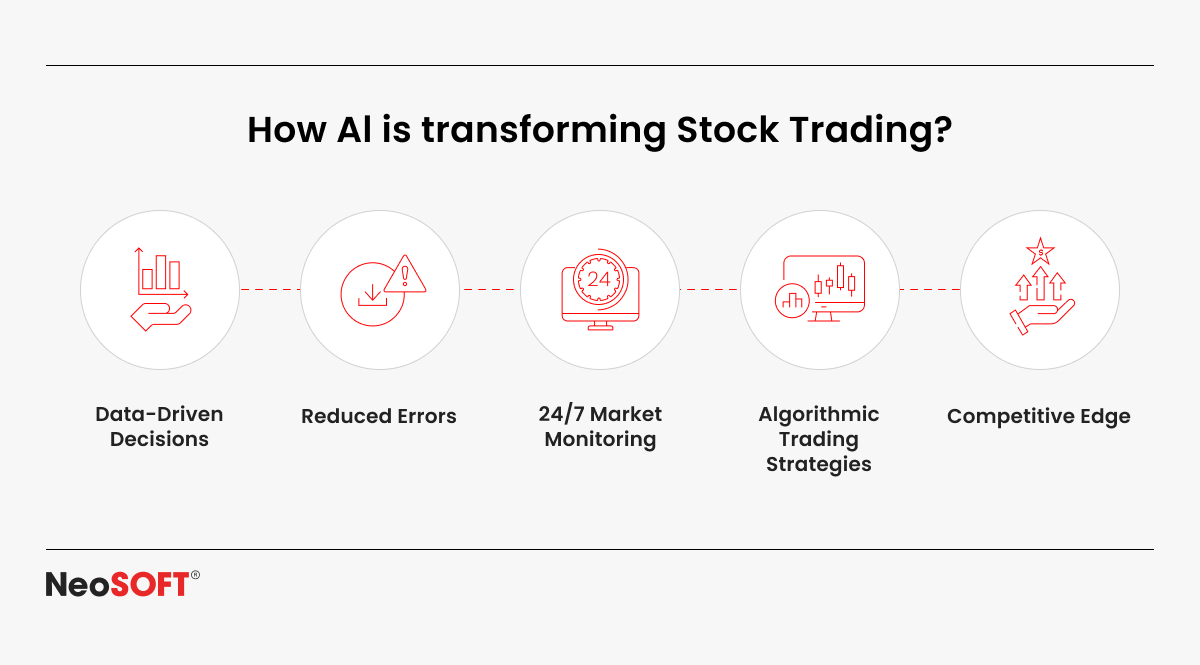
AI-powered trading holds the capability to outshine conventional methods because they can process large-scale financial data with unmatched precision and speed. In contrast to static algorithms, machine learning models have evolved over time improving their forecast efficiency, by offering:
- Real-time decision-implementation: Discovers profitable trades and takes them into consideration within a few milliseconds.
- Risk assessment and management: Detects possible recessions and modifies strategies accordingly.
- Elimination of human bias: Decreases the possibility of decisions being made emotionally, resulting in objective focused trading outcomes.
- Enhanced fraud detection: Explores unusual trade developments that might signal fraud.
The Role of Machine Learning in Trading
Machine Learning monitors news sentiment, macroeconomic variables, and historical price modifications to produce data-driven insights. This technology enables high-frequency trading (HFT), which materializes on tiny market movements by allowing powered by AI algorithms to carry out thousands of trades per second.
In addition, monetary institutions, wealthy people, and individual traders can all make superior investment choices by integrating artificial intelligence into trading platforms. This reduces risks and optimizes profits. AI-powered trading systems are increasingly using machine vision to better read complex chart patterns, identify market deviations, and to further analyze graphical data related to finance.
Key Machine Learning Techniques Used in Trading
Supervised Learning
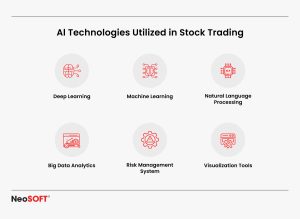
In order to generate accurate asset price forecasts, algorithms that use supervised learning rely on labeled training data, including historical stock prices, trading volumes, and financial indicators. Common supervised learning techniques used in trading include artificial neural networks, regression models, and decision trees.
Unsupervised Learning
Market information contains hidden connections and trends that can be identified through unsupervised learning. These models can help traders identify correlations, manage risks more effectively, and construct varied portfolios to reduce possible risk by evaluating groups of commodities that show price movements and trends alike. Traders can therefore find fresh investing opportunities with the aid of clustering techniques and principal component analysis (PCA).
Semi-Supervised Learning
A strategy that combines aspects of both supervised and unsupervised learning is called semi-supervised learning. To enhance model training, it integrates a lot of unidentified information with a little bit of labeled data. This approach works best when there is a lot of raw data and classification is expensive or time consuming.This minimizes the need for intensive manual labeling while promoting accuracy and generalization through employing attributes in the unlabeled data. It is used in applications such as fraud detection, image recognition, and speech processing.
Reinforcement Learning
Through continuous problem-solving adjustments based on market conditions, reinforcement learning maximizes automated trading strategies. These models promote long-term profitability by improving their tactics based on historical trades. Therefore, reinforcement learning is especially helpful when creating portfolio management setups driven by AI.
Natural Language Processing (NLP)
NLP techniques analyze financial news, earnings reports, analyst opinions, and social media trends to assess market sentiment. They can predict stock price movements influenced by news events and investor sentiments by processing unstructured textual data.
Benefits of AI-Powered Trading
Faster and More Accurate Problem-solving
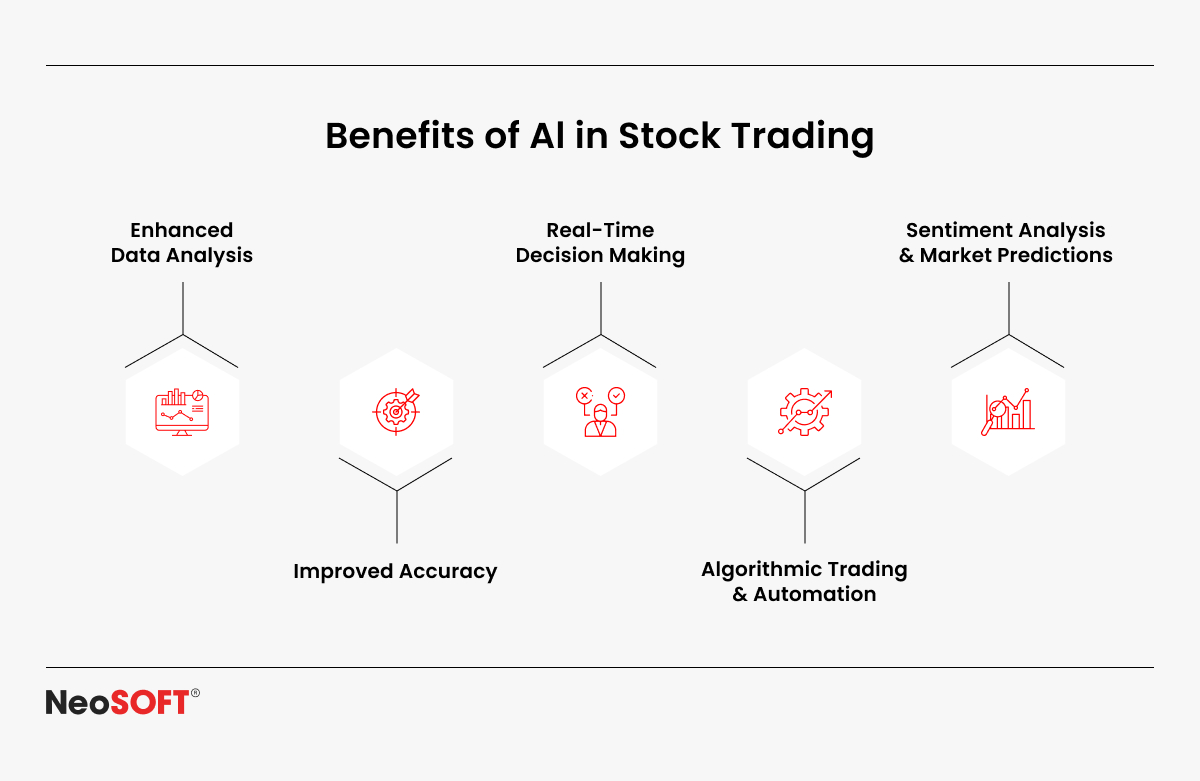
AI-powered trading algorithms evaluate enormous data sets in real-time, anticipating the best times to buy and sell in milliseconds. This speed is essential in automated investment methods and HFT, where snap decisions can mean the difference between earnings and heavy losses. Furthermore, AI models continuously improve their accuracy by taking in fresh data and making the necessary adjustments to trade strategies.
Reduced Human Bias and Emotional Trading
AI eliminates irrational thinking brought on by human emotions such as fear, greed, and overconfidence. ML-driven strategies rely on data and statistical models to ensure objective trading solutions, which assure objective trading decisions. Artificial intelligence promotes trading discipline and consistency through the elimination of emotional biases ultimately leading to more predictable and steady investment outcomes. This helps investors to stay true to their goals by decreasing impulsive reactions to market changes.
Improved Risk Management
In order to anticipate downturns and mitigate risks, AI models assess both historical and current market data. They encourage traders to take timely measures by detecting indicators of market instability early on through the analysis of enormous datasets. By shielding investors from sudden shifts in prices, predictive analytics minimize overall risk exposure.
Fraud Detection and Regulatory Compliance
Machine learning models detect unusual trends that could point to insider trading, counterfeiting, or market manipulation by examining enormous quantities of transaction data. Compared to conventional monitoring techniques, these automated networks provide faster and more precise means of detecting fraudulent activity.
It further limits the possibility of charges and harm to financial organizations’ reputations by minimizing human mistake, enhancing transparency, and assisting them in preserving compliance with the ever-changing regulatory system.
How AI-Powered Trading is Impacting Retail Investors
Virtual assistants driven by AI are also becoming more prevalent in the financial sector, helping traders to handle their portfolios, track real-time markets, and to execute strategy-based trade. These AI-driven tools, once limited to institutions, are now available to retail investors, identifying real-time opportunities and risks.
Automated trading bots enhance efficiency and eliminate emotional bias by executing transactions according to algorithms. Leveraging AI to evaluate data and carry out plans may support retail investors in growing more competitive and making informed decisions.
Challenges and Risks
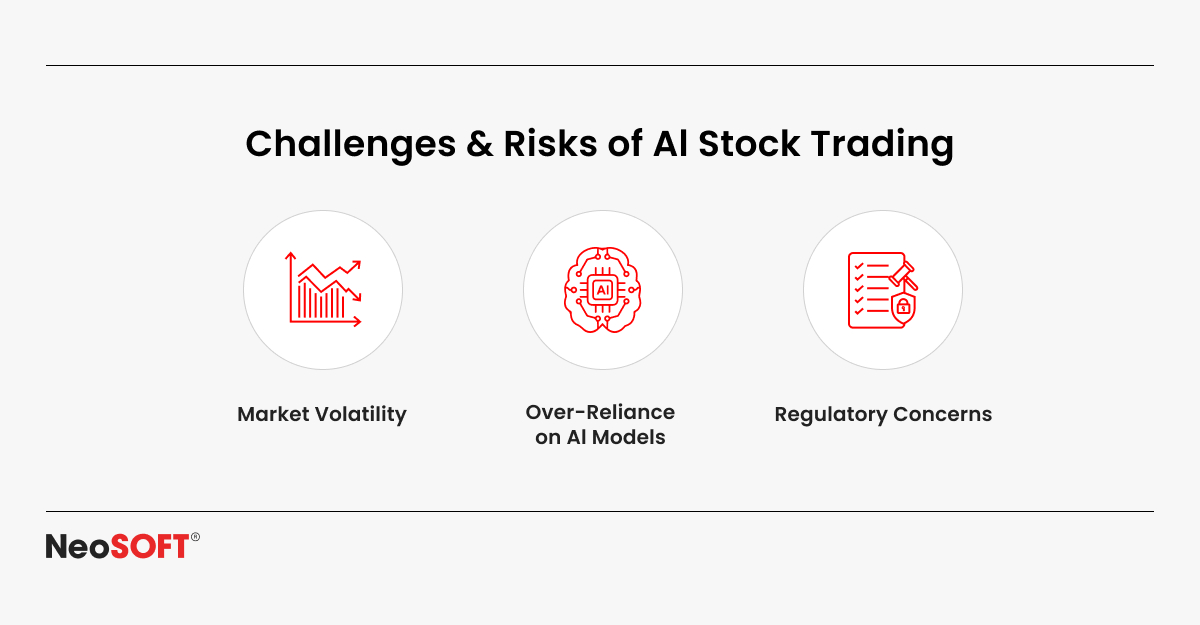
Despite its transformative capabilities, trading driven by AI still has an array of limitations. Machine learning models can at times fail to consider previously unexpected market circumstances, such as downturn or unexpected geopolitical advancements, due to their high reliance on historical data. Likewise, if several algorithms respond to the same inputs at the same time, AI-driven systems could spike market volatility.
The Role of AI in Risk Management
AI reduces trading risks through the detection of market irregularities and early warning indicators of possible losses. Advanced risk models evaluate data in real time, enabling traders to modify asset allocations and reduce volatility exposure. Using automated risk assessment, AI-driven fraud detection has enhanced security by discovering suspicious transactions and reducing financial fraud, thereby reinforcing investor protection.
Ethical and Regulatory Concerns
AI-driven trading raises queries regarding market manipulation and the business advantage of high-frequency traders. Regulators have reinforced regulations to maintain market fairness because, despite the rapid pace of AI-powered trades, such trades may create unjust advantages. In the wake of artificial intelligence, governing bodies such as the European Union have introduced stricter rules to promote fairness and transparency in financial markets.
Algorithmic transparency and compliance to data confidentiality rules are becoming more important as AI is developing. To make sure AI-driven trading remains fair and doesn’t cause market instability, regulatory bodies are attempting to achieve stability between innovation and accountability.
Over-Reliance on AI and Black Box Systems
The lack of disclosure in resolving issues is one of the main hazards associated with AI-powered trading. A lot of models for machine learning function as “black box” systems, which makes it challenging to understand their internal reasoning. Traders and businesses that only use AI could find it difficult to comprehend the reasoning behind some trades. Excessive reliance on transparent AI-models could lead to severe losses if they fail in reacting to abrupt changes in the economy.
Example: The 2010 Flash Crash
The 2010 Flash Crash, where trading performed using algorithmic approaches resulted in an abrupt and catastrophic market crash, is a noteworthy example of market failure powered by AI . The Dow Jones Industrial Average fell nearly one thousand points in just a couple of minutes on the fatal day of May 6, 2010, leading billions to be lost, but the market rebounded promptly.
This was actually raised by AI-driven high-frequency trade (HFT) algorithms that detected anomalous market activity and reacted by placing huge sell orders. These algorithms exacerbated the crisis before human intervention could stabilize the market. This incident emphasizes the need for human control in AI-driven trading in addition to the risks associated with black-box AI algorithms.
How AI is Redefining Trading Psychology
The judgements made by the investors are changing as a result of AI-powered trading. Conventional traders frequently go through emotional highs and lows, which causes them to make rash decisions and use inconsistent methods which may lead to undesired monetary choices. Thus, machine learning systems eliminate this emotional bias, providing data-driven, rational approaches that improve efficiency and consistency.
- AI-driven sentiment analysis: Permits traders to accurately forecast investor behavior by evaluating market psychology through the examination of financial news, earnings estimates, and social media trends.
- Algorithmic discipline: Reduces premature choices and improves long-term profitability by guaranteeing that the trades are executed out carefully employing reasoning and past data.
- Risk mitigation: Real-time market conditions are tracked through AI models, which dynamically alter portfolios to reduce exposure to unexpected shifts in the economy. This improves stability and reduces the emotional toll that volatile markets take.
Future Trends in AI and Financial Market Predictions
Deep Learning for Enhanced Forecasting
Complicated market predictions are made feasible by deep learning models, which are made of multiple layers, that gradually extract higher-level financial information. These forecasts are more precise, especially the deep neural networks, which examine large financial datasets in a variety of ways. Also, by continually acquiring knowledge from new information, these models improve their predictions and assist traders in successfully predicting market movements.
AI and Blockchain Integration
Blockchain’s immutable record can be used by artificial intelligence models to securely hold and validate trading data, increasing accountability and reducing the possibility of fraud. AI-powered smart contracts additionally allow trades to be carried out automatically according to predetermined guidelines, decreasing the need for human intervention thereby boosting the performance of financial transactions.
Quantum Computing in Financial Predictions
Financial trading may undergo an evolution thanks to quantum computing’s capability to solve complex optimization issues at previously unheard-of rates. Quantum algorithms have an opportunity to improve risk assessment and portfolio management, giving traders more resources for making decisions.
Quantum systems use parallel processing to investigate multiple market scenarios at once, in contrast to traditional computing, that analyzes data sequentially. More accurate risk modeling may result from this capability, enabling traders to foresee and avert financial slumps before they materialize.
Conclusion
AI-powered trading has positively altered financial markets by improving on risk management, increasing prediction accuracy, and simplifying approaches to trading.
The manner in which businessmen evaluate the market trends, carry out trades, and control their portfolios is evolving as an outcome of machine learning techniques like supervised learning, reinforcement learning, and natural language processing.
Even while AI-driven trading has several advantages, problems involving erroneous data, unstable markets, rules and regulations still need to be fixed.
As AI technology expands, financial markets’ automation, security, and forecasting abilities will all likely improve as it will be necessary to find an equilibrium between innovation and regulatory oversight in order to preserve market stability and ethical business practices.
Get in touch with us at info@neosofttech.com to maximize your financial plans, take advantage of AI-driven trading solutions, and maintain your competitive edge in the quickly changing market.