PHP has been a mainstay of web development for a long time. Its versatility and ease of use make it the engine of many web components. Due to its ability of serving both small and large-scale commercial systems, PHP has become a popular choice among developers worldwide. However, the requirement for writing more organized and maintainable code grows with the complexity of PHP applications.
Here’s where Dependency Injection, or simply DI, comes in. DI is a design pattern that separates object creation from its dependencies, allowing developers to build more flexible, testable, and maintainable code. Instead of instances of classes handling their own dependencies, DI delegated the duty to external sources, fostering a clear separation of concerns.
In the case of PHP development, using DI can enhance the overall quality of the codebase significantly. It facilitates unit testing by making dependencies easily mockable or replaceable. Furthermore, DI aids in the management of complicated applications by eliminating the tight connection between components, thereby rendering the code more flexible and scalable. Leveraging Dependency Injection in applications developed with PHP allows developers to create software that’s simpler to maintain, expand, and test, guaranteeing long-term success in the applications they develop.
This blog discusses the principles of Dependency Injection (DI) in PHP, with a focus on the PHP’s DI library. It highlights the importance of DI in developing better PHP applications. The blog caters to PHP developers, software engineers, users, and decision-makers who want to improve their coding procedures and development processes by leveraging Dependency Injection.
Understanding Dependency Injection
What is Dependency Injection?
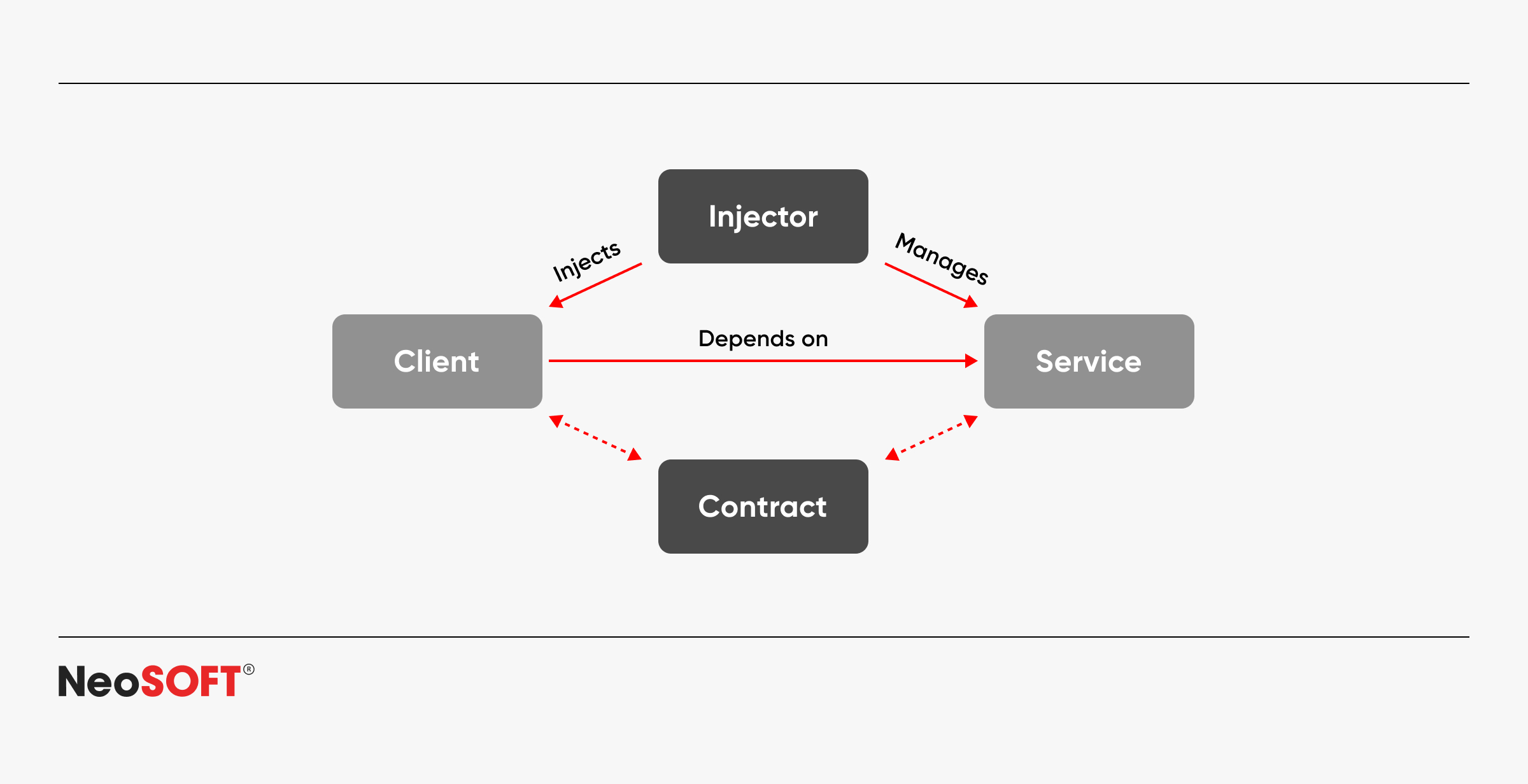
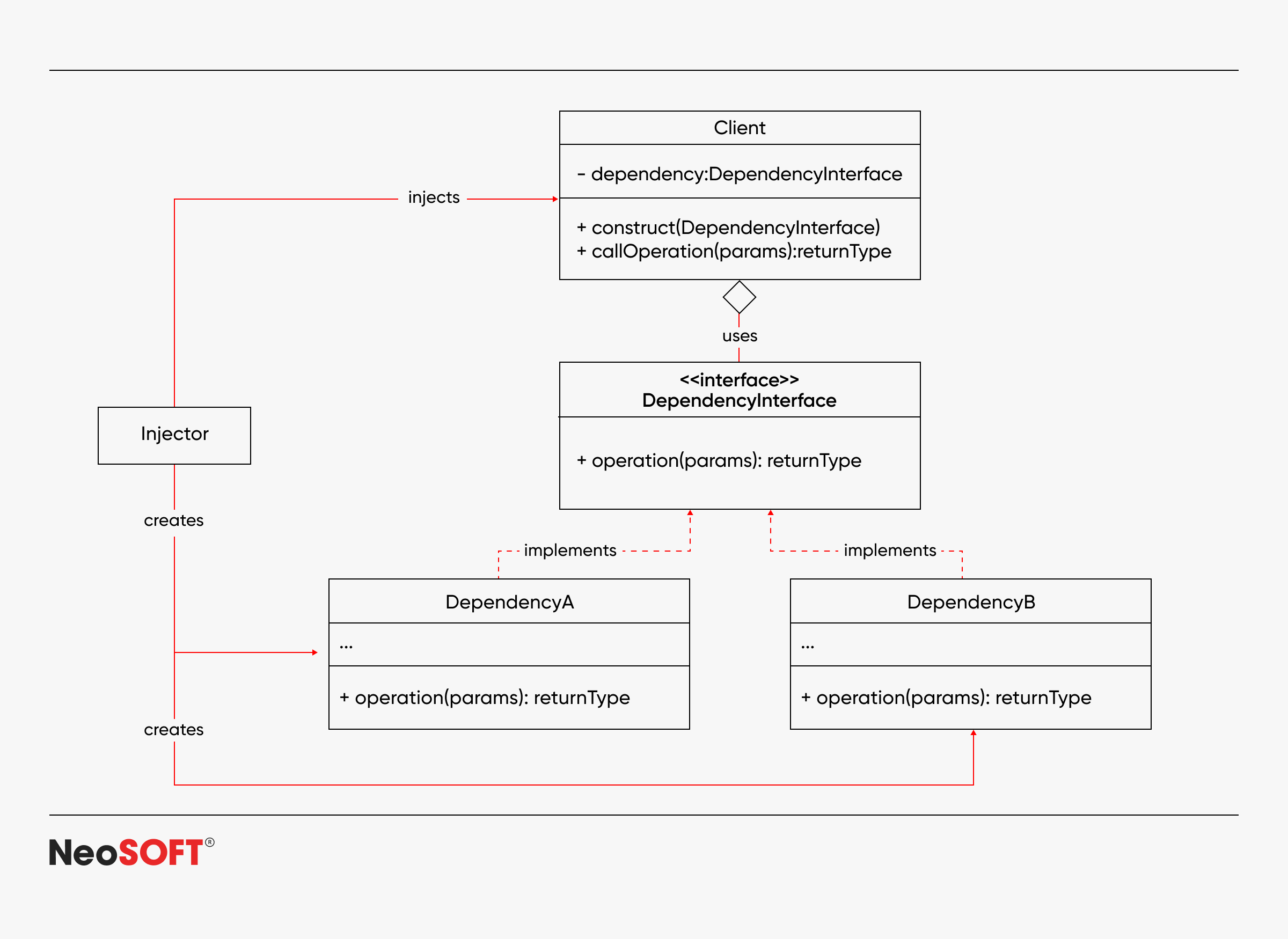
Dependency Injection is a design model in software development that manages the dependencies among objects. Instead of each object in a class developing its own dependencies, they are injected by the class constructor from an outside source, usually via the constructor or a function. This allows for a more effective separation of concerns, with each object oriented programming class focusing exclusively on its tasks and not thinking about how its dependencies are produced or managed.
Core Principles of Dependency Injection
Inversion of Control (IoC): DI is a type of Inversion of Control in which control for object creation and dependency management is shifted from the class to another source. This inversion gives the system control over how dependencies are delivered, allowing for greater flexibility in component composition.
Loose Coupling: Dependency injection enables loose coupling between classes. This means that classes rely less on the actual implementations of their dependents, making the code easier to alter and extend. Loose coupling allows components to be switched, modified, or evaluated independently of the rest of the class container or structure.
Benefits of Using Dependency Injection in PHP Projects
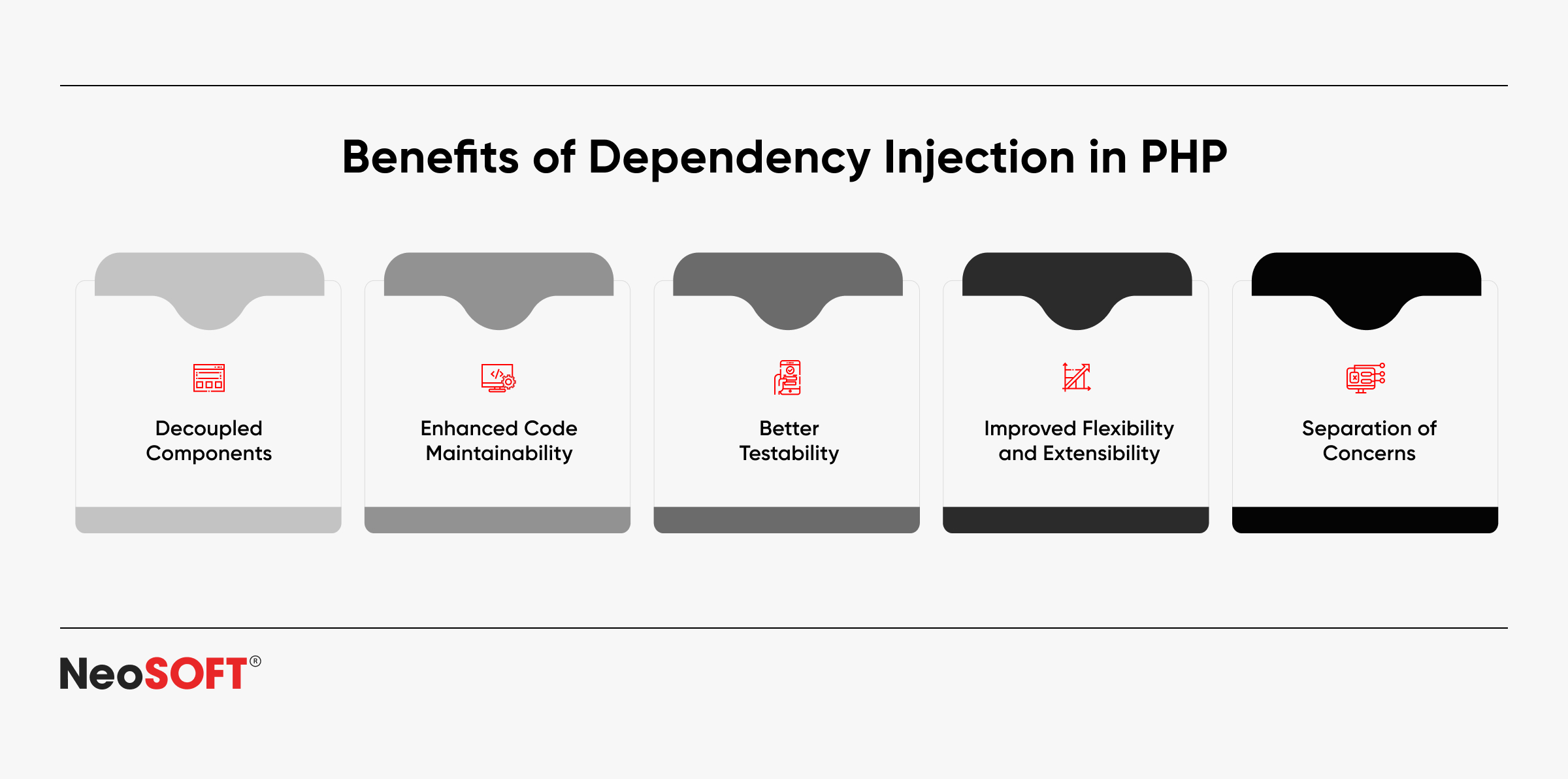
Simpler Unit Testing:Unit testing is made easier by DI, which enables developers to automatically inject stub or more instances of fake dependencies during the process, facilitating the isolation and quality assurance of individual components without the need for real implementations.
Improved Modularity: DI makes it possible to design reusable and modular components. Decoupling dependencies makes it simpler to reuse and maintain various application components.
Enhanced Scalability: DI facilitates codebase extension and management as applications evolve. The system is more scalable and flexible since it may be modified or added without requiring the reworking of tightly connected code.
Common Challenges Faced Without DI in PHP Applications
Tightly Coupled Code: Code that is closely connected results from classes having to create their own dependencies in the absence of DI. Because of this, it is challenging to replace or alter sections of one class of the system without also affecting other parts.
Difficult Testing: Testing gets harder when dependencies are hardcoded into classes. Unit testing is impractical without DI since it frequently requires the setup of intricate settings in order to test a single component.
Developers may overcome these obstacles and produce web applications and frameworks that are simpler to write, test, grow over time, and maintain by implementing Dependency Injection in PHP projects.
Dependency Injection in PHP
The PHP-DI Library and Its Purpose
Built exclusively for PHP applications, this library is a potent Dependency Injection container. Solving and injecting dependencies automatically serves the main goal of the container: making managing dependencies within a PHP application easier. With the help of this container library, PHP developers may eliminate the headache of manually managing object generation and configuration of database dependencies and concentrate on creating application logic.
Key Features
Autowiring: Dependencies can be automatically created, resolved, and injected without requiring explicit user configuration. Because there is less boilerplate code needed for users to create and wire dependencies, this function saves time and effort for PHP developers and users.
Dependency Configuration: Developers can decide the way dependencies should be solved, altered, or overridden, giving them greater flexibility in dependency setting. This is a powerful tool, especially helpful for complex applications and instances where it may be necessary to employ different renditions of the same database interface.
Annotations and PHP Definitions: Annotations are supported by the library, enabling developers to specify dependencies right in their class code. It also provides PHP-based configuration, which gives developers greater authority on the dependency injection process by allowing them to define the class name and dependencies in the PHP files.
Compatibility with Existing Frameworks: Popular PHP frameworks such as Laravel, Zend Framework, and Symfony can easily be integrated with this library. This makes it a flexible choice for developers who are already involved in these ecosystems and frameworks, allowing them to incorporate DI capabilities without having to make major modifications to their current project or codebase.
Why Choose PHP’s DI library?
Ease of Use: Developers will find dependency injection to be user-friendly, with a simple setup and low configuration needs. Because of its annotation and autowiring features, less boilerplate code is required, which makes it simple to use even for smaller applications.
Flexibility: The customizable parameters enable it to adjust to different project requirements. It may support your preferred development method, be it PHP-based configuration, annotations, or a combination of both.
Performance: The library is performance-optimized despite its simplicity. It has an array of features like efficient autowiring and caching to make sure the DI process does not slow down the application as it grows.
Community and Documentation: With its robust documentation and vibrant community, the library helps developers locate resources and support more easily when integrating DI into their applications.
Stacking PHP-DI Against Competitors
There are various PHP frameworks and libraries for Dependency Injection, each with its own set of advantages and disadvantages. Here’s a brief comparison of this library to other popular DI solutions, with frameworks like Symfony DI, Pimple, and Laravel’s IoC container.
PHP vs. Symfony DI
Pros
PHP’s DI library is noted for its straightforward and developer-friendly interface, which makes it simple to set up and use, even when developing smaller applications. Symfony’s DI container, while strong, can be more difficult to configure and necessitate more boilerplate code.
PHP-DI specializes in autowiring and solving dependencies requiring little setup. Symfony, while it offers autowiring, usually requires a more specific configuration, especially in larger projects.
Cons
Symfony’s DI container is more than capable of handling sophisticated use scenarios. It offers increased flexibility and extremely fine-grained control over dependency management, and this may be required for very big or complicated applications.
Symfony’s DI library is tightly linked with the Symfony structure, making it the best option for Symfony-based projects. In contrast, PHP-DI is framework-agnostic and may or may not be helpful, depending on your project.
PHP vs. Pimple
Pros
PHP-DI is more suitable for bigger applications that necessitate advanced dependency handling and autowiring features. Pimple, although lightweight and simple to use, is better suited for small projects with limited DI requirements.
PHP’s DI library includes more capabilities such as autowiring, annotations, and caching, making it a more comprehensive option for complex projects than Pimple’s simpler, manual approach to handling dependencies.
Cons
Pimple, being a lightweight container, is quicker and has a smaller memory footprint than PHP-DI, making it a great option for microservices or small applications wherein performance is crucial, and the dependency network is straightforward.
For developers who only require a basic DI container, PHP’s DI library may seem like overkill, whereas Pimple’s simplicity makes it simpler to learn and implement for modest use cases.
PHP vs. Laravel IoC
Pros
Unlike Laravel’s IoC container, which is tightly integrated with the Laravel framework, PHP’s DI library is not framework-specific. This makes it more adaptable for projects that do not rely on a specific PHP framework.
PHP-DI’s autowiring is more natural than Laravel’s IoC container, which frequently requires manual PHP service configuration and registration.
Cons
If you operate within the Laravel ecosystem, the built-in IoC container is more tightly linked with other Laravel services, resulting in a more seamless experience. Laravel’s container is designed specifically for Laravel applications, making it a better fit for developers who are familiar with the framework.
Laravel’s IoC container offers more hooks and customization options for developers who are deeply committed to the framework, which may not be as available with PHP’s DI framework.
Advantages of Using Dependency Injection in PHP
Enhancing Scalability and Flexibility
Scalability and flexibility in large-scale applications are based upon effective dependency injection containers and management. As the system expands, it will be easy to modify and extend since a strong dependency injection container creates a clear division between components. The above approach guarantees the seamless integration of additional functions or the incorporation of new features while maintaining the system’s flexibility to accommodate evolving business needs.
Improved Project Function
A DI container simplifies the management of various components of complicated e-commerce systems that have several modules, such as user accounts, inventory management, and payment gateways. Developers can change or replace components – like incorporating another database or payment provider – without impacting the system as a whole by injecting dependencies instead of hardcoding them.
A Dependency Injection container aids in the management of dependencies between third-party plugins and core capabilities in big CMS platforms and frameworks that have multiple plugins and extensions. This modular container design method also makes it simpler to add or remove plugins and improves core system testing and maintenance.
A Dependency Injection makes it easier to organize and handle complicated business logic and several interrelated modules seen in ERP systems. As developers can easily create and integrate new database modules and handle changes to the business logic, maintainability is enhanced by this method of configuration.
Implications for Performance and Optimization
A well-designed DI container provides a number of optimizations to guarantee that dependency injection does not degrade performance:
Caching: Includes techniques for storing resolved dependencies, which reduces the complexity of object creation and dependency resolution for subsequent requests. This improvement is especially useful in large-scale applications where handling dependencies can be resource-expensive.
Lazy Loading: Supports lazy loading, which creates dependencies only when they are required. This feature minimizes the application’s initial load time while improving overall responsiveness.
Optimized Autowiring: The autowiring is optimized to resolve and inject dependencies quickly, reducing the performance impact caused by managing complex dependency graphs.
Custom Factories and Providers: Allows the usage of bespoke factories and providers for cases that require particular handling or optimization, improving performance and flexibility.
Enterprise-level systems can improve scalability and performance by implementing a strong Dependency Injection solution. Its advanced capabilities and optimizations make it a useful tool for managing dependencies in complicated and changing software systems.
Conclusion
Dependency Injection is an important design pattern which enhances the framework, reliability, and testability of PHP programs. By separating components and simplifying dependency management, DI allows PHP developers to build code that is simpler, more scalable, and more adaptive.
PHP-DI stands out as an excellent option for implementing Dependency Injection in PHP. Its ease of use, extensive autowiring features, and framework-agnostic flexibility enable PHP developers to manage complicated systems efficiently and with minimal configuration. Whether one is developing a simple web app or an enterprise-level solution, it provides the level of performance and scalability needed for long-term success.
For PHP developers and businesses looking to create reliable and manageable PHP applications, implementing Dependency Injection with PHP-DI is a great option. If you’re ready to boost your development process, contact NeoSOFT via info@neosofttech.com for experienced PHP programming and consulting services. Let us support you in developing scalable, high-performance apps that match your changing business needs.
Blockchain technology, which started out as the foundation for cryptocurrencies like Bitcoin, has developed into a powerful technology across a wide range of industries and services. Data integrity is preserved via consensus and encryption methods used by blockchain and other decentralized ledger technologies. This structure is a great choice for applications that need to be very stable and trustworthy because of its outstanding security features, transparency, and immutability.
Creating state-of-the-art blockchain mobile applications is essential in this ever changing digital landscape. Blockchain technology makes it feasible to develop mobile applications that ensure high levels of security and transparency by providing a means of preventing fraud and manipulation, and limiting unauthorized access.
Blockchain is changing how apps are developed and implemented in a large variety of industry sectors, including finance, healthcare, and logistics. This blog article looks at how blockchain app development can effectively incorporate blockchain technology.
The Fundamentals of Blockchain Technology
To effectively use blockchain in application development, one must have a comprehensive understanding of the core concepts and components of blockchain development technology, as well as the types of blockchains.
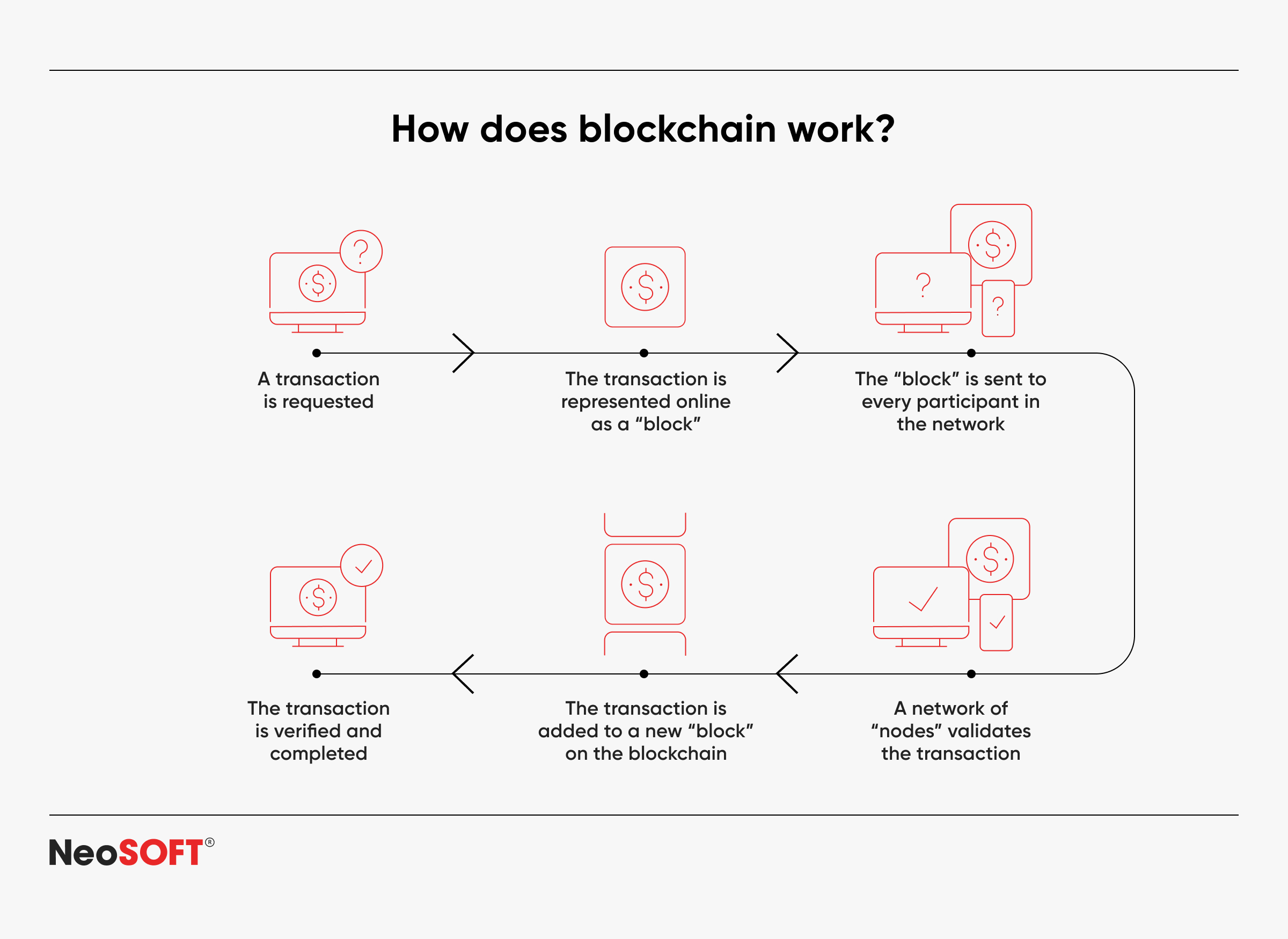
Blockchain technology is a decentralized system and distributed ledger that operates on multiple computers. It securely logs transactions to maintain transparency and data integrity. The information is immutable and impenetrable because each transaction is saved in a “block,” and these blocks are then connected in a “chain” via cryptographic hashes.
Instead of relying on a single central authority, blockchain technology functions on a decentralized network of computers or servers called nodes. Since control is distributed throughout the entire development process and network, decentralization reduces the possibility of corruption and isolated points of failure, thereby enhancing trust and security.
Core Concepts
Immutability: Data in a blockchain block is immutable once it is stored there. Each and every block on the chain is connected to the previous block using cryptographic hashing. This guarantees that every transaction is recorded securely and permanently.
Consensus mechanisms: The methods that authenticate transactions and ensure the ledger’s integrity are referred to as consensus mechanisms. Common approaches include Proof of Work (PoW), which demands solving tough problems, and Proof of Stake (PoS), which picks validators based on their network stake.
Smart contracts: Consisting of self-executing code that autonomously enforces contract terms when certain conditions are satisfied, these eliminate the need for middlemen and enhance efficiency.
Types of Blockchains
Public – Certain blockchains like Bitcoin and Ethereum are open and decentralized, so anybody can join. They are transparent and safe but may be slower and less scalable.
Private – For internal business activities, private blockchains – which are limited to specific parties – are ideal because they offer faster transaction times and more security.
Hybrid – A balance between security, privacy, and transparency is obtained via hybrid models, which incorporate various components from both public and private blockchains.
Types of Blockchain Applications
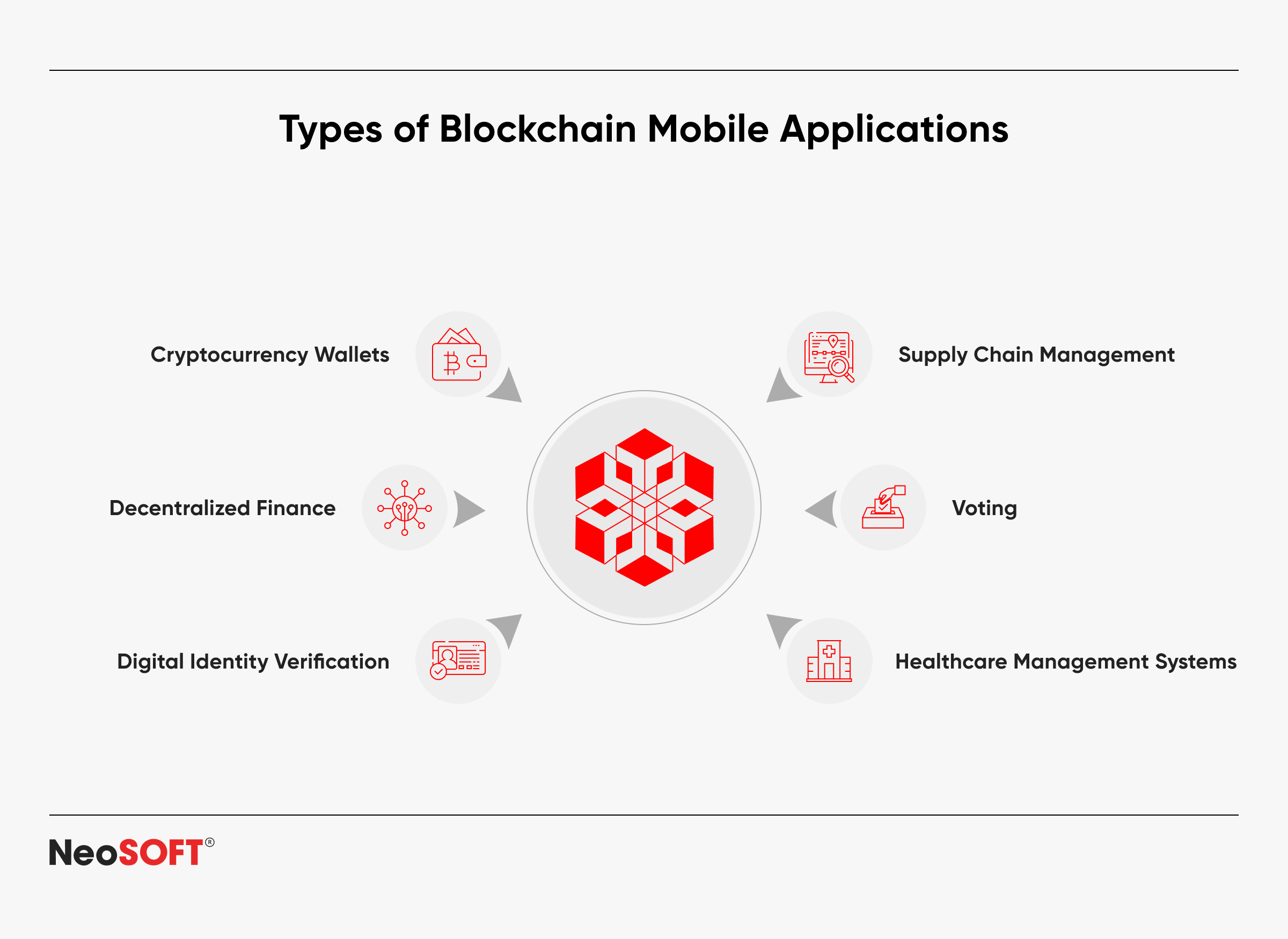
Healthcare Apps
Blockchain technology can be leveraged in healthcare to keep and distribute medical records securely. Healthcare apps maintain information integrity and patient privacy, allowing medical professionals to obtain correct information while protecting sensitive patient information. One can achieve better patient outcomes and seamless data sharing through blockchain’s promotion of interoperability amongst healthcare networks and systems. Individuals can have more control over their medical files by choosing who can access them and making sure they are not tampered with.
Crypto Wallet Apps
A blockchain wallet or crypto wallet uses blockchain solutions to store and handle various digital assets and cryptocurrencies securely. These wallets provide increased security using cryptographic techniques and guarantee transaction transparency, making them trustworthy resources for digital asset management. Crypto apps enable users to easily track transactions on the blockchain and as a result ensure accuracy in transactions and avoid double spending. Besides, as blockchain wallets are decentralized, it means an end to intermediaries, which in turn eliminates transaction costs while also providing privacy.
Decentralized Finance Apps
To handle investments, loans, and other financial deals without traditional financial institutions and intermediaries, decentralized finance applications, or DeFi apps, work with blockchain technology. Decentralization reduces costs, and enhances accessibility, thereby increasing financial autonomy. With the help of the DeFi blockchain software, users may now engage in peer-to-peer banking, including lending, borrowing, and trading, expanding their financial portfolios. DeFi apps ensure equitable and transparent financial transactions by cutting down on human errors by implementing process automation via smart contracts.
Supply Chain Management Apps
The transparent and immutable ledger of blockchain platforms is suitable for supply chain management. These apps enable firms to track the validity and movement of items from source to destination, increasing transparency and decreasing fraud. Blockchain apps also assist businesses in responding quickly to concerns such as delays, human errors, or anomalies by offering real-time tracking. Furthermore, the permanent log of each transaction via blockchain development allows all parties to verify the product’s journey, building trust between vendors and consumers.
Digital Identity Apps
Blockchain technology allows for the development of safe and verified digital identities. These apps and services decrease identity theft and fraud by giving users control over their personal information while keeping it private and tamper-proof. Users can utilize the blockchain network to selectively share selected aspects, limiting exposure and maintaining their privacy. This technique is especially useful for online verification processes such as KYC (Know Your Customer), where security and accuracy are essential.
Voting Apps
Voting apps built on blockchain technology offer tamper-proof, open, and secure features that enhance election integrity. By utilizing blockchain technology, these decentralized applications guarantee accurate recording and verifiability of each vote, thereby removing any potential for fraud or manipulation. With confidence that their votes will be correctly counted, voters can cast their ballots from a distance. Moreover, blockchain produces an immutable record of the election process, improving the effectiveness and dependability of recounts and inspections.
Advantages of Blockchain Development
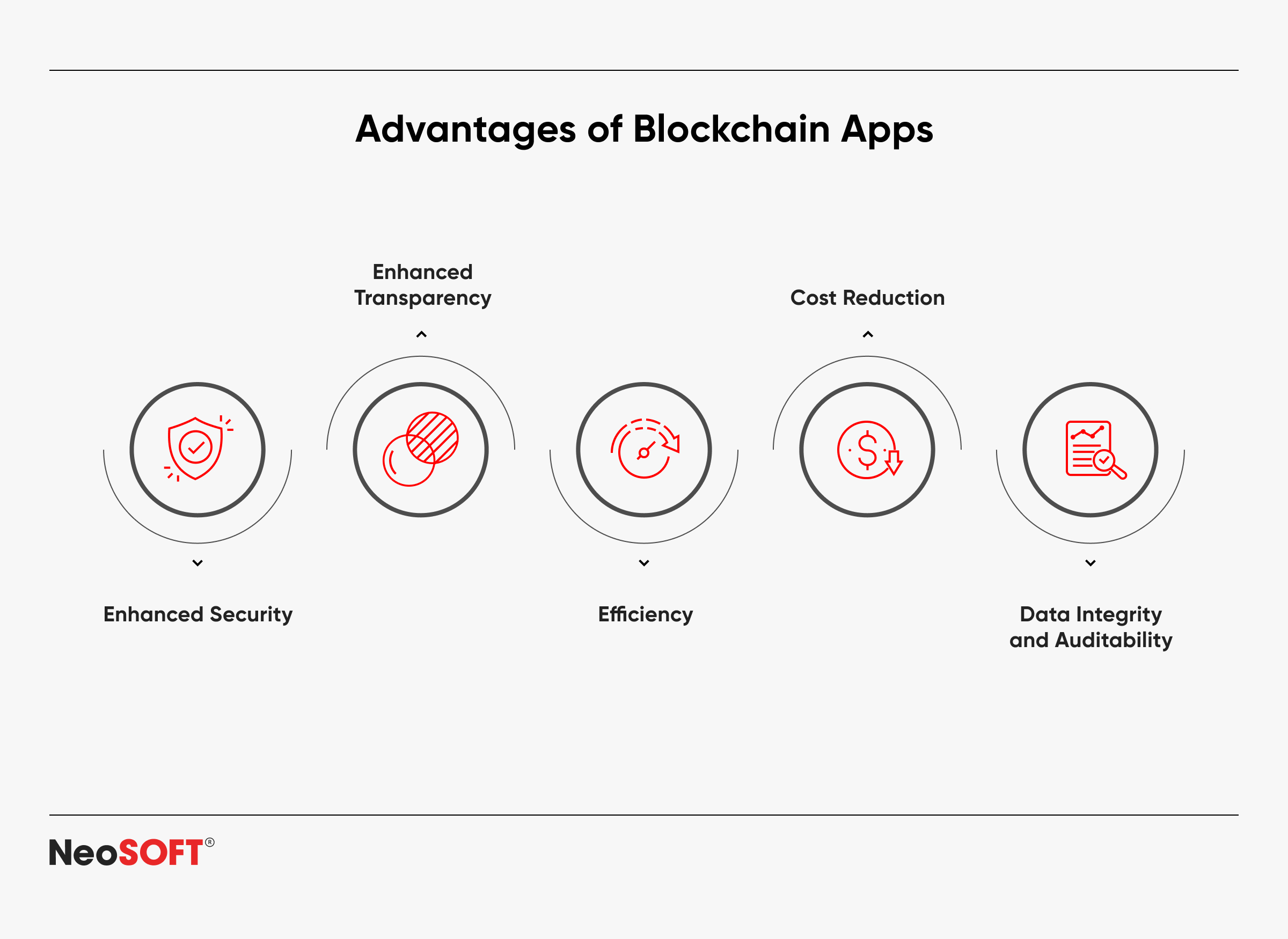
There are several benefits of integrating blockchain technology into application development, such as improved data quality, security, efficiency, transparency, and reduced expenses in both the end result and the whole development process.
Security: Blockchain technology provides strong security via cryptographic hashing. Each block in the chain is connected to the preceding one by a unique hash, rendering it almost impossible to change data without discovery. This safe framework prevents tampering and fraud, guaranteeing that the records and transactions are dependable and intact.
Transparency: The decentralized nature of blockchain development offers a transparent ledger that all network participants may access. All transactions on a decentralized ledger are visible and verifiable, which builds user trust. The immutability of the blockchain platform assures that once information is stored, it cannot be modified, resulting in a solid record that boosts business development, consumer trust and accountability.
Efficiency: Blockchain is used to analyze and optimize company processes and procedures through the use of smart contracts and automation. The terms of smart contracts are directly inscribed onto the blockchain, making them basically self-executing agreements. They implement and enforce contract terms automatically when predetermined criteria are satisfied, eliminating the need for middlemen and accelerating transaction procedures.
Cost Reduction: Blockchain app development lowers associated costs by eliminating intermediaries and automating procedures. Traditional systems may involve several parties and complex workflows, causing greater transaction fees and administrative costs. Blockchain simplifies transactions, reducing costs and increasing the overall efficiency of the development process.
Data Integrity and Auditability: Blockchain’s immutable records maintain data integrity and provide auditability. Every transaction is recorded permanently and connected to the same blockchain network, leading to a transparent and tamper-proof record of all actions. This dependability is critical for applications that require precise information tracking and adherence to regulatory compliance norms.
Challenges in Blockchain App Development
While blockchain provides numerous benefits for business and app development, its implementation might create certain problems that a blockchain developer must overcome in order to develop a successful blockchain app.
Scalability Issues
Scalability issues might arise with blockchain development, especially when dealing with large-scale applications. Because of the lengthy consensus processes required, public blockchains, in particular, have limited transaction throughput and speed. Scaling up blockchain platforms and networks to serve a large number of transactions while maintaining performance remains a significant challenge.
Regulations and Compliance
The intricate regulatory framework environment – which differs from location to location – is a major barrier to blockchain adoption and development. It is imperative that blockchain app development experts carefully plan and execute blockchain-based solutions that adhere to these regulations to steer clear of potential legal issues.
Interoperability
Blockchain networks often run in isolation, which complicates interoperability. For an ecosystem to be connected, various blockchain networks and systems must effortlessly exchange information. Blockchain experts must develop interoperability standards and protocols for blockchain technology to be more easily integrated and usable overall.
Energy Consumption
Blockchain operations, especially those involving Proof of Work (PoW) consensus methods, may require substantial energy consumption. Questions of resource allocation and sustainability are brought up by this environmental impact. To address these concerns, more energy-efficient consensus algorithms, as well as blockchain infrastructure optimization, must be looked into.
The Future of Blockchain in Web and App Development
The capability of blockchain technology to revolutionize businesses and completely reimagine the entire application development process is becoming increasingly evident in the crypto space as it evolves. New developments like Web 3.0, decentralized apps or DApps, and Non-Fungible Tokens or NFTs, along with the expansion of the cryptocurrency market, are transforming the blockchain environment.
Among Web 3.0’s primary objectives is to create a decentralized blockchain-based network akin to the internet for the purposes of digital communication and information storage. This will enable people to have greater authority and ownership over their digital identities.
NFTs, too, have generated fresh opportunities for digital ownership by enabling the tokenization and exchange of unique assets like mementoes, digital property, and virtual art on blockchain networks. The growing popularity of DApps can be credited to their capacity to function without a central authority, thereby with security features offering users increased autonomy and privacy.
Blockchain contains the potential to completely transform a wide range of industries beyond financial services, banking, and technology. For example, by ensuring transparency and traceability across the project scope and lifeline, from the source to the client, a blockchain app can enhance supply chain management.
The healthcare industry can greatly benefit from secure and interoperable medical information, while real estate transactions can be streamlined with blockchain-based smart contracts. Blockchain development can also significantly improve intellectual property management by ensuring verifiable ownership and safeguarding authors’ rights. As blockchain matures, new applications and industries will emerge, creating the potential for wider innovation and disruption.
Conclusion
Businesses have a great opportunity to innovate and gain a competitive edge by implementing new technologies such as blockchain. Whether the purpose of your application is to prioritize security and transparency or to increase operational efficiency, including blockchain technologies can significantly improve the entire process.
Strategic relationships with blockchain platforms and developers can give firms a significant competitive advantage. Additionally, training teams on blockchain technology and cultivating a collaborative environment will be critical for their business processes and driving effective blockchain adoption. Businesses that embrace custom blockchain solutions can significantly level up their existing operations and services while positioning themselves as leaders in the incoming wave of digital change.
To get and stay ahead in this fast-evolving market, businesses must be proactive in developing and implementing blockchain technology. This includes remaining current on the newest advances, engaging in R&D, and experimenting with blockchain solutions. Now is the moment to investigate how blockchain may alter your business and create new opportunities for growth.
Are you ready to level up your applications by integrating blockchain technology? Contact NeoSOFT at info@neosofttech.com to discuss your next blockchain development project requirements with our experienced team and learn how we, as a top blockchain app development company, can help fulfill the demands of your next blockchain project and empower you to reach your objectives.
The rise of serverless architecture marks a change in the creation and delivery of applications. These days, serverless architecture is essential to software development teams. Abstracting away the complexities of infrastructure management significantly streamlines development. As you only pay for the actual compute time spent, this boosts cost savings, minimizes operational overhead, and enables faster deployment and scalability of cloud functions.
Both larger companies and smaller start-ups can benefit from serverless’ agility and creativity, which speeds up the time to market for new features and apps while enabling continuous integration and continuous delivery. In the end, it fosters efficiency and innovation throughout the board by enabling developers to concentrate on creating features and writing code rather than running servers. Furthermore, by automatically scaling resources to meet demand and maintaining consistent performance even during traffic spikes, serverless architecture improves resilience.
This blog outlines the common issues associated with deploying serverless architecture and offers practical methods to solve them. Following these tips can help both developers and businesses optimize their serverless apps and ensure better performance, greater cost-effectiveness, and higher scalability.
Understanding Serverless Architecture
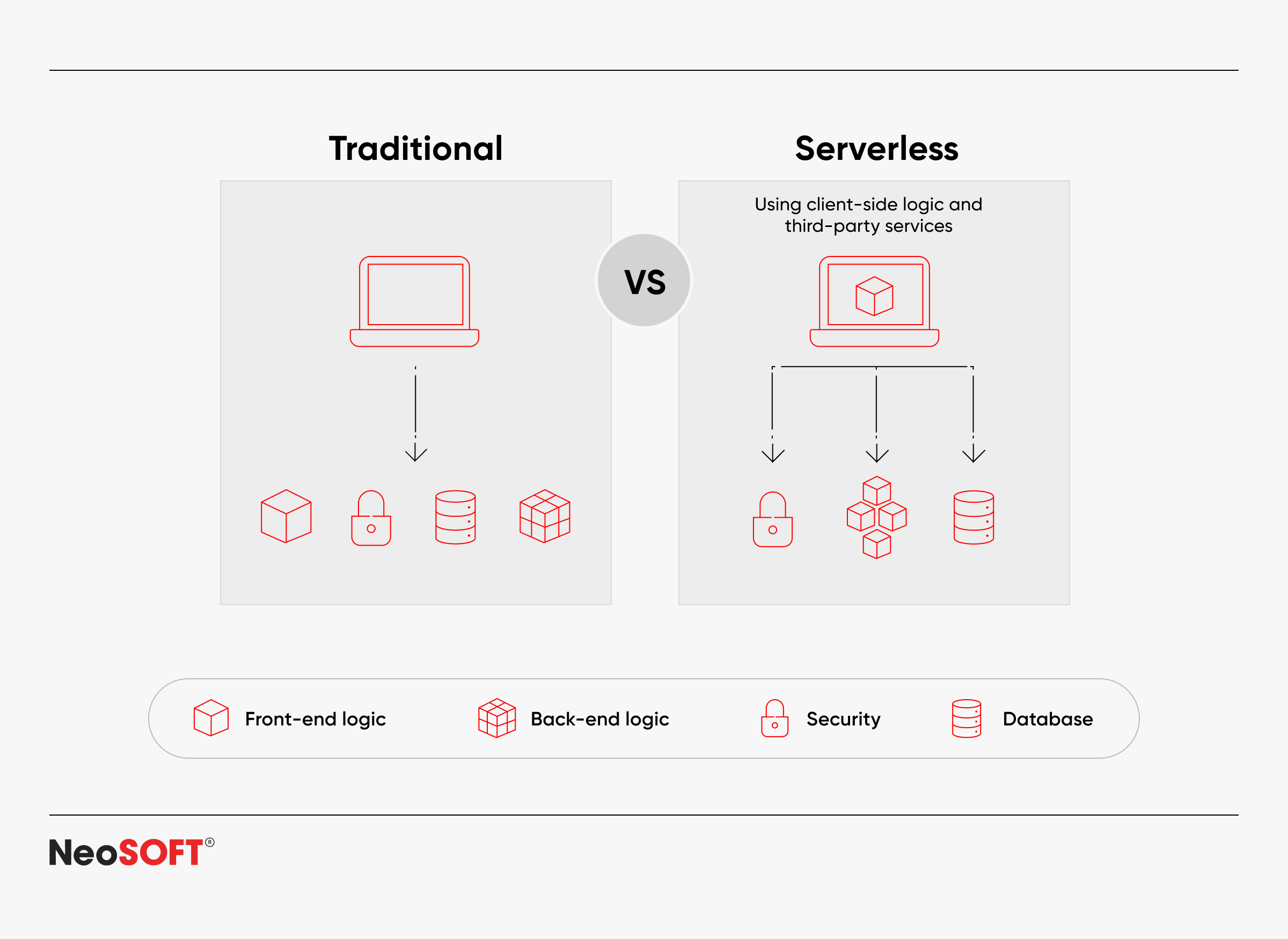
Serverless architecture, a cloud computing model, enables developers to construct and execute applications without having to manage the underlying infrastructure of physical servers. Cloud providers manage server deployment, scalability, and maintenance for serverless applications. The two main parts of serverless architecture are:
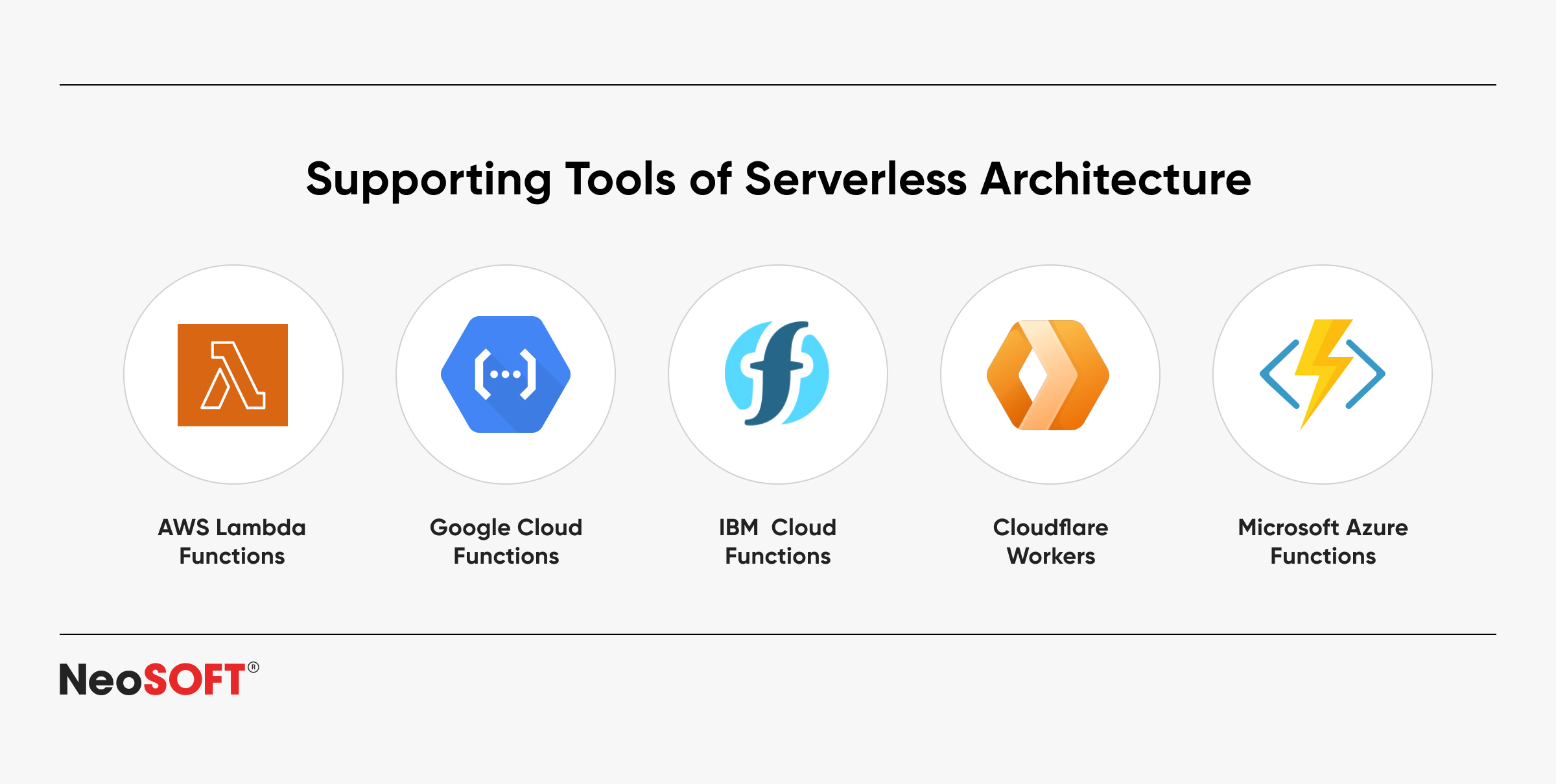
Function-as-a-Service (FaaS): FaaS platforms enable software engineers to launch designated functions or bits of code in reaction to certain events, such as file uploads, database updates, HTTP requests. The cloud provider automatically scales and controls the function’s lifespan.
Backend-as-a-Service (BaaS): Using this method spares developers from having to manage backend services themselves and lets them integrate ready-to-use backend features into the serverless application themselves.
All execution-related responsibilities, such as load balancing, monitoring, security updates and scaling, are handled by a serverless framework when an event initiates these procedures. The burden of scaling, upkeep, and server management is removed, freeing developers to create and execute code and putting business logic into practice.
Advantages of Serverless Architectures
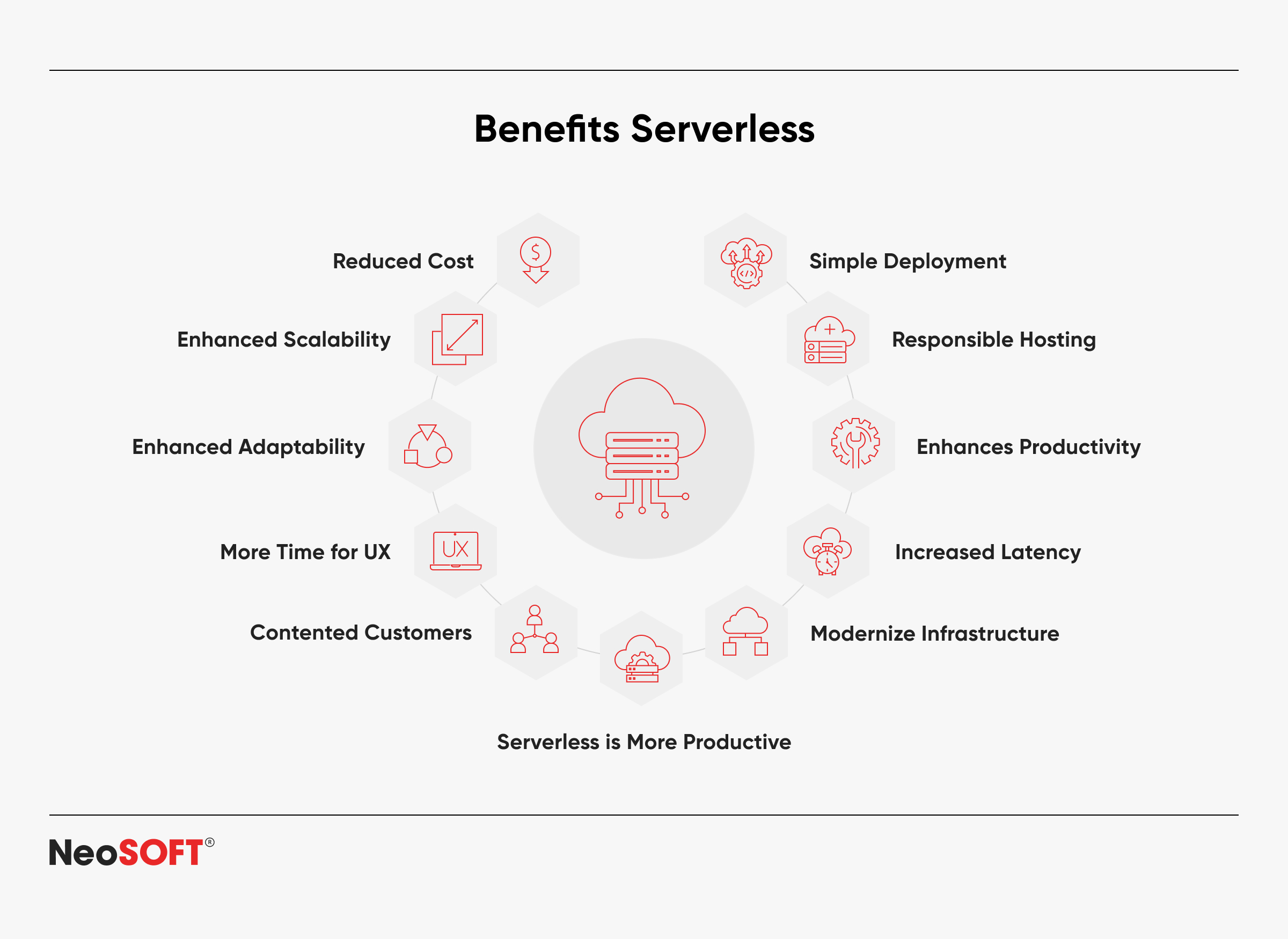
Serverless architectures are being adopted more and more in contemporary software development due to the many benefits they offer businesses. Some of these are:
Scalable: Without requiring human intervention, serverless architectures automatically scale applications in accordance with demand, guaranteeing optimal performance and resource utilization.
Less Complex: Serverless computing simplifies development and deployment by managing infrastructure, allowing developers to focus on code and application logic.
Cost Efficient: Serverless architecture saves money by billing only for the compute time needed rather than for pre-allocated resources as well. This pay-as-you-go mechanism aids in cost management and resource optimization.
Quick Development: Serverless architecture accelerates the software development lifecycle, which makes it easier to rapidly iterate new features and updates as well as to facilitate continuous integration and deployment.
Serverless computing is a desirable option for enterprises due to these – and many more – advantages, which allow firms to develop and deploy applications more effectively, lower operational costs, and achieve faster time-to-market.
The Industry Impact of Serverless Architecture
Numerous industries have seen a transformation thanks to serverless architectures, including:
E-commerce: Serverless functions improve scalability by automatically modifying resources based on traffic, which is critical for managing fluctuating loads during busy shopping seasons. It is also cost efficient, charging only for the time spent on processing, making it an excellent solution for handling unpredictable traffic.
Healthcare: Managing large datasets is a significant challenge for healthcare companies, but serverless computing makes it possible to process and analyze data quickly and effectively. Serverless applications enable scalable data processing pipelines and are able to link with a large number of data sources to enable real-time analytics and improved patient care.
Financial Services: The rapid development and implementation of financial applications is facilitated by serverless architecture. A serverless framework speeds up the introduction of new features, allowing institutions to react swiftly to changes in the financial market.
Common Issues with Serverless Applications and Their Fixes
Cold Start Latency
A serverless function experiences cold start latency when it is utilized for the first time or following a prolonged period of inactivity. The time needed to set up and run code and provision the execution environment is what’s causing the delay. This latency can degrade user experience and cause performance bottlenecks in other functions, particularly in applications that require real-time replies or handle infrequent invocations.
Solutions –
Provisioned Concurrency: Use technologies like AWS Lambda’s supplied concurrency to pre-warm a specified number of function instances, saving setup time.
Optimized Function Code: Reduce code size and dependencies to speed up function initialization. Refactor functions to improve efficiency and maintain them lean.
Lightweight Runtimes: To reduce cold start times and increase overall speed, select quicker runtimes such as Node.js or Python.
Limited Execution Time
Serverless solutions impose time constraints on function execution, such as AWS Lambda’s 15-minute limit. This can stifle long-running tasks. Time constraints can halt long-running operations and disrupt complex workflows.
Solutions –
Break Down Tasks: Split large jobs into smaller operations that can be completed within the time restrictions.
Stateful Services: To manage and coordinate complicated operations across several functions, use solutions such as AWS Step Functions.
Vendor Lock-In
Vendor lock-in happens when an application becomes overly reliant on the tools and services of a single cloud provider, making migration to other platforms or switching providers difficult. This can make transitioning to new platforms difficult and limit adaptability to different technologies or providers.
Solutions –
Multi-cloud Strategy. Distribute your workloads among various cloud providers to lessen reliance on a single source while increasing flexibility.
Open-source Frameworks. Adopt open-source serverless frameworks such as OpenFaaS or Knative, which are intended to be portable across several cloud environments.
Monitoring and Debugging
The distributed nature of serverless architecture complicates monitoring and debugging because functions are frequently dispersed across numerous services and invoked asynchronously. Tracing difficulties across several serverless functions and services can be complex, making it tough to identify the source of problems.
Solutions –
Distributed Tracing Tools: Use AWS X-Ray or Jaeger to visualize and trace requests as they move through various services, making it easier to identify and fix problems.
Centralized Monitoring and Logging: Using logging services and centralized monitoring platforms to collect and analyze logs from several functions in one place boosts visibility and makes troubleshooting easier.
Security Concerns
Serverless environments have distinct security problems, including a greater attack surface due to the dynamic nature of functions and services, the possibility of unsafe setups, and restricted insight into runtime behavior of application code. These issues include increased vulnerability to assaults, the possibility of incorrect permissions, and the complexity of monitoring and managing servers and safeguarding dispersed components.
Solutions –
Robust IAM Policies: To reduce potential security concerns, implement robust IAM policies that enforce least privilege access by carefully defining and administering IAM (Identity and Access Management) roles and permissions.
Serverless-specific Security Tools: Use tools such as AWS Lambda Security to guard against potential common risks and ensure correct configuration.
Regular Security Audits: Conduct frequent audits and vulnerability scans to detect and address potential flaws in the security of your serverless apps.
Cost Management
Even though maintaining a serverless architecture might be cost-effective, the pay-as-you-go pricing approach can bring unanticipated costs. This can involve erratic invoicing, hidden fees associated with data transfer, and other variables. Managing and forecasting costs for serverless databases can be tough, resulting in unexpected charges and budget overruns if not carefully controlled.
Solutions –
Budget Alerts: To manage spending, create a system to receive notifications when costs approach or exceed thresholds.
Optimized Function Execution: To minimize inefficiencies and save money, fine-tune function execution time and memory use. Perform a regular review and optimization of functional performance.
Unused Resource Clean-up: Audit your serverless resources on a regular basis and remove or deallocate those that are no longer in use to avoid incurring excessive expenses.
Integration with Legacy Systems
Integrating serverless architecture into existing legacy systems can be difficult due to compatibility difficulties, data synchronization complications, and significant delays. Legacy systems may not interface well with modern serverless applications and services, making it impossible to ensure continuous data flow and real-time performance of application data.
Solutions –
Use APIs and Middleware: Provide interfaces between serverless services and older systems to allow for better data transmission and interaction.
Gradual Migration: To manage risks and reduce interruptions, implement a phased migration strategy that involves gradually migrating components from old systems to serverless architecture.
Implement Hybrid Architectures: Use a hybrid design that combines serverless services with existing legacy systems, allowing you to make use of the capabilities of both environments while maintaining continuous operation.
Scalability and Performance Management
Scalability and performance management in a serverless environment can be difficult because of the dynamic nature of serverless operations and their scaling characteristics. Maintaining continuous performance and scaling operations effectively under changing loads can be difficult for server hardware alone, especially when dealing with large traffic or complicated workloads.
Solutions –
Optimize Resource Allocation: Set up suitable memory and compute resources for functions to manage peak loads effectively.
Implement auto-scaling policies: Use the auto-scaling features provided by serverless platforms to dynamically modify resources in response to demand.
Monitor performance metrics: To maintain optimal performance and cost efficiency, track performance data on a regular basis and alter configurations accordingly.
The Future of Serverless Architectures
Serverless Edge Computing
Processing is being moved closer to the data source thanks to the growing popularity of serverless and edge computing integration. This strategy lowers latency, accelerates data processing, and improves user experiences, particularly in IoT applications and content delivery networks (CDNs). With the introduction of 5G networks, serverless edge computing is expected to become even more popular, providing better performance for latency-sensitive cloud applications.
Hybrid and Multi-Cloud Infrastructure
As enterprises attempt to avoid vendor lock-in, the demand for serverless multi-cloud and hybrid systems is rising. These solutions allow enterprises to deploy serverless functions across cloud providers or to integrate on-premises infrastructure and cloud services. New tools and frameworks are also emerging to help manage and orchestrate serverless functions and operations across several environments, resulting in improved deployment flexibility and robustness.
Serverless AI/ML
Thanks to its scalable and affordable workload solutions, serverless computing is quickly gaining traction in AI and machine learning models. This approach makes AI more accessible by allowing companies to develop and deploy predictive models without having to also manage servers and the underlying infrastructure. As serverless systems continue to optimize for AI projects, we may expect more widespread AI/ML integration into applications.
Event-Driven Architecture
The rise of event-driven architectures has expanded the capabilities of serverless computing. Serverless is ideal for handling dynamic, event-driven workloads as applications become more sensitive to data changes and user interactions. As a result of serverless adoption, programs that can effectively manage complex workflows have become more responsive and granular.
Conclusion
Serverless architecture has various benefits, including scalability, cost-efficiency, and shorter development cycles. These benefits do present a unique set of obstacles that must be carefully overcome if one is to succeed. It is necessary to understand the challenges related to serverless architectures and to put workable solutions in place.
Concerns like security, cost management, and others emphasize the importance of developing a well-thought-out strategy when implementing serverless technology. By proactively tackling these obstacles, businesses may realize the full potential of serverless computing, allowing them to develop faster and preserve a competitive advantage.
NeoSOFT can provide personalized solutions for developing and optimizing your serverless architecture. Whether you’re just starting out with serverless computing or looking to upgrade your current cloud infrastructure, our expert teams are there to support you every step of the way. Contact us today at info@neosofttech.com!
In the past few years, the explosive development in technology has revolutionized the business landscape across industries and sectors, bringing better cloud computing services, increased analytics, and flexible software solutions. This has sparked considerable excitement about multi-cloud computing, which improves agility and adaptability to suit the needs of modern enterprises across a variety of cloud settings.
In 2022, Oracle carried out a survey which brought to light the increasing demand for cloud services, especially multi-cloud computing. 98% of the global organizations surveyed in this study either use multi-cloud systems currently or plan to do so in the near future.
The study also reported that 96% of the organizations polled are using various different cloud providers. The COVID-19 pandemic has also sped up this adoption, with businesses looking to boost growth and innovation across multiple cloud environments by delivering seamless multi-cloud infrastructure. Multi-cloud strategies are becoming more and more important in cost reduction, innovation, and international service delivery as businesses grow.
This blog provides an in-depth account of multi-cloud strategies and explores why they have become so essential for contemporary software and IT infrastructures. Targeting IT specialists, decision-makers, and company executives who wish to enhance their cloud infrastructure, boost adaptability, and reduce vendor lock-in, the blog also covers emerging trends and best practices to help businesses stay on top of the rapidly evolving cloud market.
Defining Multi-Cloud Strategy
The utilization of several cloud providers within a single architecture is known as a multi-cloud strategy. Instead of being limited to a single cloud provider, businesses may distribute their workloads over several platforms. By using this approach, they can leverage the features offered by several providers, customizing the cloud environment to suit their specific requirements and optimize efficiency.
Businesses can seek greater resilience, agility, and creativity while responding to evolving market conditions and technological breakthroughs with the flexibility provided by a multi-cloud strategy. By keeping away with any risk of vendor lock-in, businesses can choose from a wide range of cloud solution providers’ best offerings and features, without becoming unduly dependent on any one provider. In today’s technologically evolved environment, having a multi-cloud approach is crucial.
Why Choose a Multi-Cloud Solution?
Opting for a multi-cloud strategy has major benefits, some of which are:
Avoid vendor lock-in: By diversifying their cloud vendors, businesses can lower the risks involved with working with only one cloud provider. This flexibility enables switching cloud providers if better alternatives become available or if their present supplier suffers problems.
Improve recovery: Data and apps are dispersed over numerous platforms in a multi-cloud system, providing inbuilt redundancy. This decreases the risk of downtime and loss of data while also ensuring business continuity in the event of a breakdown in one cloud service.
Enhance performance: Cloud computing companies are thriving in numerous domains, including computational power, storage, and application services. Businesses that use various providers can improve performance for specific workloads, assuring the best possible results.
Types of Multi-Cloud Deployments
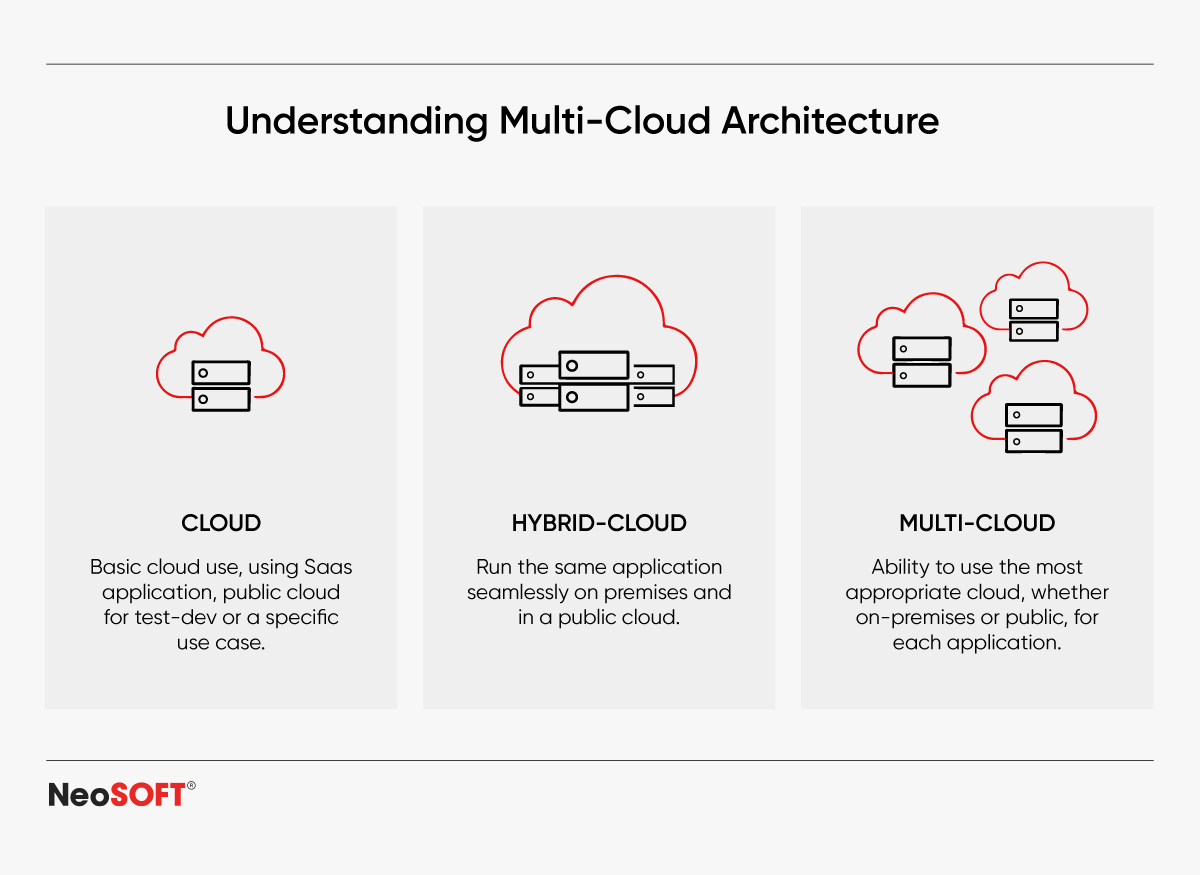
Apps and data are shared between public and private clouds in a hybrid cloud architecture. The strategy of storing sensitive workloads in private clouds and utilizing the scalability of public clouds for different purposes provides significant flexibility.
Multi-cloud, on the other hand, employs various public clouds from various different public cloud providers, such as AWS, Microsoft Azure, and Google Cloud, without necessarily integrating with private cloud services. This enables organizations to select the best products and services from a variety of providers, reducing single-vendor reliance while boosting performance and lowering costs and redundancy.
When contemplating adopting cloud systems, it is critical to understand the key differences between multi-cloud and hybrid cloud deployments in order to determine which configuration will be most effective for the needs of your project.
Key Components of Multi-Cloud Architecture
A strong multi-cloud architecture relies on several fundamental components:
Cloud platforms – These are the core infrastructure, services, and tools offered by public cloud providers such as Amazon Web Services, Google Cloud, and Microsoft Azure. They consist of computation, storage, and networking capabilities, which are the foundation of a multi-cloud solution.
Networking – It is important to ensure seamless connectivity between various cloud platforms. This involves integrating networks from several providers, ensuring that data transfers and communication across cloud services are efficient and safe.
Security and compliance – With data spread across several clouds, security is paramount. This includes deploying identity management, encryption, and compliance monitoring across every platform.
Management tools – To manage numerous clouds effectively, tools that provide visibility, automation, and resource control across multiple clouds are required. These solutions help with performance monitoring, cost management, and compliance across several cloud environments.
Key Considerations for Implementing Multi-Cloud Strategies
Evaluating Business Goals
Before beginning your multi-cloud journey, make sure the chosen approach is aligned with your organization’s overall business goals. Establishing your goals for adopting a multi-cloud solution, such as cost savings, increased flexibility, improved disaster recovery, or availability of specialist cloud-native services, is the first step. Choosing which cloud service providers and providers to use can be made easier if you are cognizant of these aims.
Additionally, it’s important to assess your performance goals and workload. Not every task is the same; some may require a large amount of processing power, while others may call for a large amount of storage or certain security measures. You can determine which cloud services are most appropriate for each need by evaluating your workloads. This will ensure that your multi-cloud setup operates at peak performance and efficiency, taking advantage of many cloud services with this customized approach.
Security and Compliance
Protecting data across several cloud environments demands robust safety processes. Apply encryption, access limits, and constant monitoring to protect data in transit as well as at rest. Make sure that all your cloud service providers follow your security standards and function effectively with your complete security strategy.
Compliance with rules and data sovereignty legislation is essential. Recognize the laws governing the data processing and storage in each jurisdiction that your cloud providers do business. Review and update your rules on data sovereignty on a regular basis to ensure that your cloud strategy is in line with industry regulations and handles any sensitive data and residency concerns.
Cost Optimization
To efficiently manage costs in a multi-cloud scenario, leverage the strengths and prices of each cloud provider. To save money, use cost-effective services for certain workloads and reserved instances, spot instances, or bulk discounts. Regularly assess your cloud usage to prevent waste and ensure that you only pay for what you need.
Use cloud cost management technologies to track and optimize expenditure across multiple cloud providers. Tools like AWS Cost Explorer, Azure Cost Management, and third-party solutions give you insight into expenses, allowing you to analyze consumption, build budgets, and receive alerts for possible overspending. These tools help in keeping costs on track with your financial objectives.
Interoperability and Integration
An effective multi-cloud strategy calls for seamless interaction between different cloud platforms. This includes creating consistent APIs, utilizing cloud-agnostic technologies, and making sure your apps and services interact effectively across many different environments. Prioritizing integration right from the outset will decrease complexity and improve operations.
Transferring information across multiple cloud providers helps but can be challenging in terms of bandwidth, latency, and security. To address these difficulties, efficient data migration technologies must be utilized, and specific rules for secure data transfers must be set. Also employ containerization and microservices to guarantee that your applications are cross-platform compatible.
Governance and Management
Effective management in a multi-cloud system requires centralized administration and monitoring solutions. These technologies deliver an integrated overview of resources, performance, and safety across cloud platforms. Centralizing management allows you to streamline operations, enforce regulations, and assure consistency across several cloud environments.
Establishing clear guidelines for governance is critical to maintain control of a multi-cloud strategy. Develop best practices for access control, regulatory compliance, and cost management. Regularly evaluate and update these guidelines to keep up with changing business needs and laws and regulations to ensure that your system stays secure, compliant, and efficient.
Disaster Recovery and Operational Continuity
Multi-cloud environments improve disaster recovery by dispersing workloads among various cloud providers. This method reduces the risk of downtime because problems in any one cloud provider can be handled by moving operations to another. Leveraging several clouds for recovery increases availability and resilience, safeguarding important business functions.
To maintain continuity, you must prepare for failover and redundancy throughout your multi-cloud infrastructure. Build automated failover systems capable of detecting and responding to disruptions swiftly. Establish multiple systems and data backups in various cloud settings to mitigate any disruptions and ensure smooth operations.
Vendor Management
To successfully navigate a multi-cloud solution, strong partnerships with cloud vendors are required. Continuous communication and collaboration are critical for ensuring that each provider fulfills your specific requirements. Building strategic partnerships allows you to stay up to date on advancements, negotiate better terms, and respond to challenges quickly.
Carefully review SLAs and contracts when collaborating with several cloud providers to be sure they meet the requirements of your business. Prioritize critical features such as uptime assurances, support levels, data ownership, and exit strategies. Defined SLAs help manage expectations and lower the possibility of misunderstandings, assuring dependable service from all providers.
Best Practices for a Successful Multi-Cloud Strategy
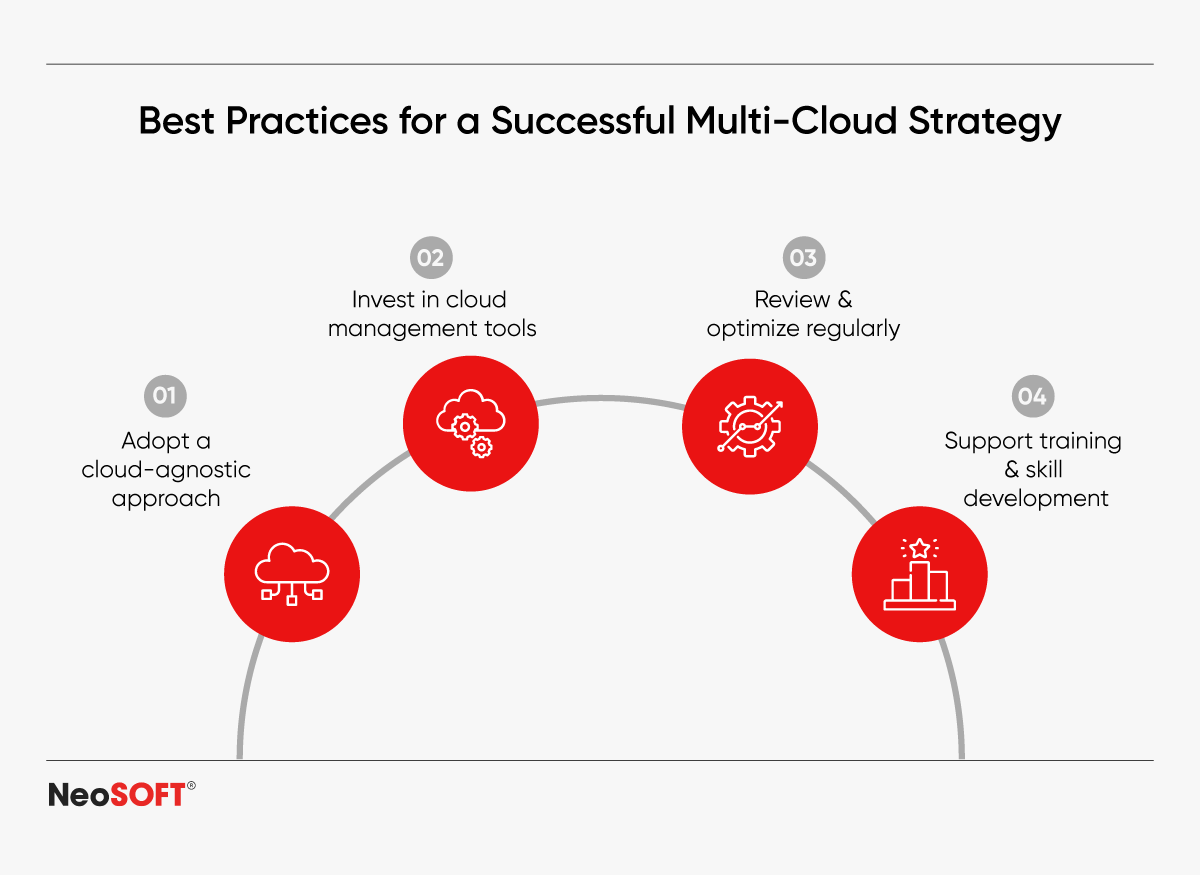
Adopt a cloud-agnostic approach
Configure your programs to be cloud-agnostic, which means they can run on any cloud provider. This eliminates reliance on just one platform, increases flexibility, and enables you to simply switch providers to balance workloads without major reconfiguration.
Invest in cloud management tools
Utilize management tools which provide complete monitoring, cost control, and cybersecurity across different cloud services. These enable you to maintain control, visibility, and compliance in a complicated multi-cloud environment while assuring efficient operations.
Review and optimize regularly
Regularly evaluate your cloud consumption to detect areas for improvement. Optimizing cloud deployments also ensures the best performance, affordability, and security. This proactive approach helps prevent inefficiencies and keeps your multi-cloud strategy at par with your evolving business needs.
Support training and skill development
Ensure that your team is well-equipped to function in a multi-cloud environment. Invest in training sessions and certification programs to keep your team up to date on the newest cloud technologies and best practices, allowing them to efficiently handle the intricacies of a multi-cloud approach.
Future Trends in Multi-Cloud Services
AI-powered automation is changing the game and helping businesses manage complex settings more effectively as multi-cloud approaches gain traction. By automating tasks like workload management and resource allocation, artificial intelligence lowers costs and boosts efficiency. This keeps a company’s multi-cloud architecture nimble and flexible while assisting it in setting priorities for critical tasks.
Edge computing is changing multi-cloud tactics by bringing data processing closer to the source, decreasing latency, and increasing real-time decision-making. As IoT and real-time analytics become more common, companies looking to improve performance in distributed systems will benefit from integrating edge computing with multi-cloud settings.
Modern multi-cloud management and orchestration technologies make it possible to deploy apps across various platforms, avoiding vendor lock-in and guaranteeing hassle-free integration for businesses. These trends, combined with advancements in security and compliance, are accelerating the multi-cloud evolution. Organizations that embrace these strategies will be in a better position to remain competitive and future-oriented.
Conclusion
Implementing multi-cloud strategies has various advantages, including increased flexibility, cost savings, and improved disaster recovery. Embracing best practices can help to boost your multi-cloud strategy. As technology progresses, staying updated on new innovations and trends will be vital to ensuring long-term success.
Our expert team of developers and engineers are here to guide you through the complexities of multi-cloud infrastructures and help you accomplish your business goals. Write to us at info@neosofttech.com to find out how we can help you.
Supply chains are complex networks of interconnected systems which make use of digital tools, technology, and procedures. Efficiently handling these complexities can be impeded by a number of issues, ranging from data storage and risk management to inventory control and transportation solutions.
Creative technical and business solutions are more crucial than ever as global supply networks become more integrated. Internet of Things technology is expected to cause a drastic transformation in the supply chain and logistics industry. By connecting sensors, devices, and entire systems, IoT technologies enable real-time data collection, increase communication, and automate numerous steps of supply chain management processes.
This technology, offering unprecedented levels of control and efficiency, is quickly gaining momentum and changing how businesses handle logistics operations, from delivery to procurement and everything in between.
This blog explores the ways in which IoT in supply chain management is transforming operations, offering insightful information to developers building IoT platforms, stakeholders interested in streamlining supply chain processes, and decision-makers seeking to maintain their edge in a changing market with emerging technologies.
IoT: What it is and How it Boosts Supply Chain Management
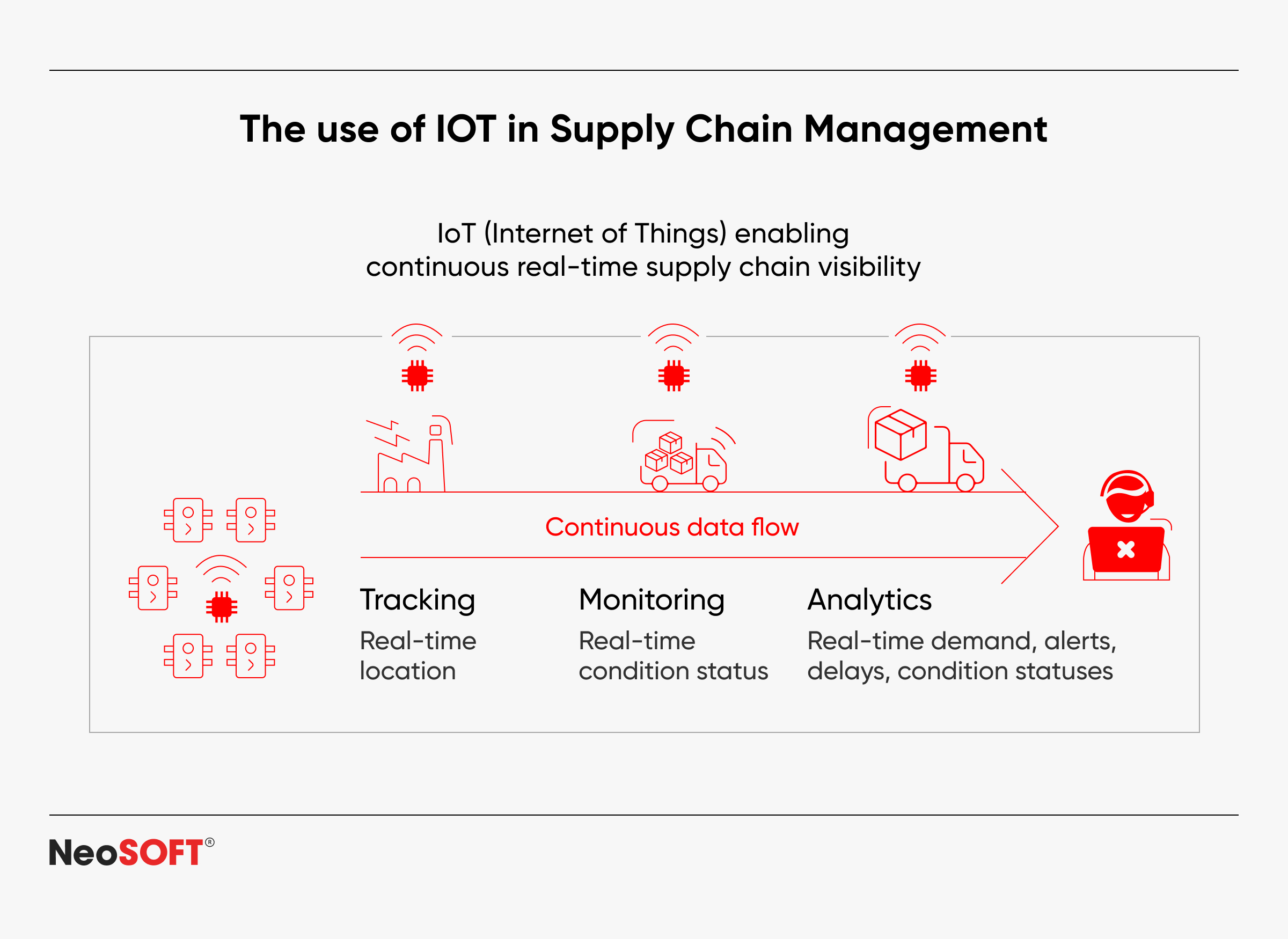
Internet of Things, usually referred to by the acronym IoT, is a network of sensors and devices that are connected to and communicate with one another in order to gather data and share information. Simple sensors that keep an eye on their environment to intricate systems that oversee entire operating procedures are all examples of IoT tools’ varying degrees of sophistication. The insights supplied by IoT devices enable real-time insights, operation optimization, predictive analytics, and intelligent decision-making.
IoT has a substantial and growing effect on supply chain management. Up from more than US$ 12.4 billion in 2023, the worldwide IoT supply chain industry is projected to grow to an astounding USD 41.8 billion by 2033. IoT technology is predicted to have a CAGR of 12.9% from 2023 to 2033, demonstrating how it is becoming more and more popular for supply chain operations optimization.
IoT provides real-time environmental data on a range of supply chain management characteristics. For instance, IoT sensors may track the whereabouts and conditions of items in transportation, keep an eye on the stock levels in warehouses, and even forecast when equipment and storage facilities will require maintenance. The business benefits of IoT software development can thus improve the entire supply chain.
The data collected automates repetitive procedures, boosts overall productivity, and facilitates better communication between logistics managers and various supply chain components. IoT technologies give logistics and supply chain organizations more resilience, visibility, and control, which has changed the way they operate.
Advantages of Incorporating IoT in Supply Chain Management
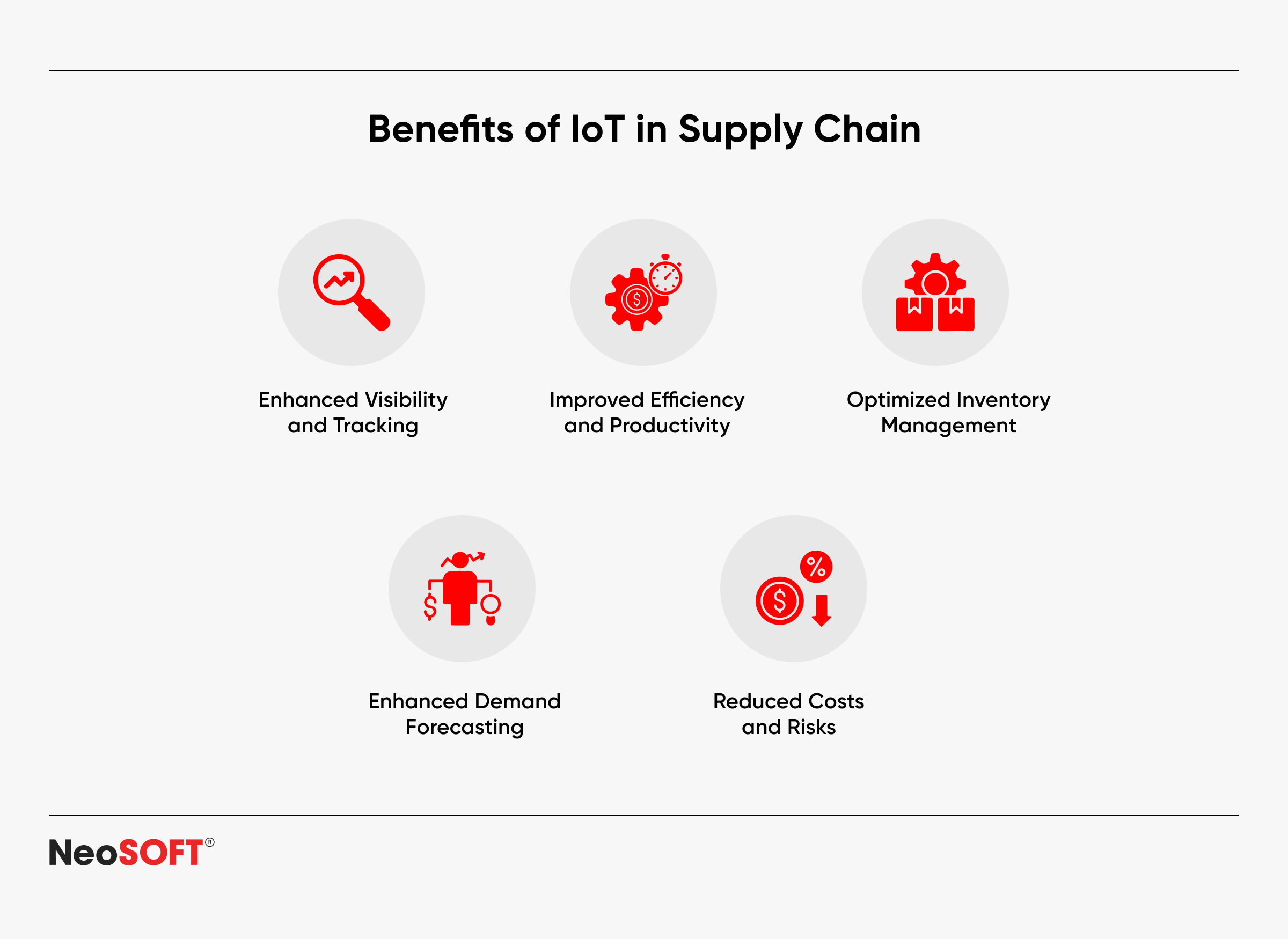
Enhanced Inventory Management
By offering real-time insights, IoT technologies improve inventory management efficiency and accuracy.
Real-Time Tracking: Live tracking of products and assets is made possible by IoT, which offers precise, current insights on inventory levels as well as locations. This feature guarantees that businesses have reliable control over their inventory, which helps to manage stock levels, decrease surplus inventory, and prevent stockouts.
Reduced Ambiguity: IoT supply chain management operations are less unpredictable, which provides clear and accurate data on stock and asset status. With the help of this information, errors and inconsistencies can be reduced, leading to better decision-making and more efficient stock management.
Increased Visibility
IoT gives businesses better visibility over the whole supply chain process, especially warehouse operations, enabling them to control and track every facet in real time.
Transparency: IoT makes supply chains more visible, which significantly boosts overall operational efficiency and gives stakeholders the ability to make wiser decisions. IoT lets organizations monitor each link in their supply chain by offering deep insights and real-time data.
Breaking Silos: IoT enables the integration of diverse components throughout the supply chain, breaking down old silos effectively. This integration promotes better communication and collaboration between divisions, resulting in a more cohesive and effective supply chain operation.
Enhanced Predictive Maintenance
IoT transforms maintenance practices by offering advanced notice of potential equipment issues via continuous monitoring and analysis. This technique allows organizations to address maintenance issues before they become problematic.
Preventing Breakdowns: IoT plays an important role in predictive maintenance because it uses sensors and data analytics to forecast equipment faults before they occur. This proactive method enables prompt maintenance interventions, considerably reducing the chance of unanticipated problems and minimizing operational delays.
Cost Savings: Employing IoT-driven predictive maintenance saves money by avoiding the high costs of unexpected downtime and emergency repairs. Businesses can maximize equipment longevity, save repair costs, and enhance overall performance by addressing issues with maintenance proactively.
Improved Efficiency
An IoT-based solution improves productivity by automating common tasks and business processes, leading to smoother business operations with reduced reliance on human involvement. Organizations can improve productivity by leveraging relevant data and automated technologies.
Automation: Routine actions and procedures in supply chain management are automated by IoT devices, doing away with the need for human input and involvement. Since automation speeds up procedures, decreases human error, and frees up developers for more strategic tasks, it increases operational efficiency.
Resource Optimization: IoT improves resource management by offering in-depth knowledge of operational requirements and usage trends. This data-driven strategy contributes to waste reduction, resource allocation optimization, and cost savings, resulting in a more economical and sustainable supply chain.
Better Risk Management
IoT has become extremely useful for supply chain management and logistics risk management and mitigation since it improves security protocols and allows for comprehensive analysis and early identification of possible problems.
Early Detection: IoT sensors continuously keep an eye on storage conditions across a variety of supply chain components, offering early alerts for any issues like equipment failures or changes in environmental conditions. Because of this early detection, companies can handle risks more proactively, preventing operational disruptions and addressing issues before they become more serious.
Enhanced Security: Real-time IoT enhances supply chain security and reduces fraud by providing live notifications and monitoring. IoT devices can detect suspicious activity and possible security concerns by monitoring assets and activities throughout the supply chain. This enables prompt response to security threats and safeguards against fraud and theft.
Improved Customer Experience
By improving visibility and guaranteeing high-quality products through sophisticated monitoring and communication, IoT in supply chain improves the entire customer experience.
Real-Time Updates: Supply chain and logistics companies can now offer customers real-time order updates thanks to IoT, increasing customer satisfaction and transparency. Customers receive fast access to tracking details and status updates, which makes them feel more informed and improves their overall delivery experience.
Quality Assurance: IoT keeps an eye on conditions at every step of the supply chain, which helps to preserve product quality. In IoT-driven warehouse automation, sensors monitor handling procedures and environmental conditions, enabling companies to see possible quality problems early. Thanks to this proactive approach, customers are guaranteed to obtain items that fulfill high-quality requirements.
The Challenges of Implementing IoT in Supply Chains
Integrating with Existing Systems
There may be significant challenges when introducing IoT applications to the supply chain infrastructure. For the integration and operations to be successful, these need to be resolved.
Making sure that emerging IoT technologies are compatible with existing infrastructure and legacy systems is one of the biggest challenges. Potential obstacles could arise from the use of antiquated protocols or technologies in existing systems, which make them difficult to integrate with contemporary IoT platforms.
Firms should consider implementing IoT solutions that support many communication protocols and have flexible integration options in order to get past compatibility difficulties. Using IoT platforms or middleware can be helpful in bridging the gap between outdated and contemporary systems. Investing in system upgrades and phased installations can also help to streamline integration and minimize interruptions to daily operations.
Data Security Threats
Owing to the private nature of the details, it is critical to preserve privacy and secure data while using IoT in supply chains.
A wide range of connected sensors and devices that gather and exchange vast amounts of data usually make up IoT systems. Due to their interdependence, they could be at risk of data breaches. Unauthorized access to confidential information, data manipulation, and the disclosure of private or vital company information are a few potential security threats.
Companies should put strong authentication procedures in place, encrypt data while it’s in transit and at rest, and update security patches often to guarantee privacy and security. Another way to prevent unwanted access to valuable data, is to use secure communication channels and network segmentation. To further improve data protection and privacy in IoT-enabled supply chains, frequent security assessments and employee training on best practices are recommended.
Scalability and Costs
A logistics company must carefully assess the difficulties and financial ramifications before attempting to implement IoT throughout extensive supply chains.
The diversity and complexity of all the systems involved make deploying IoT technologies across a vast supply chain difficult. Ensuring consistent performance, managing growing data volumes, and preserving interoperability across regions or facilities are all significant obstacles. Furthermore, as the scale of operations expands, so too do the demands on network infrastructure and information processing capabilities, putting existing resources – including budgets – under strain.
Implementing IoT can involve significant initial expenses to set up hardware and software and conduct personnel training. However, these upfront costs should be balanced against the long-term benefits of IoT, which include lower operational costs, higher efficiency, and better decision-making. Companies can successfully manage expenses while realizing the full value of their IoT investments by implementing in stages and prioritizing high-impact areas.
Future Trends for IoT in Supply Chain Management
5G
The introduction of 5G technology is expected to transform IoT in supply chains by greatly improving connection and information processing capabilities. 5G will enable real-time communication between IoT devices, boosting responsiveness and precision by reducing latency and increasing transmission speed. This will result in more dynamic and adaptable supply chains that can respond to changes in demand and supply swiftly.
AI/ML
The integration of artificial intelligence algorithms and machine learning models with IoT technology holds promise for creating intelligent and effective supply chain management solutions. The large amounts of data and information produced by IoT devices can be utilized by artificial intelligence and machine learning models to predict trends and optimize processes, which can then lead to computerized decision-making and more precise demand forecasting, all of which can decrease waste, cut costs, and improve overall supply chain efficiency.
Blockchain technology
Blockchain technology and IoT provide exciting new possibilities for supply chain management in security and traceability. Blockchain provides a decentralized, tamper-proof database for transactions, and it can ensure that every product movement is safely recorded and tracked. This can assist with preventing fraud and counterfeiting while also ensuring that items adhere to quality and regulatory standards.
Conclusion
The integration of IoT in supply chain management is more than just a technology trend; it is a transformative strategy that may provide organizations with a substantial competitive advantage. IoT has the power to revolutionize logistics and supply chain operations by improving visibility, efficiency, and decision-making.
Our expert software developers can provide tailored IoT solutions to match your specific requirements. Contact us today at info@neosofttech.com to set up a consultation and learn more about how we can help you transition to a more efficient and innovative supply chain and logistics management system.
We use cookies on our website to give you the most relevant experience by remembering your preferences and repeat visits. By clicking “Accept All”, you consent to the use of ALL the cookies. However, you may visit "Cookie Settings" to provide a controlled consent.
This website uses cookies to improve your experience while you navigate through the website. Out of these, the cookies that are categorized as necessary are stored on your browser as they are essential for the working of basic functionalities of the website. We also use third-party cookies that help us analyze and understand how you use this website. These cookies will be stored in your browser only with your consent. You also have the option to opt-out of these cookies. But opting out of some of these cookies may affect your browsing experience.
Necessary cookies are absolutely essential for the website to function properly. These cookies ensure basic functionalities and security features of the website, anonymously.
Cookie
Duration
Description
cookielawinfo-checkbox-analytics
11 months
This cookie is set by GDPR Cookie Consent plugin. The cookie is used to store the user consent for the cookies in the category "Analytics".
cookielawinfo-checkbox-functional
11 months
The cookie is set by GDPR cookie consent to record the user consent for the cookies in the category "Functional".
cookielawinfo-checkbox-necessary
11 months
This cookie is set by GDPR Cookie Consent plugin. The cookies is used to store the user consent for the cookies in the category "Necessary".
cookielawinfo-checkbox-others
11 months
This cookie is set by GDPR Cookie Consent plugin. The cookie is used to store the user consent for the cookies in the category "Other.
cookielawinfo-checkbox-performance
11 months
This cookie is set by GDPR Cookie Consent plugin. The cookie is used to store the user consent for the cookies in the category "Performance".
viewed_cookie_policy
11 months
The cookie is set by the GDPR Cookie Consent plugin and is used to store whether or not user has consented to the use of cookies. It does not store any personal data.
Functional cookies help to perform certain functionalities like sharing the content of the website on social media platforms, collect feedbacks, and other third-party features.
Performance cookies are used to understand and analyze the key performance indexes of the website which helps in delivering a better user experience for the visitors.
Analytical cookies are used to understand how visitors interact with the website. These cookies help provide information on metrics the number of visitors, bounce rate, traffic source, etc.
Advertisement cookies are used to provide visitors with relevant ads and marketing campaigns. These cookies track visitors across websites and collect information to provide customized ads.