The auto insurance industry is witnessing a paradigm shift after integration with connected vehicles and IoT technologies. These developments have made Usage-Based Insurance (UBI) possible, in which the premium determining factors are real-time driving behavior, as opposed to fixed variables like age and geography. In addition to improving pricing, IoT sensors benefit policyholders and insurers by improving fraud detection, claims processing, and road safety.
Standard insurance models often end up in generalized rates since they utilize broad risk estimations. On the contrary, insurers may monitor vehicle performance, fuel efficiency, and sensor data in real time with IoT-powered telematics, resulting in more precise risk assessment and customized insurance.
In this blog, we’ll look at how IoT-enabled telematics and linked car ecosystems are changing the auto insurance market. We will also explore the technologies causing these changes, their advantages for insurers and policyholders, and the associated ethical, legal, and regulatory issues. Regardless of whether you’re an insurer, a tech worker, or a policyholder eager to learn how IoT impacts your rates and protection, this blog will provide insightful information about the future of smarter, more equitable, and more connected auto insurance.
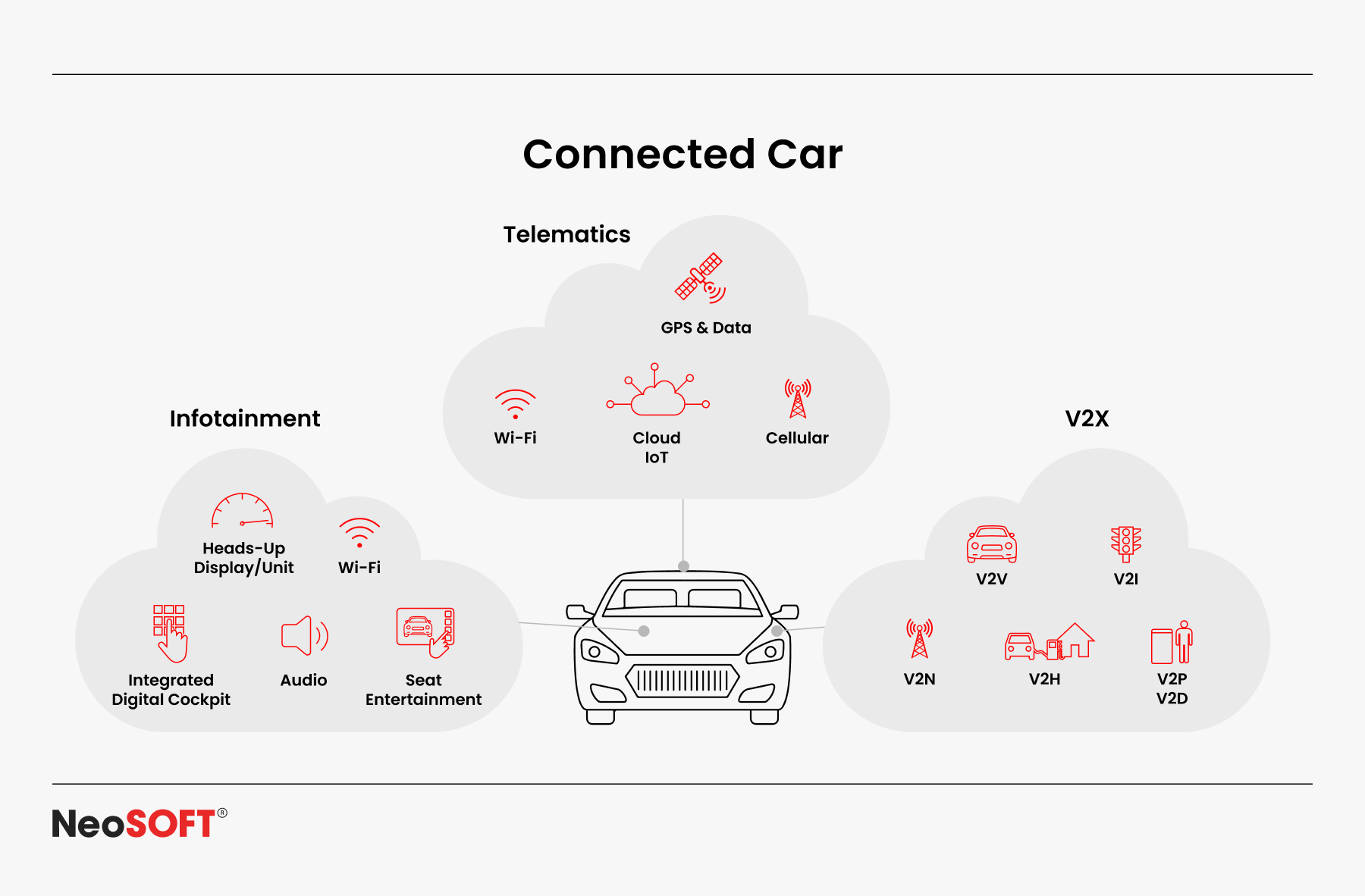
Thanks to IoT-enabled technologies, connected vehicles can use Vehicle-to-Everything (V2X) communication protocols to interact with their environment. This comprises internet of things platforms, communication protocols for engaging with pedestrians (V2P), cloud computing systems (V2C), and other vehicles (V2V).
IoT-Enabled Features in Modern Cars
GPS Tracking & Navigation – Offers real-time location information, aiding navigation and fleet management while reducing energy consumption.
Black Box Telematics – Monitors driving trends that insurers use in calculating Usage-Based Insurance (UBI) premiums.
AI-Powered Dashboards – Utilizes machine learning to detect patterns in driving trends, device data, and maintenance demands.
The Role of IoT in Auto Insurance
IoT-Enabled Data Collection & Telematics: In an effort to gauge risk and enhance policy offerings, insurers use real-time device data obtained from IoT sensors and telematics.
Usage-Based Insurance (UBI): Insurance companies can base rates on a driver’s driving habits thanks to IoT-driven PAYD and PHYD models.
Personalized Premiums: Data generated by AI dynamically updates insurance pricing, guaranteeing that safer drivers pay less.
Enhanced Risk Assessment: IoT applications produce accurate risk profiles through big data analytics and AI-driven predictive models.
Automated Accident Detection: IoT-enabled sensors can detect vehicle performance issues and notify insurers for smart claims processing.
Remote Vehicle Diagnostics: IoT-based remote monitoring improves predictive maintenance, reducing human intervention in vehicle upkeep.
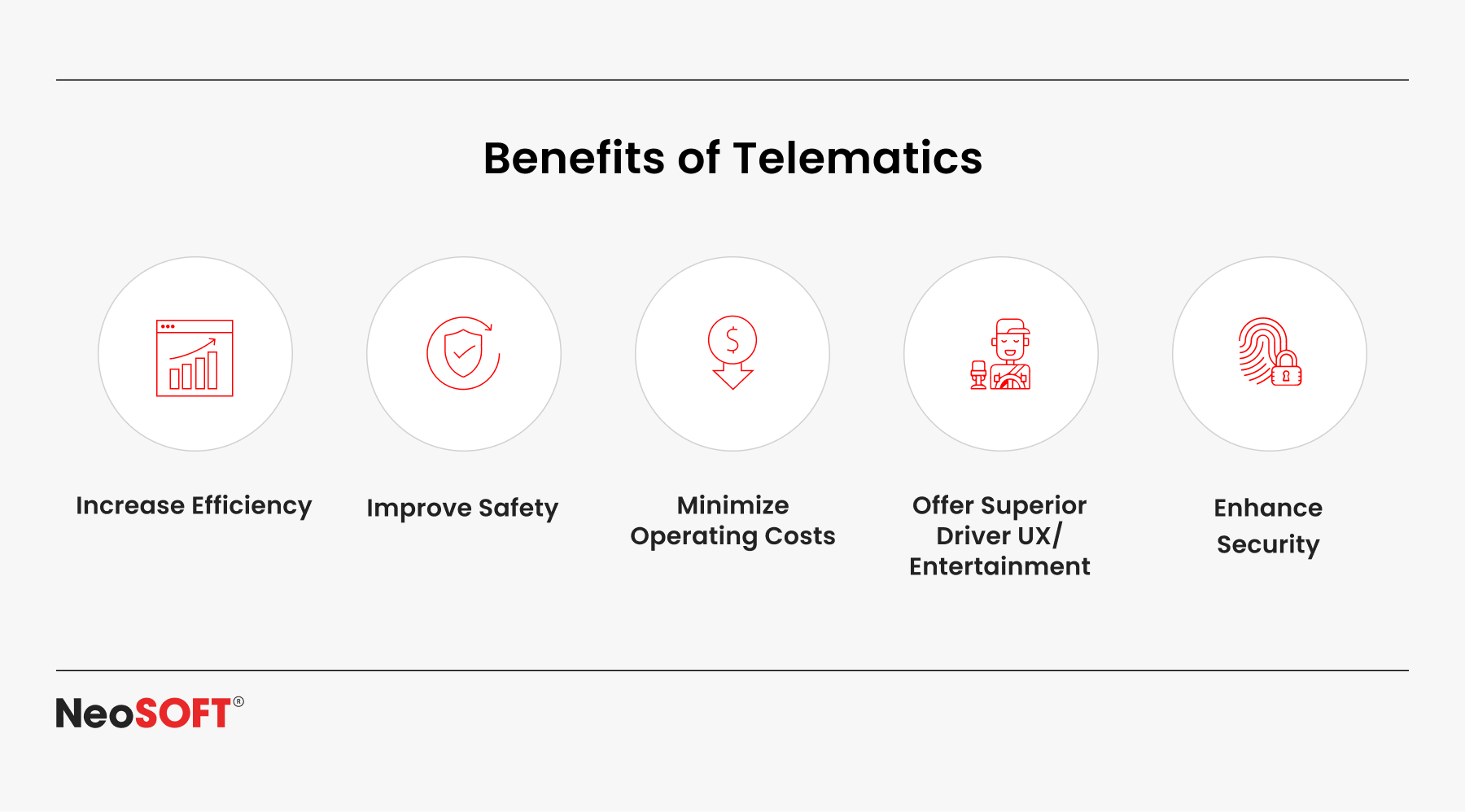
The primary benefits of IoT-driven auto insurance include:
Fair & Personalized Pricing
Standard healthcare models, which determine costs on key hazards like gender, residence, and vehicle type, can sometimes lead to inaccurate or generic pricing. Insurance companies may track information from sensors, vehicle performance, fuel efficiency, and driving habits in real time with IoT-powered telematics offering dynamic and reduced pricing. Sensor data is gathered using IoT applications and connected devices to make sure consumers pay insurance based on real hazards rather than presumptions.
Fraud Detection & Prevention
Auto insurance fraud is a significant concern, since it has caused insurers to forfeit billions. IoT security systems enhance fraud prevention by ensuring the authenticity of collected data. IoT-enabled fraud detection uses artificial intelligence and machine learning to detect patterns in accident reports, sensor data, and device data to identify suspicious claims. With IoT networks supporting secure data exchange, fraudulent claims can be flagged before payouts, reducing financial losses and ensuring fair settlements.
Faster Claims Processing
Lengthy evaluations and human verifications are common reasons why claim payouts in conventional insurance models are frequently delayed. Using automated IoT solutions such as powered by blockchain network protocols, which guarantee safe and effective data transmission between insurance companies, claim adjusters, and policyholders, IoT-connected platforms expedite the claims processing process.
Instant communication of accident details via IoT devices reduces human intervention and speeds up claim approvals. Long-term investigations are no longer necessary because insurers may obtain real-time accident data from IoT sensors and smart devices.
Encouraging Safer Driving Habits
Insurers provide real-time driver feedback through wearable technology, smart objects, and Internet of Things-enabled telematics with the purpose of reducing hazardous driving behavior like speeding, assertive braking, and distracted driving. Certain IoT solutions combine with graphical user interfaces (GUIs) to give drivers information about their driving enabling them to make safer judgments while driving.
Predictive Maintenance & Safety Alerts
IoT sensors and industrial IoT devices analyze mechanical parts such as automobile tires, brakes, and engines to detect early indicators of wear and tear. Proactive maintenance systems reduce the probability of malfunctions by generating safety signals before concerns escalate. Using IoT data, insurers may also recommend the best energy management strategies to boost fuel economy and keep linked cars in top shape.
The integration of IoT technologies into insurance benefits both insurers and policyholders by creating a more transparent, secure, and efficient system. As IoT deployments grow, auto insurers must embrace internet of things innovations to remain competitive in a connected vehicle ecosystem.
The Role of Edge Computing in IoT-Based Auto Insurance
Vast amounts of instantaneous data is developed by IoT devices, making conventional cloud computing susceptible to security threats and latency issues. Instead of depending entirely on remote cloud servers, edge computing handles these issues by analyzing information closer to the source, such as within cars or adjacent nodes in the network.
Edge computing permits insurers to conduct risk assessment, fraud detection, and premium adjustments in real-time without being delayed by network outages Furthermore, by improving data security and privacy edge based IoT applications lower the possibility of cyberattack on centralized insurance networks. By utilizing AI-powered edge analytics, insurers may provide more personalized and faster claims processing making the industry more efficient and customer-focused.
The Ethical & Legal Implications of IoT in Auto Insurance
Considerations of ownership, confidentiality of information, and regulatory compliance are brought up by the use of IoT in auto insurance. Insurers companies’ real-time data gathering on driving patterns, car location, and even biometric information may give rise to concerns about authorization, monitoring, and inherent biases caused by algorithms in pricing. Consumers worry about unfair premium hikes, lack of control over personal information, and misuse of data.
Insurers must place stringent data protection strategies, ensure transparency in data usage, and adhere to compliance regulations like the GDPR, and CCPA to mitigate these concerns. Encrypted data storage and transparent opt-in methods will be crucial in maintaining consumer confidence while striking a balance between innovation and moral obligation.
Impact on Insurance Companies
The transition from conventional insurance policies to based on data IoT deployments is changing the business models of insurers as a result of the widespread utilization of IoT solutions. IoT security measures increase profitability by lowering the number of false claims.
Further, IoT connectivity improves customer happiness and reduces administrative expenses by simplifying smart claims processing. By implementing cutting-edge solutions like pay-per-mile insurance and connecting with power management systems to maximize vehicle economy, insurers using IoT platforms obtain a competitive advantage.
Consumer Perspective
IoT-powered smart insurance provides advantages to customers like remote monitoring, customized pricing, and quicker claims resolution. Insurance becomes more equitable when IoT standards allow policyholders to optimize energy usage. Consumer worries about privacy and ongoing data interchange, however, are still very real.
Some insurers offer opt-out options for IoT tracking, but these often result in higher premiums. To encourage adoption, insurers must ensure transparent IoT device data policies and use GUIs that help users understand their insurance benefits easily.
IoT-Driven Pay-Per-Mile Insurance: A Game Changer?
Even in cases where the vehicle is not used frequently, conventional auto insurers have set premiums. IoT-enabled pay-per-mile insurance (PPMI), has altered this narrative by basing rates on actual mileage and driving patterns.
Urging safer behavior, PPMI reduces accident claims, and helps low-mileage drivers save money. However the pricing may differ and the continuous surveillance may arouse a sense of unease. Despite these drawbacks, IoT-powered PPMI is reshaping insurance by making it more flexible and usage-based for contemporary drivers.
Challenges & Solutions
IoT-driven auto insurance has many benefits but in order to be widely adopted to succeed in the longer run, insurers have to address a number of obstacles like:
1. Privacy & Data Security
Real-time driving data collection may raise significant concerns pertaining to user privacy and data ownership, including:
Policyholders may become aware of insurers tracking their whereabouts and driving behavior, undermining their faith.
Sensitive intimate and vehicle information may be exposed due to the possibility of security breaches or illegal access.
Legal disagreements over control and usage of acquired data may result from unclear data ownership policies.
Solution: Building consumer trust demands insurers to conform to regulatory norms, build robust encryption systems, and assure transparent data usage rules.
2. Customer Acceptance:
Despite the advantages of IoT-based insurance, consumer skepticism remains a barrier:
Some drivers fear that minor infractions could lead to sudden premium increases.
Policyholders may be deterred from establishing telematics-driven policies due to worries about ongoing monitoring.
Reduced acceptance rate due to non-tech savvy consumers, especially the older demographics.
Solution: Insurance companies ought to focus on informing customers about advantages of IoT & improvement of equity and safety. Also, early adopters should be rewarded with incentives to curb these issues.
3. Legal & Regulatory Concerns:
Legal complexities caused due to different regions having varying regulations on telematics and data sharing practices:
Securing a balance between technological innovation & consumer protection requires continuous regulatory evolution.
Adherence to laws such as GDPR (Europe), CCPA (California), and other data securing regulations to ensure ethical data collection.
Following strict privacy regulations when data is shared between automakers, insurers, and third-party service providers.
Solution: Collaboration between automakers, insurers, and policymakers is essential to establish transparent standardized regulations that boost innovation while safekeeping consumer rights.
4. Technology Barriers:
High Implementation Costs: Costing a fortune to deploy IoT infrastructure, such as data analytics, telematic devices, and AI-driven risk assessment systems.
Integration Challenges: Integrating existing insurance systems with IoT solutions can be tedious and resource-intensive.
Limited Accessibility: Little to no access of IoT-based policies to vehicle owners with
older models lacking built-in connectivity.
Solution: Insurers can decrease costs and improve scalability by collaborating with smart city initiatives, automakers, and tech companies to create shared data ecosystems improving affordability.
The Future of IoT in Auto Insurance
The future of IoT-driven auto insurance is centered on connectivity technologies, AI, and blockchain for fraud-resistant IoT applications.
AI & Machine Learning for Smarter Risk Assessments: IoT-driven artificial intelligence will refine sensor data analysis to improve pricing accuracy.
Blockchain for Secure Data Management: IoT ecosystems will use IoT security protocols for tamper-proof records of accident history and claims.
Autonomous Vehicles & Smart City Integration: IoT-connected vehicles will interact with smart cities through communication protocols for seamless insurance adjustments.
6G Connectivity & Edge Computing: The emergence of 6G networks will enable instantaneous data transmission from IoT devices, improving real-time risk assessment and policy adjustments.
Quantum Computing in Insurance: Future quantum algorithms could enhance fraud detection by analyzing vast amounts of insurance data faster than classical systems.
Ethical AI & Fair AI Practices: Insurers need to eliminate algorithmic biases as AI-driven screening becomes increasingly prevalent in order to avoid unfair premium hikes based on demographics.
Conclusion
IoT-powered telematics and correlated car ecosystems are driving a significant revolution in the auto insurance sector. In addition to offering policyholders individualized pricing, increased transparency, and enhanced road safety, these technologies are changing how insurers evaluate risk, identify fraud, and handle claims.
These developments also bring with them important problems, such as worries about data privacy, unclear regulations, and the moral application of AI to insurance decision-making. To ensure a sustainable, safe, and customer-friendly insurance model, these problems must be resolved.
As IoT continues to transform the industry landscape, companies must proactively embrace innovation, compliance with regulations, and responsible data governance. In order to make well-informed judgments, consumers should educate themselves on how IoT-driven rules affect their personal data, driving behavior, and premiums.
Those that can effectively strike the equilibrium between data security, technical developments, and ethical considerations will influence the foreseeable future of vehicle insurance. Now is the moment to act, whether you’re a customer navigating a changing environment or an insurer adjusting to new business models. Will you welcome the transition to an insurance environment that is more intelligent, equitable, and interconnected?
Access the future of more intelligent, secure, and individualized auto insurance with the aid of our IoT and AI-powered insurance products. Contact us at info@neosofttech.com to learn how our intelligent data systems and connected car platforms may reinvent your insurance packages and build consumer confidence.
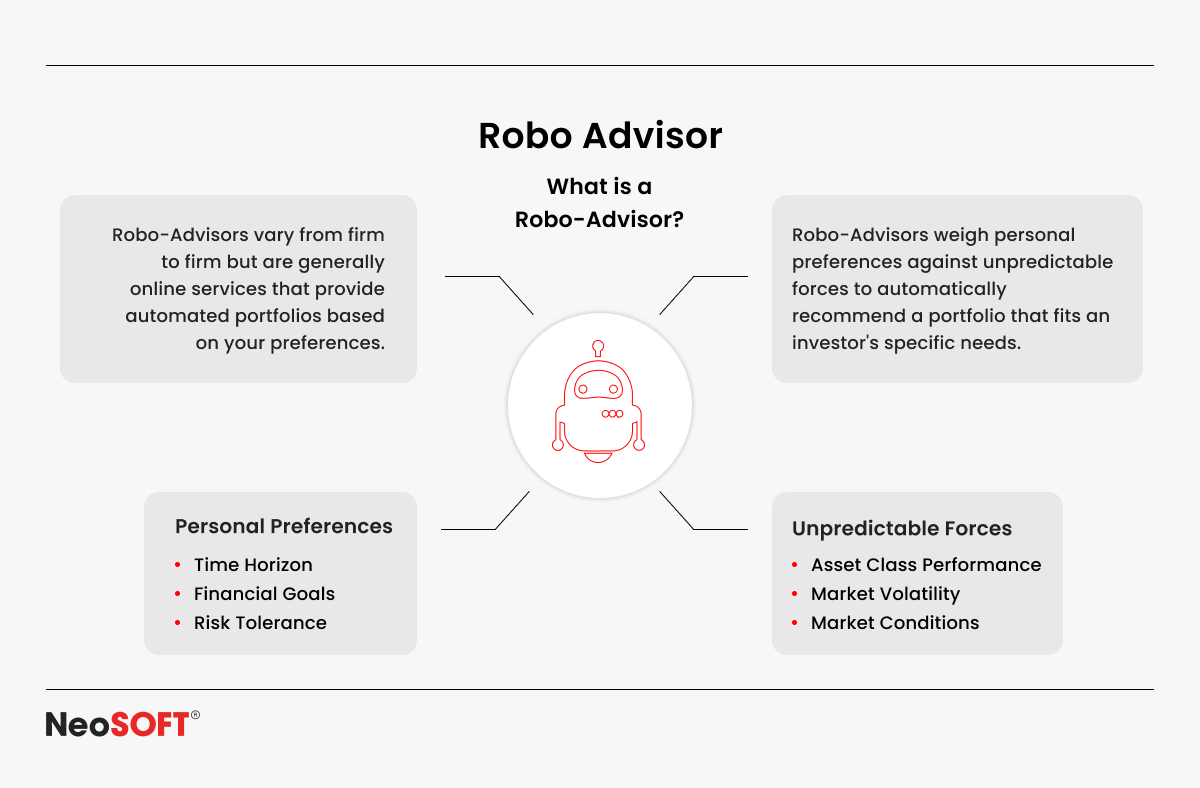
Over $1 trillion assets are being handled globally by robo-advisor firms, demonstrating the rapidly increasing significance of AI in wealth management. With no human interaction, these automated systems offer algorithm-driven financial services by creating and managing investment portfolios that match personal risk tolerance and financial objectives, such as mutual funds, index funds, and exchange-traded funds (ETFs).
The foundation of wealth management for many years has been human financial advisors, who deliver individualized investment plans based on client relationships and market knowledge. While this traditional strategy has been successful in many instances, it has frequently suffered from expensive management fees, restricted accessibility, and the inevitable impact of subjective biases, which can result in emotionally motivated and less-than-ideal investment choices.
On the other hand, robo-advisors driven by AI are rapidly transforming the investing environment. These tools empower investors in avoiding rash transactions and illogical financial decisions by doing away with emotional decision-making and depending only on data-driven insights. By providing intelligent, automated investing methods with fewer capital requirements, they have also liberalized access to financial advice, enabling younger and novice investors to more easily access wealth management services.
As financial markets are becoming more complex, AI-powered investing solutions are growing in number offering a scalable, reasonably priced, and effective substitute.
This blog will examine the ways that wealth management is changing because of AI and emotionless investing. Predictive analytics and machine learning’s role in portfolio management, the advantages and drawbacks of AI-powered investing tools, and the future of financial advising services in a digital-first economy will all be covered. This blog will provide details about the developing field of AI-driven wealth management, regardless of your background as a retail investor, financial advisor, or fintech enthusiast.
Types of Robo-Advisors
Fully Automated Robo-Advisors
These solutions powered by AI manage all facets of investment management without the need for human oversight, from rebalancing to portfolio construction. They assess risk tolerance, allocate assets, and optimize investments based on market trends.
Hybrid Robo-Advisors
AI-driven portfolios with professional consultation for individualized recommendations are offered by hybrid robo-advisors, which combine AI and human knowledge. Investors that respect human insights but also desire automation may find this model appealing.
For instance, the Vanguard Digital Advisor combines expert financial advice with quantitative accuracy to provide a comprehensive approach to financial planning. As consumers seek actively managed funds, hybrid robo-advisors offer a blend of human insights and AI-driven asset management to optimize mutual fund selection.
Niche Robo-Advisors
These specific platforms focus on certain financial subjects, such as cryptocurrency portfolios, alternative asset classes, or ESG investing, which is perfect for investors with specific investment goals or ethical standards.
Technologies Behind Robo-Advisors
Robo-advisors apply modern technology to automate trading strategies, optimize portfolios, and carry out transactions quickly.
Artificial Intelligence & Machine Learning
AI and ML can spot trends and make wise investment strategies, through processing enormous amounts of financial data, these models continuously enhance asset allocation and risk assessment. A 40% improvement in software development productivity has been recorded by banks using AI for decision-making, stated McKinsey, demonstrating the enormous scope of AI to automate financial operations and improve wealth management.
Stock market trend analysis, portfolio augmentation, and risk profiling are all made easier by big data. Robo-advisors gather financial records, stock fund data, and macroeconomic factors to provide personalized value investing advice.
Furthermore, by integrating predictive analytics, robo-advisors are able to precisely forecast shifts in markets and decrease risks. Accenture estimates that the initial users of generative AI might experience a 600 basis point boost in revenue growth and productivity gains of 22% to 30%. It is used by platforms like Vanguard Digital Advisor, to tailor index funds and ETF according to each user’s financial objectives and risk tolerance.
Algorithmic Trading
Algorithmic trading allows robo-advisors to swiftly complete trades using pre-programmed tactics for cost-effectiveness, accuracy, and promptness. Automated portfolio rebalancing lowers transaction costs and optimizes earnings by maintaining the optimal asset mix and adjusting holdings in response to changing market circumstances.
Key Advantages Over Traditional Capital Management
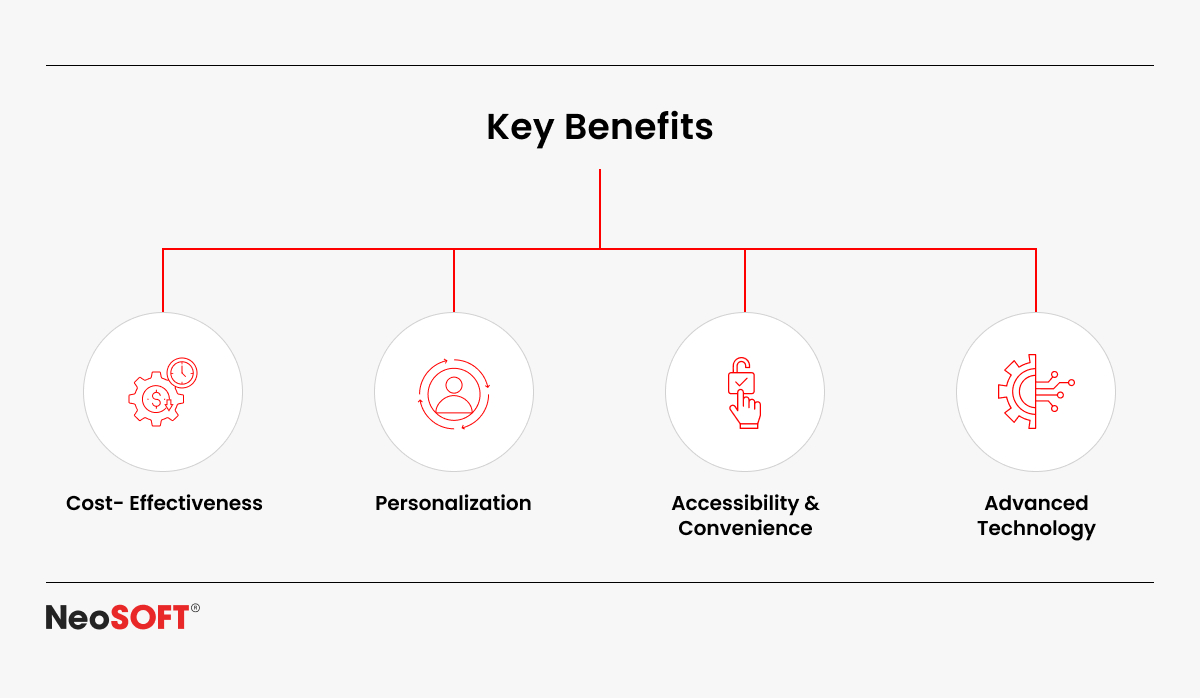
Robo-advisors have revolutionized the world of finance management by providing a data-driven, accessible, and reasonably-priced method of value investing. These AI-driven platforms, in contrast to traditional financial advisors, maximize asset management while removing human bias through automation and sophisticated algorithms.
Transparency
Robo-advisors offer more transparency by displaying investment plans, fees, and performance in a way that is straightforward. Unlike traditional advisors, whose procedures may be less transparent, investors maintain control and knowledge through user-friendly dashboards and data-driven decisions.
Cost Efficiency
Cost effectiveness is one of the primary advantages of AI investment advisors. Conventional investment advisors often demand substantial advisory fees, frequently as a percentage of assets of management (AUM). However, due to automation, robo-advisors incur less costs, making asset management accessible to a large audience.
Accessibility
AI investment advisers democratize investing by enabling even the most modestly capitalized investors to access complex financial strategies. Even people with no prior financial expertise can confidently begin investing thanks to user-friendly interfaces and automatic assistance.
Personalization
Robo-advisors may alter investing strategies to suit a person’s risk tolerance, economic objectives, and market conditions with the use of AI-driven insights. The versatility of AI-driven solutions for wealth management is illustrated by Accenture, who states that 73% of jobs completed by U.S. bank staff possess the capacity for AI-driven transformation, with 39% being appropriate for automation and 34% for augmentation.
Speed & Efficiency
Robo-advisors use AI and algorithmic trading to carry out real-time portfolio modifications, guaranteeing optimum asset allocation and risk reduction, in contrast to traditional advisors who need personal assistance and time-consuming consultations. The potential of robo-advisors to respond promptly to market changes makes them an effective substitute to standard capital management, improving the efficiency of transactions.
How to Start Investing with Robo-Advisors
Step 1: Define Your Financial Objectives
Prior to choosing a robo-advisor, ensure that your objectives are defined. Typical goals consist of:
Wealth Growth: Robo-advisors empowered by AI find emerging companies and stocks with significant development potential.
Retirement Planning: Tax-efficient techniques for managing retirement funds, such as Roth IRAs, IRAs, and 401(k)s are maximized by robo-advisors.
Generating Passive Income: AI preserves portfolio balance while dividend stocks, bonds, and REITs offer predictable revenue.
Preserving Capital & Managing Risk: Diversified portfolio, bond, and alternative asset allocations are beneficial for low-risk investors.
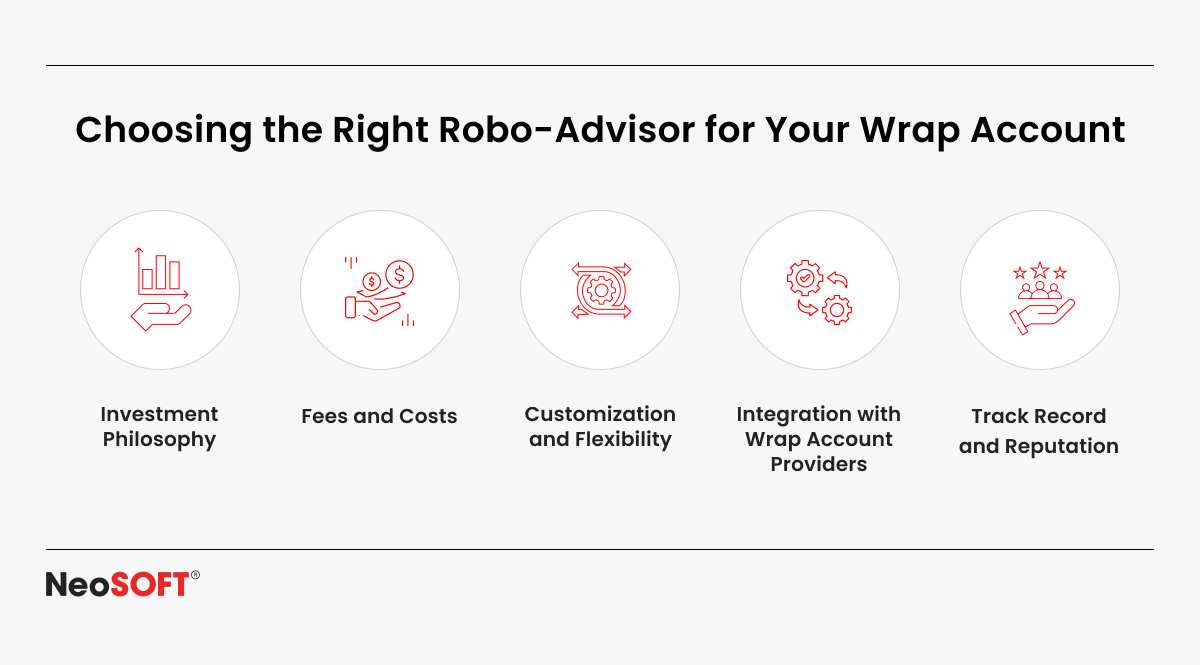
Step 2: Choose a Robo-Advisory
Select one based on your needs:
Vanguard Digital Advisor – Low-cost index fund investing, ideal for retirement planning.
Betterment – Best for ESG investing, tax efficiency, and passive asset management.
Wealthfront – Ideal for tech-savvy investors looking for automated harvesting of tax losses.
M1 Finance – The best option for self dependent investors seeking AI automation for portfolio management.
Schwab Intelligent Portfolios – Great for retirees needing no advisory fees and automatic rebalancing.
Step 3: Fund Your Account & Use Dollar-Cost Averaging (DCA)
Start with investing a fixed amount at regular intervals (DCA) to:
Reduce the impact of market fluctuations
Avoid emotional investing
Build wealth consistently
Example: Investing $500/month instead of $6,000 at once helps buy more shares when prices are low and fewer when high.
Step 4: Monitor & Adjust
While robo-advisors automate rebalancing, periodic reviews ensure alignment with your financial goals.
Review annually to adjust risk levels as needed.
Adapt to life changes like marriage, home purchase, or retirement.
Consider a hybrid advisor if you want AI automation with human financial guidance.
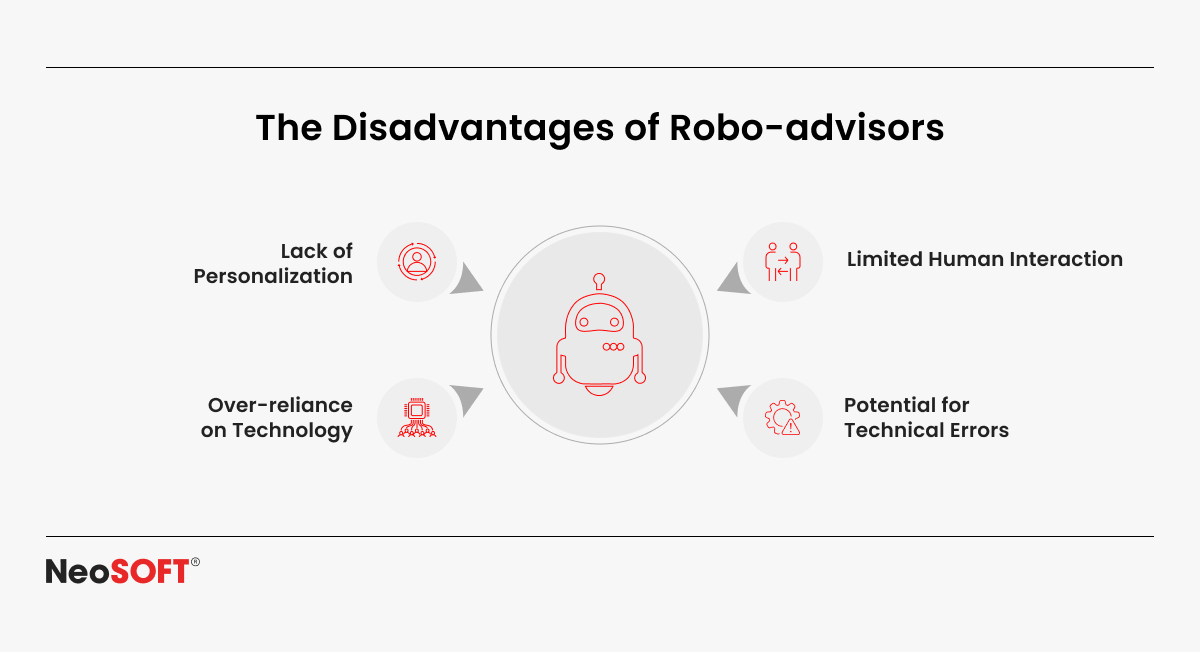
Challenges and Limitations
Whilst robo-advisors have numerous benefits, investors must take into consideration the limits of these automated investment platforms, ranging from a lack of human experience to regulatory issues.
Lack of Human Expertise
The human touch and complex decision-making that qualified investment advisors offer are absent from robo-advisors, despite their efficacy.
When creating investing strategies, conventional advisors take into account personal factors such as life transitions, personal objectives, and behavioral biases.
However, because robo-advisors just use algorithms and historical data, they might not always bring complex financial conditions or emotional decision-making into account. Human advisors remain to be invaluable for investors with complex financial needs, such as pensions, tax efficiency, or estate planning.
Market Volatility Risks
The use of preset algorithms and previous data by robo-advisors could hinder their ability to adjust to novel market circumstances. Leading banks have seen increased returns on equity and overall shareholder returns as a result of implementing AI, reports McKinsey, but the company cautions that enterprise-wide change is required for long-term gains.
Moreover, robo-advisors respond exclusively to data trends, which may lead to inadequate investment strategies during market turbulence, in lieu of human advisors who offer judgment and foresight.
Over-Reliance on Algorithms
The efficiency of robo-advisors is determined by the complexity of the algorithms they use. Incorrect, biased, or obsolete algorithms can lead to adverse investment strategies and monetary losses.
In addition, automated systems can sometimes be able to anticipate sudden shifts in investor behavior, regulations, or macroeconomic situations. Even though AI models constantly acquire knowledge from data, they are not immune to biases or mistakes that can come from prior patterns.
Regulatory and Security Concerns
Robo-advisors have to conform to strict rules since they handle sensitive financial data. Regulations are still being modified by governments and financial organizations to guarantee adherence, openness, and moral AI implementation in capital management.
Furthermore, since robo-advisors rely upon digital platforms, they are vulnerable to hacking attempts, thus facing a threat towards cybersecurity. Strong data protection policies are required for maintaining investor confidence and preserving funds from malicious activity.
Limited Customization for Unique Financial Goals
Robo-advisors are adept at general financial strategies, nevertheless they might not be able to accommodate specialized investing preferences that include highly customized wealth-building initiatives or alternative assets. Traditional advisors may be more beneficial for people with particular financial needs.
Even If robo-advisors are efficient and readily available, their disadvantages show how important it is to strike an equilibrium between automation and financial knowledge. Resolving these issues will be crucial for the ongoing success of AI technology as it progresses.
Future of AI-Driven Asset Management
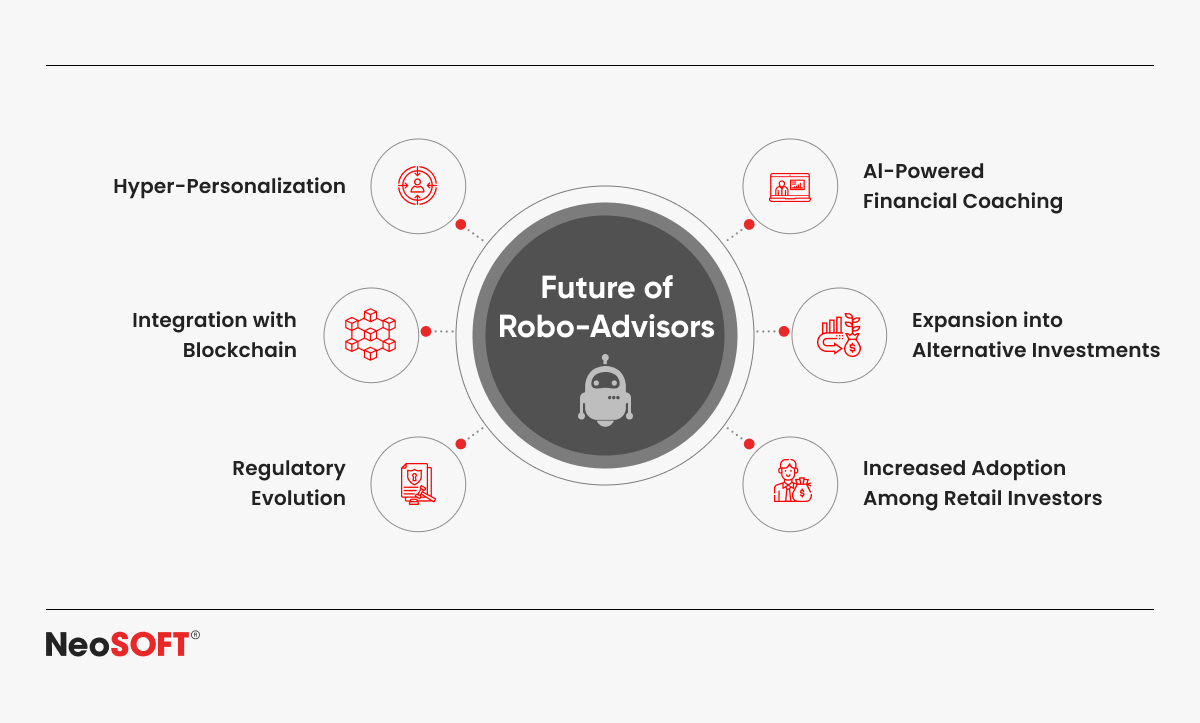
The global landscape of financial allocation is altering as robo-advisors continue to develop in tandem with technological advancements. In order to increase their sophistication and dependability, robo-advisors are incorporating human knowledge, cutting-edge AI abilities, and regulatory frameworks.
Hybrid Models: The Best of Both Worlds
A combination of robo-advisors and human advisors to finance management is probably in store for the future, with algorithms powered by AI managing data-driven allocation optimization and human specialists offering tailored financial advice for intricate investment choices.
This method assures that the investors gain from automated efficiency while maintaining accessibility to professional insights, particularly related to high-net-worth investment strategies, retirement planning, and estate management. In order to handle both index funds and active funds and provide tailored investing solutions, future hybrid models may combine AI-driven procedures with professional insights.
Advancements in AI Algorithms: Smarter and More Adaptive Investing
Robo-advisors might enhance market predictions, optimize risk management, and hone investment strategies thanks to the ongoing advancements in AI and machine learning algorithms. More flexible artificially intelligent machines that can assess market circumstances in real time, recognize new trends, and respond quickly to shifts in the economy will result from future developments. Based on a report by Accenture, banks that adopt an organized AI transformation approach may experience a surge in return on equity of up to 300 basis points over the following three years.
With these enhancements, robo-advisors will be able to manage financial risks and offer more accurate suggestions for investments, which will lower the possibility of losses during times of market volatility. Furthermore, robo-advisors will be able to assess investor behavior using AI-driven sentiment research, guaranteeing a more individualized and calculated technique for asset management.
Regulatory Evolution: Strengthening Ethical AI Use
Stricter frameworks will be put in place by the banking industry and authorities to ensure the ethical and responsible use of AI in capital management as it becomes increasingly common. These rules will make sure that robo-advisors follow just and moral principles by emphasizing obligation, transparency, and investor protection.
Users will be safeguarded from unethical trading techniques, biased algorithms, and data security breaches by improved compliance rules. Furthermore, regulatory agencies will call for more disclosure and monitoring as AI becomes more prevalent in financial decision-making, guaranteeing that investors are fully aware of how AI affects their investing strategy.
Cutting-edge AI developments, evolving regulatory frameworks, and hybrid guidance models are all propelling major change in the robo-advisor field. AI-powered expenditure will become safer and more effective than before as these automated systems develop further, offering investors with increased accuracy, flexibility, and security.
Future-proofing Finance with Robo-Advisors
Investment strategies will be modified by AI-driven innovations in the coming generations of robo-advisors, which will be more diversified, personalized, and adaptive.
Greater AI-Personalization: In the future, automated advisors will use real-time data and behavioral finance to customize investing strategies, expanding beyond static risk profiles.
Integration with DeFi: Blockchain-based investing will enable access to tokenized assets, crypto portfolios, and smart contract-driven asset management.
Real-Time Market Adaptability: AI will evolve from pre-set algorithms to adaptive learning models, reacting dynamically to economic shifts and financial crises.
AI-Driven Hybrid Advisory: A deeper fusion of AI and human expertise will enhance asset management, combining automated efficiency with strategic financial planning. McKinsey highlights the need to move from isolated AI pilots to full-scale integration for cohesive AI-driven financial advisory services.
Conclusion
Future developments in wealth management are being shaped by the emergence of robo-advisors. Hybrid models are providing a compelling solution of coupled algorithmic precision and individualized financial advising by integrating human experience with AI-driven automation.
Financial authorities are creating more stringent regulations for compliance as AI deployment increases in order to guarantee algorithmic accountability, transparency, and information protection. By preserving equity in automated investing and bolstering investor confidence in AI-powered financial products, these rules will make investing more intelligent and effective.
AI-driven platforms are affecting the way individuals think about financial progress as they continually acquire information and adapt. The moment has come to adopt AI-driven investment, which uses data-driven insights and automation to create a more intelligent financial future.
Through the help of our AI-powered robo-advisory solutions, experience the potential of data-driven, bias-free investing. Get in touch with us today at info@neosofttech.com to discover how our intelligent portfolio management can assist you in achieving your financial goals.
Recent developments and innovations in machine learning (ML) and artificial intelligence (AI) are causing major transformations in the banking sector. With AI and ML facilitating automation, forecasting, and real-time decision-making, financial institutions are aiming to improve security, data management, efficiency, loan management, and customer experience.
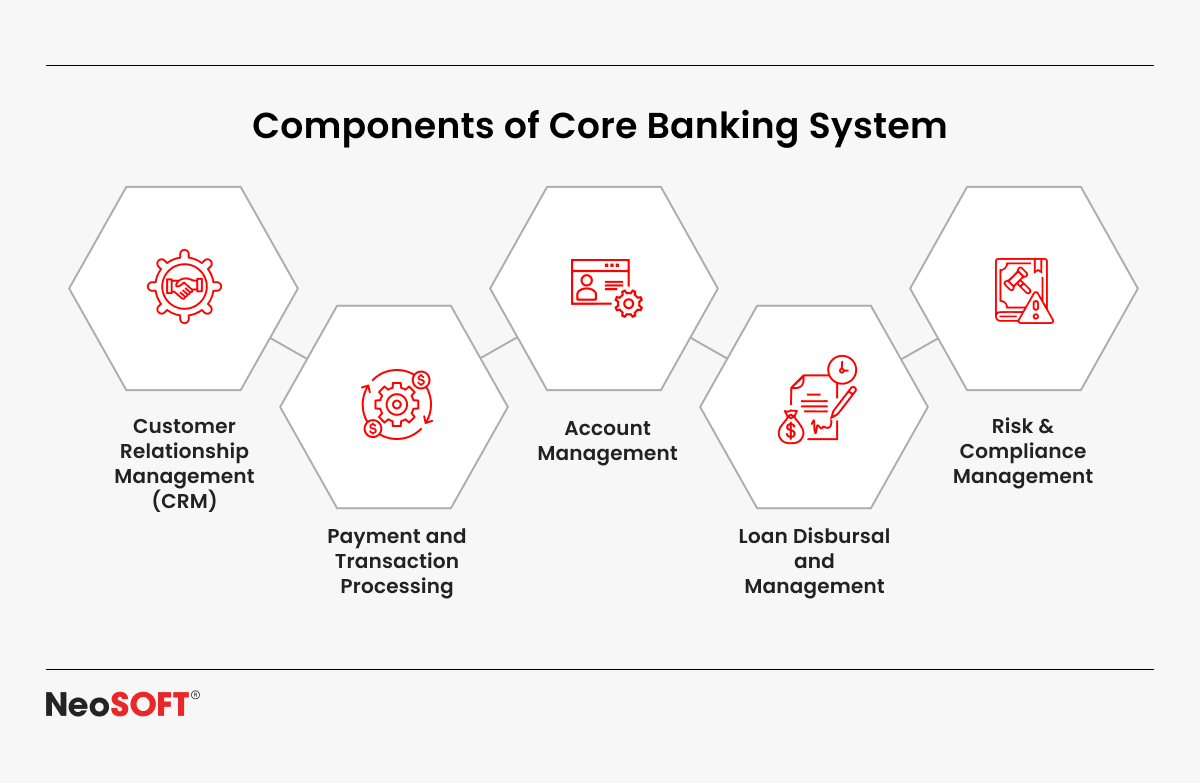
Core banking refers to the back-end system that handles daily banking activities and services such as account management, transactions, loans, and deposits. It is the cornerstone of modern banking processes, guaranteeing smooth financial transactions through digital platforms, branches, and third-party connections. Maintaining regulatory compliance and operational efficiency and giving customers an excellent client experience all depend on a strong core system of banking infrastructure.
Legacy infrastructure, sluggish processing, and growing cybersecurity concerns are common problems affecting traditional core banking systems. There has never been a greater need for highly automated, intelligent, and secure financial ecosystems. By strengthening fraud detection, improving operations, and delivering highly customized core banking applications and experiences to customers, AI and ML are working to address these issues.
In this blog, we discuss the main advantages, potential advances, and the reasons financial institutions need to adopt these technologies in modern core banking systems in order to remain effective in a world that continues to grow increasingly digital. It is intended for IT executives and decision-makers, banking professionals, and leaders in financial technology who want to learn more about how AI and ML are transforming core banking.
The Current Challenges in Core Banking Services
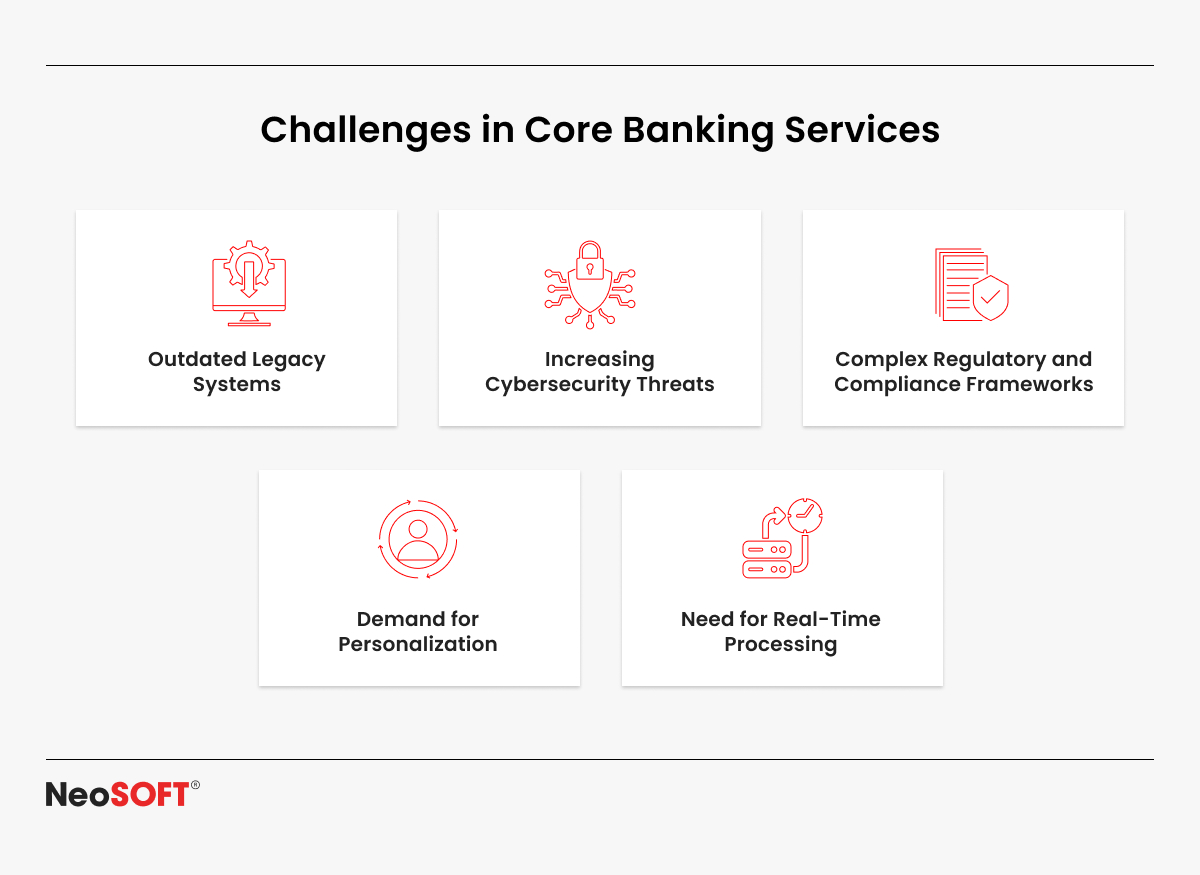
Even while financial technology is developing at a rapid pace, many banks continue to use antiquated core banking systems that are unable to keep up with the needs of the modern digital economy. Financial institutions face a number of significant issues as regulatory requirements tighten and client expectations change. These challenges include:
Outdated Legacy Systems
Many banks still use outdated, decades-old infrastructure that isn’t adaptable enough to include contemporary AI-powered solutions. Inefficiencies, increased operating expenses, and sluggish innovation are caused by these outdated systems.
Increasing Cybersecurity Threats
The growing digitization of financial services and institutions has led to an increase in the sophistication of cyber threats, including fraud, identity theft, and data breaches. Advanced security solutions are essential since standard security measures often prove insufficient to fend off AI-powered threats.
Complex Regulatory and Compliance Frameworks
Banks are required to adhere to constantly changing financial rules, including KYC (Know Your Customer) and AML (Anti-Money Laundering) policies. Risks to one’s finances and reputation arise from manual compliance procedures, which are laborious and susceptible to mistakes.
Demand for Personalization and Real-Time Processing
Consumers expect flawless, real-time banking experiences that include tailored financial advice and information. However, typical banking systems’ capacity to provide specialized services is restricted by their inability to effectively handle large volumes of transactional information.
In order to maintain their competitiveness, financial institutions must update their basic banking systems. As we shall see in the upcoming sections, AI and ML offer effective answers to these challenges by facilitating automation, improving security, and enhancing decision-making.
How AI and ML Are Revolutionizing Core Banking Solutions
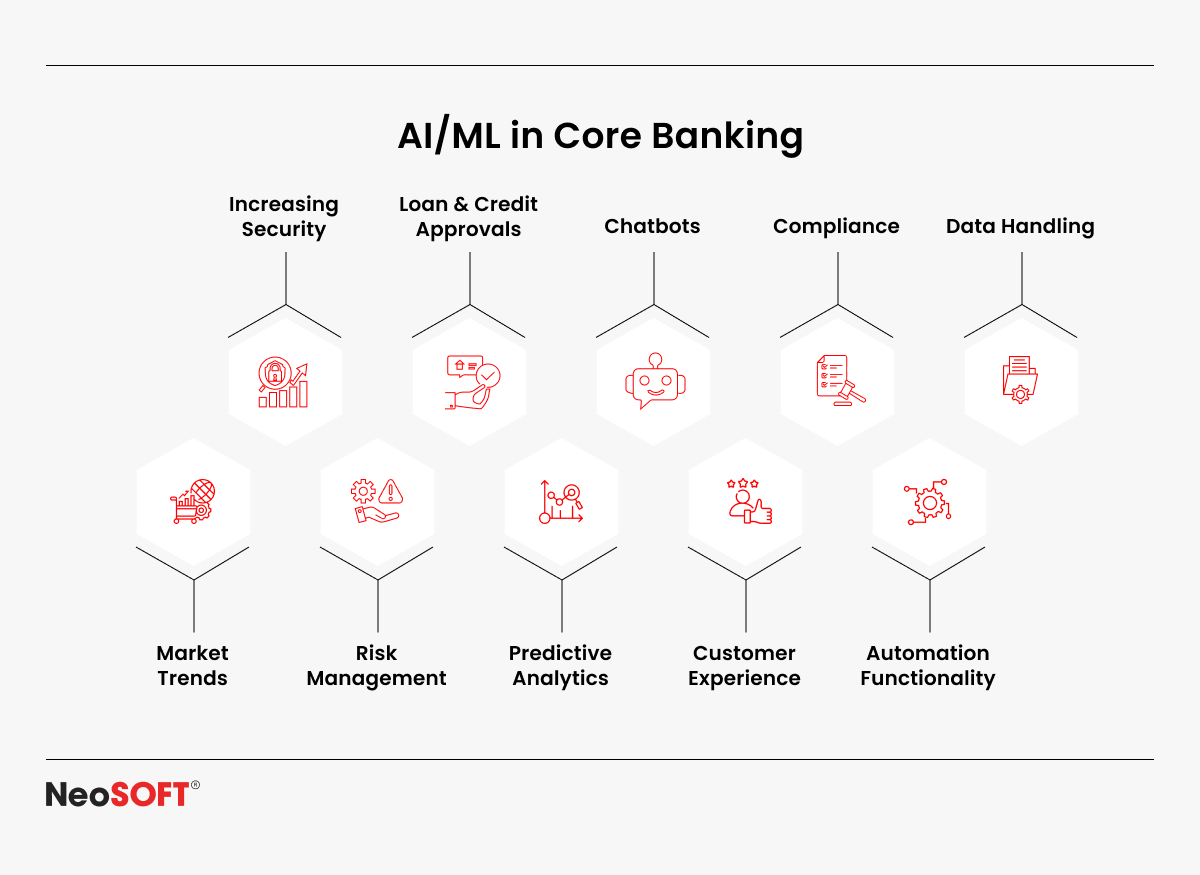
Bank operations are being redefined by artificial intelligence (AI) and machine learning (ML), which are improving the efficiency, security, and customer-centricity of financial systems. Core banking software is becoming more intelligent than ever by utilizing artificial intelligence-driven automation, predictive analytics, and automated decision-making. Here’s how:
AI-Driven Automation for Faster Banking Services
AI-driven automation is replacing manual banking procedures like loan approvals, loan management, transaction processing, and even account creation and administration. This decreases human mistakes, speeds up procedures, and saves money. Bots powered by AI and virtual assistants also assist in expediting customer service by responding to requests and transactions around the clock.
Improved Fraud Detection for Better Security
AI and ML can evaluate massive volumes of transaction data in real-time, detecting suspicious activity and preventing fraud before it occurs. AI-powered fraud protection solutions add a layer of security by recognizing abnormal spending patterns, minimizing financial losses and increasing customer trust.
Personalization for Enhanced Customer Engagement
AI-powered analytics assist banks in analyzing client behavior and preferences, allowing for highly tailored suggestions. Banks can provide every customer with a unique experience, from individualized financial guidance to AI-powered investment analytics, thus increasing engagement and loyalty.
Risk Management and Compliance for Informed Decision Making
Financial institutions have significant challenges in ensuring regulatory compliance. AI and machine learning simplify compliance by automating Know Your Customer (KYC) as well as Anti-Money Laundering (AML) processes, minimizing errors and helping institutions stay ahead of regulatory changes. ML algorithms also improve credit risk assessment, resulting in enhanced lending decisions.
Financial institutions can thus boost their efficiency, security, and personalization by incorporating AI and ML in their core banking system.
AI’s Place in Secure and Intelligent Transactions
Fast, safe, and easy transactions are of utmost importance as digital banking expands. AI-driven innovations are improving security, preventing fraud, and simplifying daily banking transactions. Here are some ways AI is influencing safer and more intelligent financial transactions:
Biometric Authentication and Behavioral Analytics
Sensitive financial data can no longer be adequately protected by traditional password-based security. An additional degree of security for customer data is provided by AI-driven biometric authentication, which includes voice, facial, and fingerprint recognition. AI is also used in behavioral analytics to monitor user behavior, identify anomalies such as odd login locations or device modifications, and instantly indicate possible dangers.
AI-Driven Fraud Prevention and Threat Detection
AI keeps a close eye on banking transactions and uses machine learning algorithms to identify fraudulent activity. These systems have the ability to examine transaction patterns and immediately stop suspicious activities before they are completed. This proactive strategy significantly decreases the risks of identity theft, phishing, and cyber fraud.
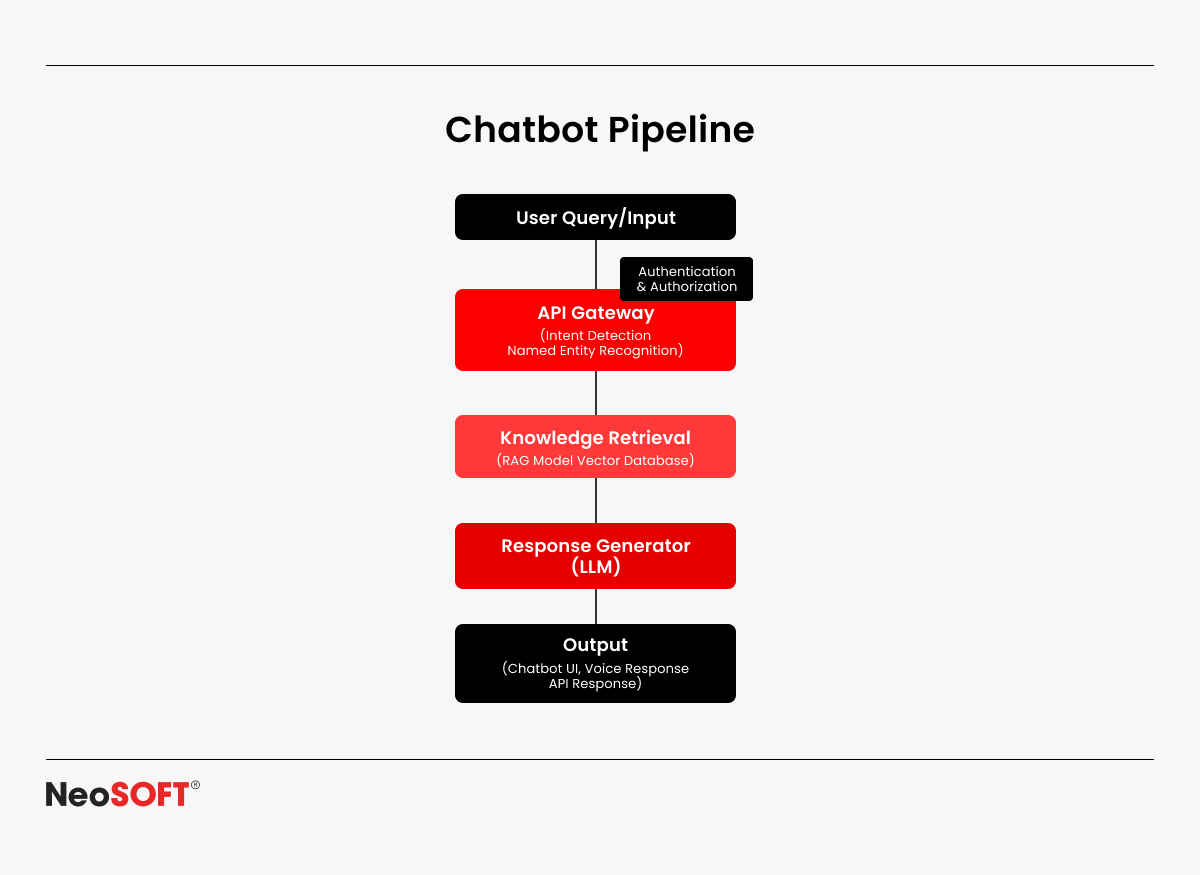
AI-Powered Chatbots and Virtual Assistants
AI-powered smart banking assistants offer real-time transaction assistance, fraud detection, and payment reminders. With the help of these virtual assistants, customers can easily manage accounts, establish spending restrictions, and schedule bill payments while navigating complicated financial procedures.
Smarter Credit Scoring and Loan Approvals
In order to generate a credit score that is more accurate, machine learning models examine a borrower’s past transactions, spending patterns, and other financial data. This benefits both banks and consumers by enabling quicker, more equitable, and data-driven credit processing and loan approvals.
Banks can boost consumer satisfaction, increase security, and expedite processes by integrating AI into financial transactions.
Future Trends in AI and ML for Core Banking
The impact of AI and ML on core banking will only increase as these technologies develop further. New applications and emerging technology have the potential to completely change the way banks function by improving client satisfaction, security, and operational efficiency. The following major themes will influence how AI and ML are used in core banking going forward:
Hyper-Personalization
Beyond simple recommendations, AI-driven hyper-personalization will provide clients with real-time guidance, product recommendations, and customized financial insights based on their particular financial behavior. This level of customization will increase loyalty and foster deeper connections with customers.
Predictive Analytics for Risk Management
Banks will be able to identify market trends and customer expectations, evaluate possible risks, and make better decisions thanks to advanced predictive models. Financial institutions will be able to detect fraud trends, proactively address credit risk, and minimize threats more accurately with the use of AI.
Blockchain and AI Integration for Enhanced Security
Blockchain and AI together will give banking systems previously unheard-of security and transparency. AI’s capacity to examine and identify irregularities in combination with blockchain’s unchangeable record will produce a safe, impenetrable environment for compliance, customer relationship management, and transactions.
Voice-Enabled Banking and Conversational AI
Conversational banking interfaces and AI-powered voice assistants will allow customers to conduct transactions, ask questions about account information, and obtain tailored financial insights using natural language. The convenience and engagement of customers will be improved by this smooth exchange.
Quantum Computing for Complex Financial Models
As quantum computing develops, it will speed up the processing of intricate financial models, giving banks the ability to manage large-scale risk assessments, optimize portfolios, and make transactions in real-time with unprecedented speed and accuracy.
What Software Development and IT Service Companies Can Do
As banks adopt AI and ML to upgrade their core systems, they need dependable technology partners to successfully integrate these advanced technologies. Software development and IT services companies are crucial to supporting this change by offering expertise, infrastructure, and support. Here’s how they can contribute:
Building AI-Powered Banking Solutions
AI-powered banking solutions can be designed and deployed by software development organizations to streamline banking procedures, improve fraud detection, and create tailored customer experiences. They ensure that AI can be effortlessly integrated into core financial systems by designing intelligent chatbots and building predictive analytics models.
Implementing Advanced Cybersecurity Measures
Banking security standards can be strengthened by IT service providers using biometric authentication and AI-powered fraud detection. They use real-time threat detection technologies and sophisticated security mechanisms to protect client information and fight cyberattacks.
Developing Scalable Cloud-Based Infrastructure
Modern financial systems need cloud-based solutions that provide data security, scalability, and adaptability. In order to facilitate the smooth integration of AI and ML features and save operating costs, IT service and cloud solutions providers help banks migrate existing systems to the cloud.
Developing APIs and Third-Party Integrations
Banks must incorporate AI solutions with third-party services and current systems to improve functionality. APIs are created and maintained by software companies to provide seamless communication between bank’s servers, payment gateways, core banking platforms, and other online platforms.
Providing Ongoing Support and Maintenance
AI-driven systems need to be continuously observed and adjusted. Long-term support from IT service providers guarantees that the AI models maintain their accuracy, compliance, and security as they change to meet changing business needs.
Financial institutions may successfully deploy AI and ML technologies by collaborating with seasoned software development and IT service providers, turning their core banking systems into intelligent, safe, and incredibly effective platforms.
Conclusion
By improving the intelligence, security, and efficiency of financial systems, AI and ML are revolutionizing core banking services. These technologies are transforming the way banks function, from automating repetitive procedures and improving fraud detection to providing individualized customer experiences and guaranteeing regulatory compliance. Financial institutions that use AI and ML will remain ahead of the curve as digital banking develops, providing their clients with creative, safe, and frictionless services.
It is crucial to collaborate with seasoned software development and IT services firms in order to successfully manage this transition. With the help of these IT partners, banks may modernize and manage their core banking infrastructure and succeed in the fiercely competitive digital market by creating, implementing, and maintaining AI-driven banking solutions.
AI-powered core banking is the way of the future; it is intelligent, safe, and designed for the next generation of financial services. Banks need to invest in these advancements now to realize their full potential. Are you ready to leverage the next-gen capabilities of AI and ML to revolutionize your core banking systems? Contact us at info@neosofttech.com to discover how we can help you develop smart, secure, and future-ready financial core banking solutions.
We use cookies on our website to give you the most relevant experience by remembering your preferences and repeat visits. By clicking “Accept All”, you consent to the use of ALL the cookies. However, you may visit "Cookie Settings" to provide a controlled consent.
This website uses cookies to improve your experience while you navigate through the website. Out of these, the cookies that are categorized as necessary are stored on your browser as they are essential for the working of basic functionalities of the website. We also use third-party cookies that help us analyze and understand how you use this website. These cookies will be stored in your browser only with your consent. You also have the option to opt-out of these cookies. But opting out of some of these cookies may affect your browsing experience.
Necessary cookies are absolutely essential for the website to function properly. These cookies ensure basic functionalities and security features of the website, anonymously.
Cookie
Duration
Description
cookielawinfo-checkbox-analytics
11 months
This cookie is set by GDPR Cookie Consent plugin. The cookie is used to store the user consent for the cookies in the category "Analytics".
cookielawinfo-checkbox-functional
11 months
The cookie is set by GDPR cookie consent to record the user consent for the cookies in the category "Functional".
cookielawinfo-checkbox-necessary
11 months
This cookie is set by GDPR Cookie Consent plugin. The cookies is used to store the user consent for the cookies in the category "Necessary".
cookielawinfo-checkbox-others
11 months
This cookie is set by GDPR Cookie Consent plugin. The cookie is used to store the user consent for the cookies in the category "Other.
cookielawinfo-checkbox-performance
11 months
This cookie is set by GDPR Cookie Consent plugin. The cookie is used to store the user consent for the cookies in the category "Performance".
viewed_cookie_policy
11 months
The cookie is set by the GDPR Cookie Consent plugin and is used to store whether or not user has consented to the use of cookies. It does not store any personal data.
Functional cookies help to perform certain functionalities like sharing the content of the website on social media platforms, collect feedbacks, and other third-party features.
Performance cookies are used to understand and analyze the key performance indexes of the website which helps in delivering a better user experience for the visitors.
Analytical cookies are used to understand how visitors interact with the website. These cookies help provide information on metrics the number of visitors, bounce rate, traffic source, etc.
Advertisement cookies are used to provide visitors with relevant ads and marketing campaigns. These cookies track visitors across websites and collect information to provide customized ads.