Digital monetary transactions have been completely transformed by the advent of blockchain technology, which makes it possible and even easy for decentralized, safe, and transparent transactions to take place across the entire network without needing middlemen. Every blockchain instance requires a consensus mechanism at its core to ensure that users of the network achieve agreement on the legitimacy of all actions and record transactions in an accurate and incorruptible way.
By eliminating central authority control, distributed ledger technology increases effectiveness, security, and trust across blockchain networks. Adopting the consensus mechanism method not only protects the integrity of the whole network but also prevents harmful behaviours such as fraudulent spending, data tampering, and unlawful information modifications.
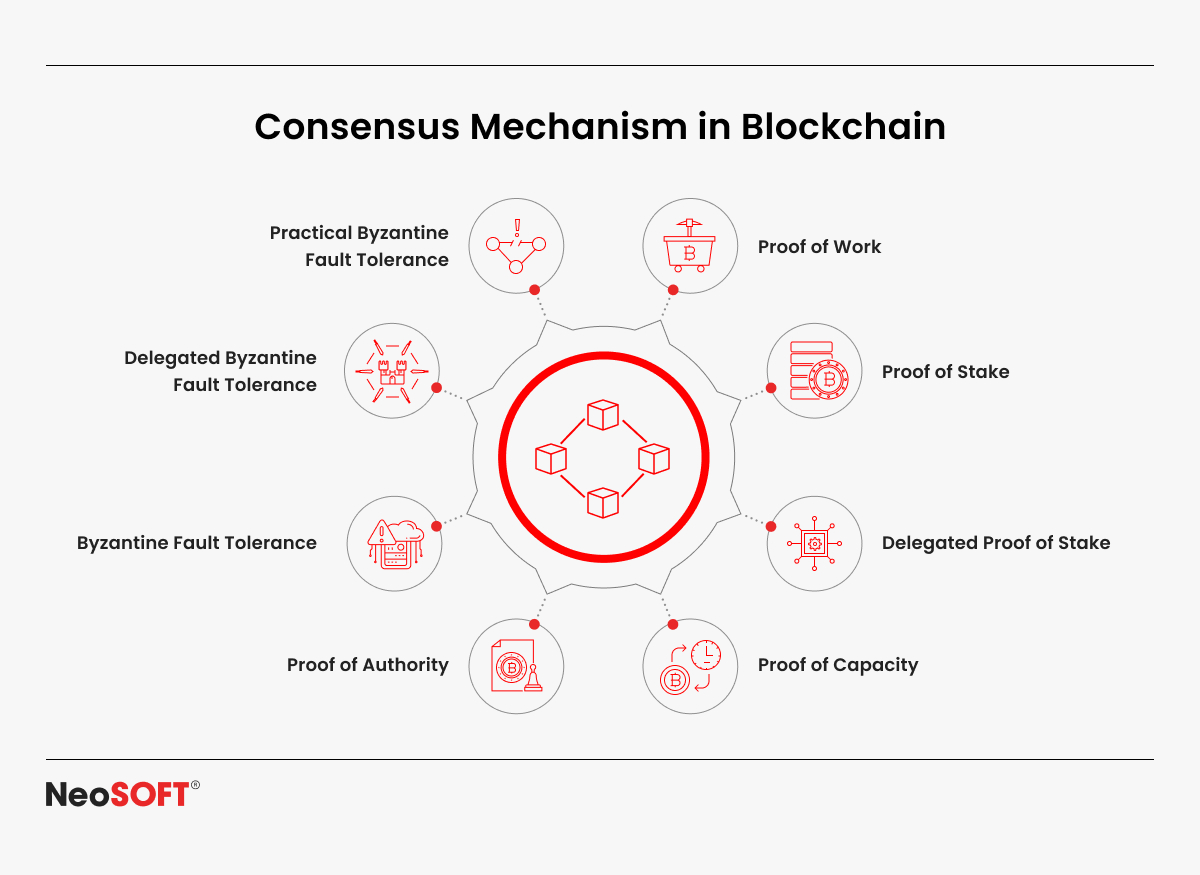
There are several consensus models, each meant to deal with specific requirements and limitations across various blockchain situations. From the resource-efficient Proof of Stake (PoS) to the energy-intensive Proof of Work (PoW), along with recently developed alternatives such as the Delegated Proof of Stake (DPoS) and the Practical Byzantine Fault Tolerance (PBFT), all consensus models form the basis for safe and trustworthy blockchain operations.
This blog will examine how different models operate, their advantages and disadvantages, and how they impact blockchain technology’s scalability, security, and efficiency. The content that follows will aid you in understanding the crucial role consensus mechanisms play in forming decentralized ecosystems, regardless of whether you’re a blockchain developer, company executive, or industry expert wishing to integrate blockchain solutions.
Explaining Blockchain Consensus Mechanisms
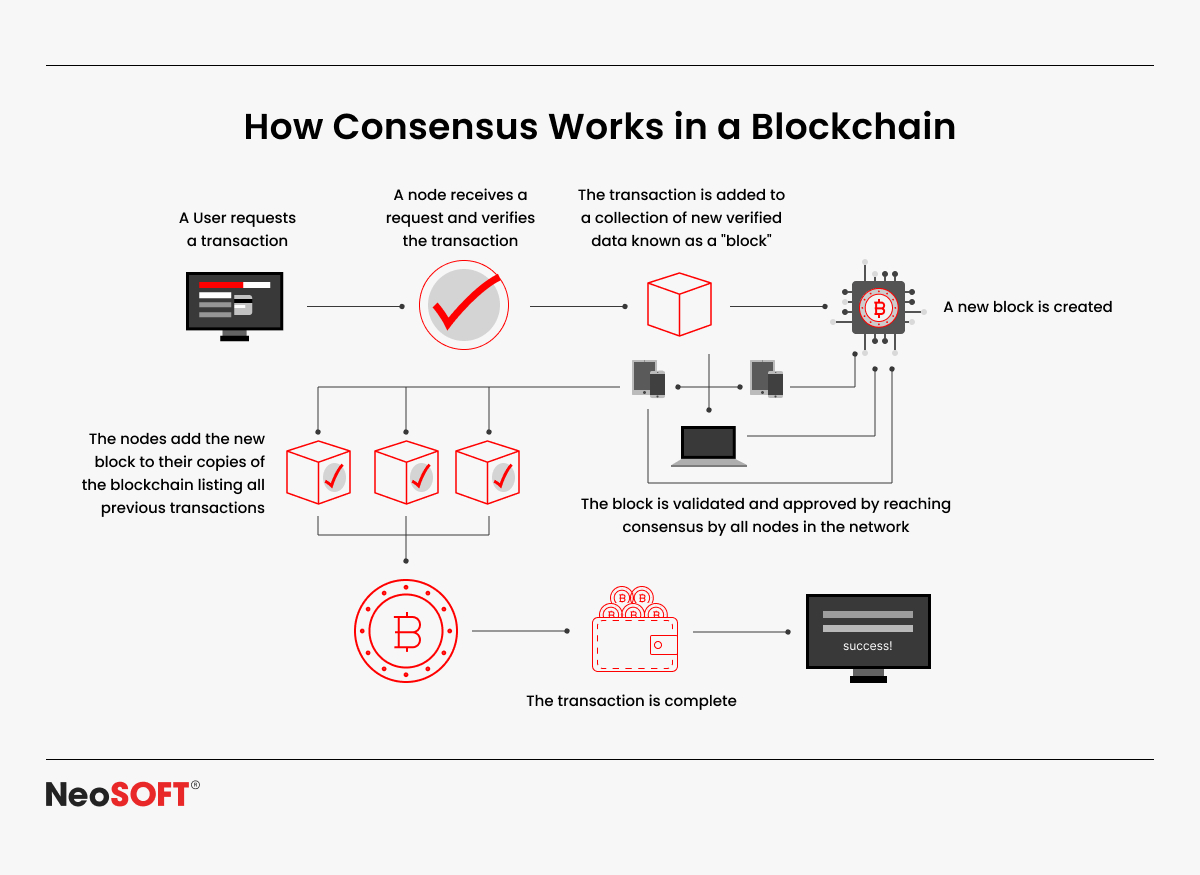
The basic procedure by which participants in blockchain systems agree on the validity and sequence of transactions is known as a consensus mechanism. A blockchain consensus mechanism considerably ensures that all distributed nodes keep a synchronized, impenetrable ledger to validate transactions, in contrast to conventional databases or financial systems that depend on a central authority for validation. By getting rid of single points of failure, this decentralized strategy lowers the possibility of fraud and increases network resilience.
For a blockchain to remain functional and intact, consensus mechanisms are essential. By making sure that every node adheres to the same guidelines for authenticating transactions and creating new blocks, these cryptographic techniques can protect against irregularities and unwanted changes. Blockchain networks can be susceptible to double-spending, security lapses, or inefficiencies that jeopardize their dependability in the absence of a strong consensus model.
In blockchains, consensus mechanisms ensure that all the nodes maintain an impartial and immutable record rather than depending on a single authority to handle validation. The ability of this consensus protocol to facilitate smooth communication between network participants makes it essential to the operation of blockchain networks. The core tenets of blockchain – security, decentralization, and zero-trust cooperation – are maintained by consensus mechanisms, which orchestrate these interactions between network participants.
Effective consensus procedures are necessary for both private and public blockchains. They keep public networks accessible and transparent while preventing bad actors from altering the ledger. They provide decentralized validation and assist enterprises in enforcing stringent security requirements in private or permissioned blockchains. The consensus layer that a blockchain uses determines how effective it is since several existing consensus mechanisms weigh trade-offs amongst security, speed, scalability, and energy efficiency.
Key Characteristics of Consensus Algorithms
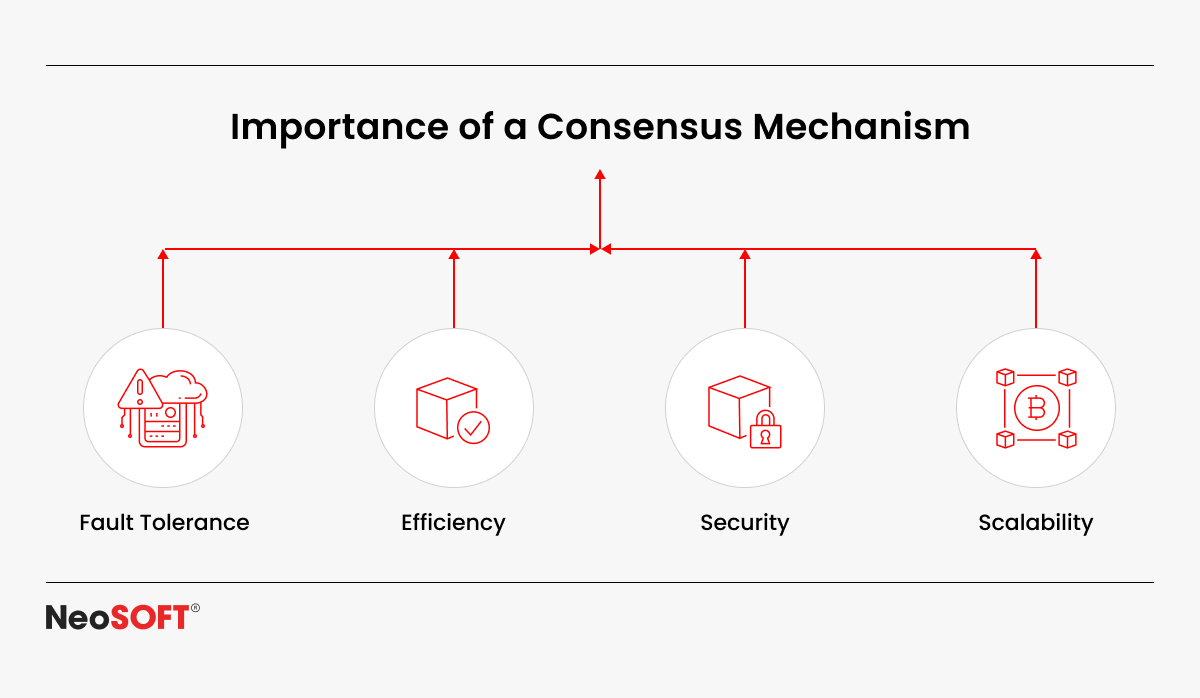
Decentralized networks utilize blockchain consensus models since they share some essential characteristics, which are as follows:
Fault Tolerance: A good consensus model is made to function well even in the unlikely circumstance that some participants appear unreliable or behave poorly. Ensuring consistency in hostile instances necessitates this resilience.
Efficiency: The process to achieve consensus requires an effective use of the time and resources available. Multiple methods, like PoW and PoS, prioritize efficiency significantly while often balancing speed and security.
Security: Consensus algorithms must protect the network from hazards such as Sybil attacks, in which a hacker establishes several false identities to gain control of the system. Efficient systems have been established to reduce such risks.
Scalability: Consensus mechanisms require flexibility as blockchain networks expand in order to deal with higher quantities of transactions while retaining security and performance.
As the cornerstone of blockchain technology, these different consensus algorithms assure the reliability, security, and legitimacy of decentralized networks.
Even though they satisfy the specific needs of different blockchain applications, such as supply chain management, smart contracts, and digital currency management, plenty of the models that we will be talking about below have pros and cons.
Types Of Consensus Mechanisms
Proof of Work (PoW)
PoW is one of the most popular consensus mechanisms, where miners are required to solve difficult puzzles to add blocks by certifying transactions to receive block rewards. It ensures higher security and decentralization but faces challenges when it comes to significant computational power consumption. The system dynamically keeps altering the puzzles for stable block generation. Bitcoin, the first cryptocurrency, uses PoW to maintain a secure and immutable ledger.
Proof of Stake (PoS)
PoS is a consensus mechanism that uses staking in lieu of energy-intensive mining, where validators lock up cryptocurrency to authenticate and verify transactions and add blocks. It requires less energy than PoW because selection is dependent on stake size and duration. PoS thus promises benefits like lower hardware requirements and decentralization but faces risks such as centralization by large stakeholders and high staking thresholds along with security concerns like long-range attacks. It is a scalable and sustainable substitute that is gaining widespread acquisition.
Delegated Proof of Stake (DPoS)
Token owners select a limited number of validators who govern the blockchain by accepting transactions and adding new blocks through the DPoS process. DPoS is known to enhance speed, scalability, and efficiency, but it risks centralization as power gets concentrated among a few validators. In order to push for fairness, validators rotate, and voting power is proportionate to token holdings. EOS is a great example, utilizing DPoS for high transaction throughput and scalable decentralized applications, which makes it ideal for networks prioritizing performance over decentralization.
Proof of Authority (PoA)
A validator-based consensus mechanism, PoA, was developed for private blockchains and depends on reliable validators chosen for their reputation and verification rather than their ownership or processing power. Since it ensures a more reliable and effective new block creation, PoA is suited for high-throughput enterprise applications that demand validator accountability. For example, PoA is incorporated into VeChain for quick and safe supply chain management and transaction fee processing. However, its drawbacks include centralization resulting from a restricted amount of validators and lower transparency in comparison with public blockchains.
Proof of Capacity (PoC)
Proof of Capacity is a consensus process that uses data storage rather than computational capacity to validate transactions and build new blocks. Miners prepare cryptographic data (plots) and keep it on their hard drives. When a new block is required, the stored data is analyzed to decide the winner. When opposed to PoW, PoC is much more energy efficient and doesn’t need sophisticated mining hardware. However, it requires a lot of storage space and is vulnerable to pre-mining assaults. Blockchains such as Burstcoin (BURST) use PoC for sustainable and decentralized mining.
Byzantine Fault Tolerance (BFT)
It is a property of distributed ledgers that are able to function correctly even if some nodes act fraudulently or fail unpredictably. The problem associated with it is that the independent players must reach a consensus despite flawed or dishonest actors. In distributed databases like blockchain, BFT is essential, where consensus must be upheld under hostile circumstances.
Practical Byzantine Fault Tolerance (PBFT)
It is a type of BFT consensus approach that has been improved for permissioned networks, in which some honest nodes are relatively known and trusted. It requires 3f+1 nodes to tolerate faulty or malicious nodes and to adopt a leader-replica paradigm to reach consensus throughout a three-phase procedure (Pre-prepare, Prepare, and Commit). Whilst PBFT can have scalability issues in big networks, its low latency and high security make it an ideal choice for enterprise blockchain solutions like Hyperledger Fabric.
Delegated Byzantine Fault Tolerance (DBFT)
Evolved from PBFT, this consensus mechanism is designed for public blockchain networks like NEO. In order to obtain a consensus on their behalf, token holders must choose validators under the new delegated voting method. Compared to PoW, this model reduces computing power and overhead while preserving fault tolerance and improving scalability and efficiency of blockchain nodes. However, network security is dependent on the honesty of elected delegates due to the potential of validator collusion introduced by DBFT.
Comparison overview of the blockchain consensus mechanisms
Consensus processes are essential to blockchain networks’ efficiency, decentralization, and security. But since every model has trade-offs, it’s important to assess them according to criteria like governance, scalability, and energy consumption.
Although Proof of Work (PoW), which was utilized in early Ethereum and Bitcoin, provided great security, it was sluggish and energy-intensive. Additionally, mining pools can reduce decentralization by centralizing control. Proof of Stake (PoS), which transfers the validation process over to token holders in order to solve these problems, increases efficiency but runs the danger of causing wealth concentration, in which larger stakeholders have greater sway.
By letting token owners choose a select few delegates to validate blocks and transactions, Delegated Proof of Stake (DPoS) improves Proof of Stake. This makes things faster and more scalable, but it also consolidates power in a small number of hands, which could compromise decentralization. For efficiency and governance, networks like Tron and EOS use DPoS.
Byzantine Fault Tolerance (BFT) methods adopt a different strategy, depending on structured communication instead of financial rewards. They are quite effective; however, they have scalability issues. Through a leader-driven procedure, Practical BFT (PBFT) improves this, which makes it perfect for private blockchains such as Hyperledger Fabric. NEO uses Delegated BFT (DBFT), which combines fault tolerance and delegation to further increase efficiency.
Alternative validation techniques are the main focus of emerging consensus models. Token destruction is a requirement for Proof of Burn (PoB), whereas data storage space is used in place of processing power for Proof of Space (PoSpace) and Proof of Capacity (PoC). Proof of Authority (PoA) is appropriate for private blockchains since it depends on reliable validators. Other techniques, such as Proof of History (PoH) and Proof of Elapsed Time (PoET), optimize transaction security and speed.
Each consensus algorithm has its own advantages and disadvantages, making them appropriate for certain scenarios:
PoW works well for energy-intensive but highly secure networks like Bitcoin.
PoS is more efficient and environmentally friendly but introduces the risk of wealth centralization.
DPoS increases scalability but sacrifices decentralization.
BFT and PBFT are well-suited for permissioned blockchains with high-security needs.
DBFT optimizes efficiency and security for enterprise applications but relies on a limited number of delegates.
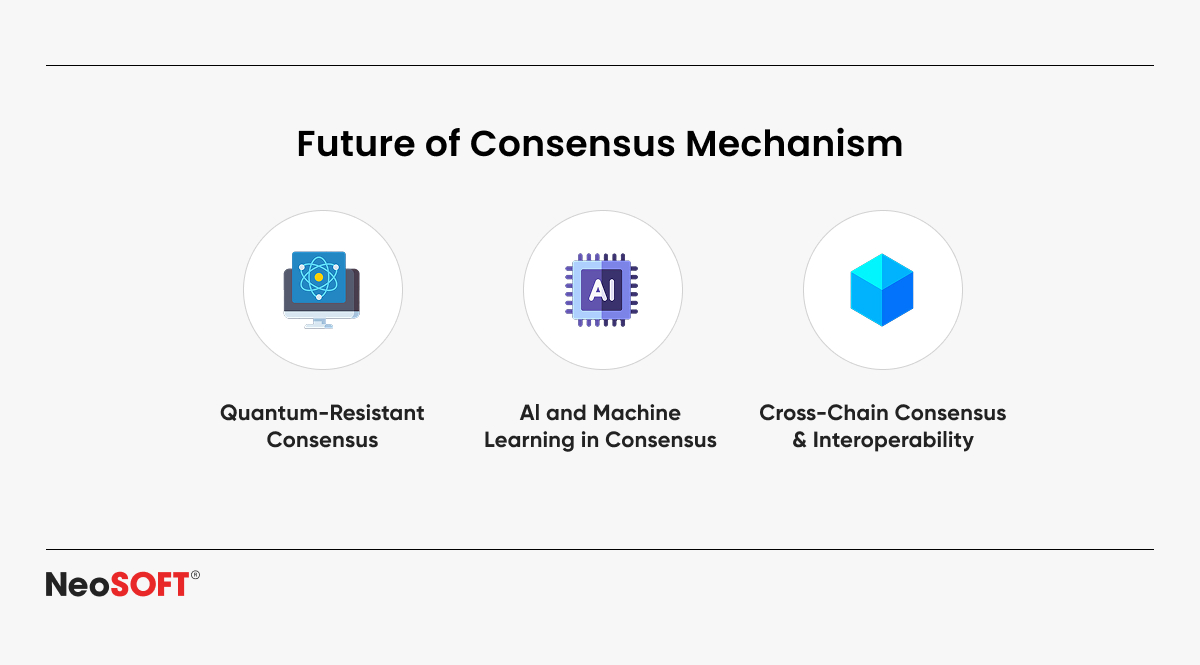
Some place a higher priority on decentralization, while others concentrate their computational resources on energy efficiency or scalability. Whether security, speed of transactions, or a hybrid method are the top priorities will determine which consensus algorithm is the best option for a blockchain. Future blockchain innovation will continue to be shaped by innovative, hybrid, and other consensus algorithms as the technology develops further.
Conclusion
The decision on which blockchain consensus algorithms to use is influenced by a number of factors, including the specific application in question, the network’s size, security, scalability, affordability, and compliance issues. Current consensus processes, each with their own pros and weaknesses, serve as the foundation for secure, decentralized networks.
PoW ensures robust security at the cost of energy consumption, whereas PoS and its variations boost scalability and efficiency. BFT-based solutions are perfect for business and permissioned networks because they offer strong fault tolerance. Network structure, scalability, storage capacity, transaction speed, and security requirements all play a role in choosing the best consensus model.
Next-generation hybrid consensus mechanisms are being developed as blockchain technology progresses further in order to increase security, streamline operations, process transactions, and become energy efficient. For developers and companies looking to use blockchain for a variety of applications, keeping up with these developments is essential.
Blockchain is rapidly changing many industries, and thus, developers, companies, and enthusiasts must explore its potential. Selecting the best blockchain solution, promoting innovation, and influencing the decentralized environment all benefit from a thorough understanding of the various consensus methods.
To learn more about how our skilled teams of developers can support you in creating scalable and secure decentralized blockchain applications, contact info@neosofttech.com for state-of-the-art blockchain solutions customized to your requirements.
Cloud computing has completely transformed several industries, notably banking and finance. On-demand availability of computer resources, including storage, servers, databases, networking, applications, and analytics, is made possible by the internet. This makes data easily accessible to financial firms, removing the necessity for direct control over the underlying framework.
These firms no longer need to rely on traditional hard drives or storage devices as they can now store data on cloud platforms and retrieve it effectively. Cloud computing is turning into an essential instrument for digital transformation as a result of the growing complexity of banking transactions and regulatory limitations.
Businesses in finance might boost operational efficiency, stay flexible, and adhere to regulations through the use of cloud-based solutions which is continually expanding as technology advances, and standard banking and investment operations change.
This blog explores the impact that cloud computing has had and can further have on financial services, highlighting the advantages, challenges, and potential of this integration. Financial experts, IT developers and stakeholders, and company executives who want to know more about how cloud computing may improve customer satisfaction, security, and operational efficiency in the financial industry will benefit from the information that follows.
Types of Cloud Computing
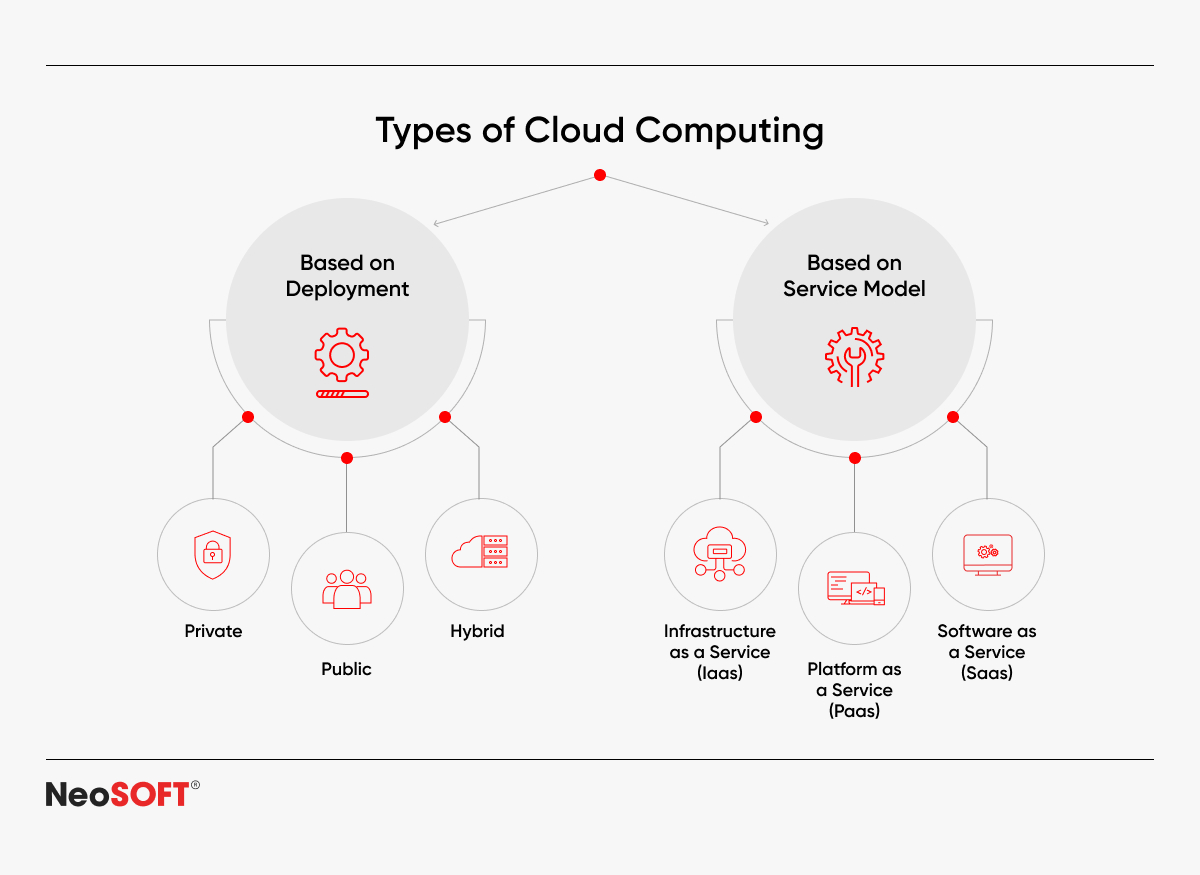
Cloud computing can be divided into different types based on deployment models and services offered.
Deployment Models
Public Cloud: Independent businesses offer public cloud services online that provide reliable resources on a subscription basis. Banking organizations use public clouds to boost efficiency, expand movement, and save expenses without having to maintain their own internal systems.
Private Cloud: Enhanced security and control over an individual company can be made possible by a private cloud. It is a good fit for financial institutions that handle sensitive data often since the system ensures data security and regulatory compliance, even though it requires more resources.
Hybrid Cloud: This type of cloud computing, as the name suggests, combines private and public clouds, enabling businesses to save costs and enhance security by allocating workloads based on demand.
Cloud Service Models
Software as a Service (SaaS): Financial organizations can make use of cloud-hosted apps, such as customer relationship management (CRM) software, without having to manually install them, thanks to SaaS solutions.
Infrastructure as a Service (IaaS): Storage and networking are instances of the standardized computing capacities that IaaS supplies. Financial institutions can use it to create scalable infrastructure without spending money on actual hardware.
Platform as a Service (PaaS): PaaS offers platforms and development systems that let lenders design and implement applications.
The Finance Industry’s Increasing Need for Cloud Computing
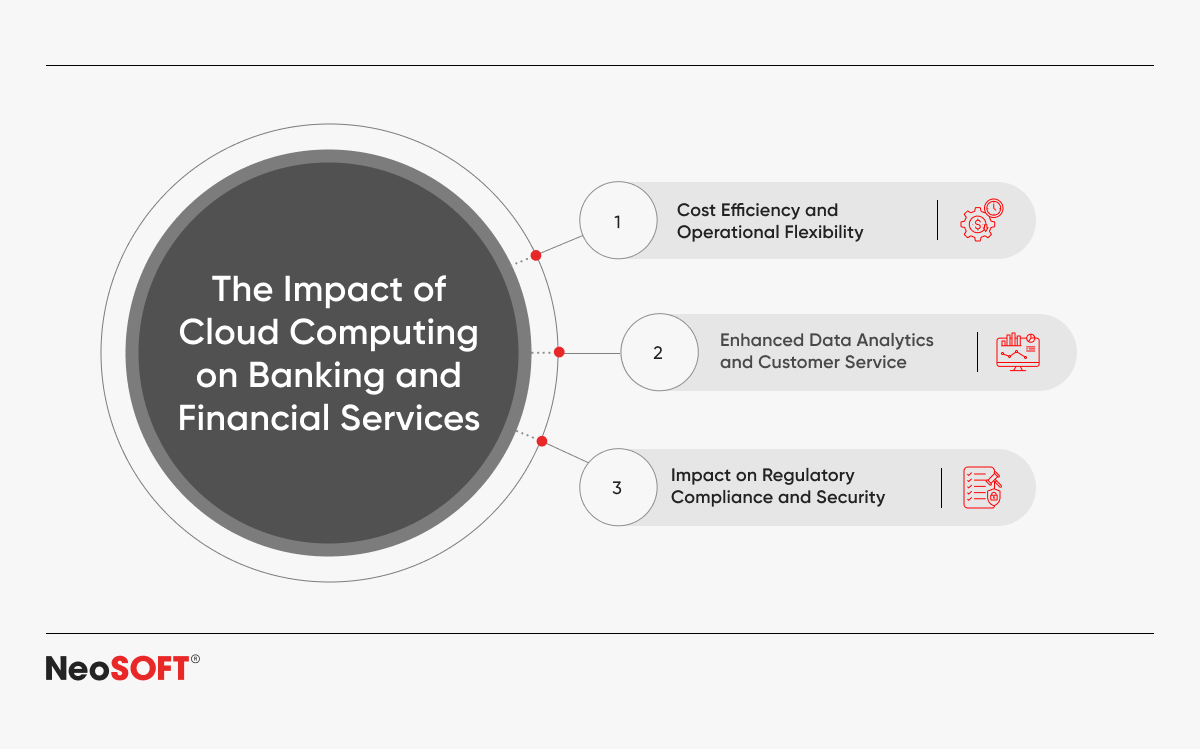
Data generation in the finance industry is growing at an unprecedented rate due to online banking, digital transactions, regulatory obligations, and client interactions. Financial institutions need adaptable, scalable solutions that can adjust to changing business needs, in order to handle this ever increasing amount of data. Large volumes of organized and unstructured data can be handled effectively using cloud computing, which also optimizes infrastructure expenses.
By ensuring smooth backup and disaster recovery options, cloud computing promotes company continuity. Conventional on-premise infrastructures are susceptible to system crashes, cyberattacks, and hardware malfunctions. Cloud-based systems, on the other hand, offer high-availability, robust environments that reduce downtime, optimize operations, and safeguard vital financial functions.
In addition to the above, cloud computing also provides fraud detection, risk reduction, and real-time analytics. Financial institutions use cloud-based artificial intelligence and machine learning tools to identify irregularities, spot fraud, and make more accurate data-driven strategic choices. Real-time data processing enables organizations to improve risk management and security, guarantee legal compliance, and proactively address new dangers in a changing digital environment.
Cloud-enabled solutions that increase agility, security, and adherence to industry standards contribute to enhanced customer service and business resilience. Financial institutions are increasingly using cloud services to automate procedures, optimize operations, and offer personalized banking experiences. Cloud computing is changing how financial services engage with their customers, whether it is through data-driven insights, mobile banking apps, or AI-driven customer service.
As more companies see the limitations of their antiquated IT infrastructure, the demand for cloud-based services will only grow. The shift to digital-first banking, increased regulatory scrutiny, and growing cybersecurity concerns make cloud adoption a strategic need for financial institutions hoping to remain competitive in an environment that has become increasingly digital.
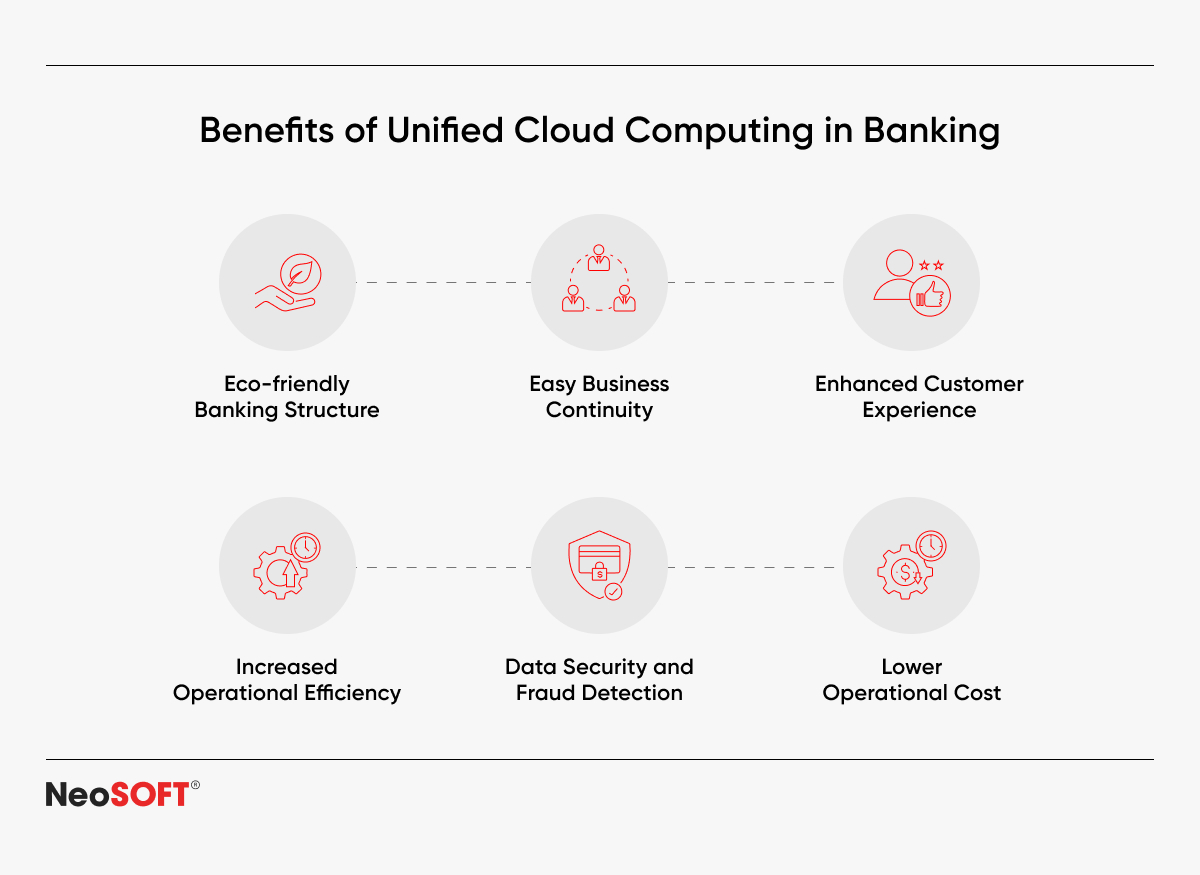
Key Benefits of Cloud Computing in Financial Services
Financial businesses can gain insights from large datasets employing cloud-powered statistical analytics, which enhances risk estimation, identification of fraud, and strategic planning. Financial companies may improve risk mitigation procedures, refine investment strategies, and make better decisions by processing massive amounts of data in real-time. Actionable insights are offered by AI-powered analytics solutions, which assist companies in anticipating consumer demands and industry trends.
Cost Reduction and Operational Efficiency
Financial companies minimize IT infrastructure servicing costs by switching from capital to operational expenditures. Processes are simplified via cloud-based automation, improving profitability as well as efficiency. When on-premise hardware service costs drop and resources are allocated effectively, IT management’s financial risks are reduced and profitability increases. Savings can be reinvested by banking institutions in strategic projects, innovation, and improved client service.
Driving Innovation in Financial Services
Cloud computing accelerates the development of fintech solutions, allowing institutions to introduce innovative products rapidly. This fosters competition and enhances financial offerings. Cloud-powered development environments enable financial services firms to experiment with emerging technologies, ensuring a faster go-to-market strategy for innovative financial products and services. By leveraging cloud-based APIs and AI-driven applications, banks and investment firms can continuously innovate, staying ahead of industry trends.
Enhancing Data Security and Compliance
Cloud platforms protect financial data by implementing multi-factor authentication, encryption, and real-time monitoring. Automated compliance systems ensure that industry rules are followed, safeguarding consumer data and eliminating online dangers. Financial institutions must put strong security measures in place which enable use of cloud-based security features like advanced threat assessment and zero-trust technology as cyber threats continue to evolve. AI-driven monitoring and regular security updates strengthen security even more, reducing the possibility of theft along with information breaches.
Ensuring Business Continuity and Disaster Recovery
Backup and recovery features offered by cloud solutions reduce downtime and provide operational resiliency. Disaster recovery can be accelerated with centralized data storage. In the event of unplanned failures or cyber events, financial institutions can minimize interruption by replicating vital data across different locations using cloud-based disaster recovery solutions. Even in the event of unanticipated setbacks, operational continuity is guaranteed by these preemptive steps.
Facilitating Remote Work and Collaboration
Cloud technology facilitates secure remote access, which empowers finance teams to work together. Even in instances of worldwide disruptions, virtualized resources assure profitability and continuity. Cloud solutions provide financial organizations with safe online desktops and communication capabilities as remote work becomes more common, guaranteeing seamless overseas interaction. The effectiveness of workflow is increased since employees can access the data and applications they need securely and from anywhere.
Improving Customer Experience
Personalized financial services are rendered feasible by cloud-based analytics that provide insights into consumer behaviour. AI-driven recommendations, faster transactions, and greater accessibility all improve client engagement and happiness. Finance companies can offer round-the-clock support to clients by using cloud-based chatbots and AI-driven assistants, promptly answering questions and enhancing overall client engagement. Customers enjoy using services on multiple gadgets, at any time, and from any location, thanks to these innovations, which provide a smooth banking experience.
Scalability and Flexibility
Financial organizations may optimize infrastructure and expenses by scaling operations to cater to demand thanks to cloud computing. This capacity for change provides easy adaptation to shifting customer needs and market swings. Financial companies can use cloud solutions to extend their services internationally while meeting local regulatory standards and preserving a high standard of quality. Businesses can maintain their agility by modifying their resources as necessary to manage periods of high transaction volume without sacrificing performance, thanks to this dynamic scalability.
Strengthening Risk Management and Compliance
Financial institutions’ risk management skills are improved by automated compliance technologies and real-time monitoring, which guarantee regulatory compliance while reducing vulnerabilities. Financial companies may stay informed of changing legislation with the use of cloud-based compliance management tools, which lowers legal and compliance risks, and associated fines. AI-powered regulatory technology reduces operational complexity while ensuring that companies remain compliant.
Cloud Service Providers in Financial Services
In order for financial firms to fully utilize cloud computing, choosing the right cloud providers is essential. Cloud providers manage the platforms, software, and infrastructure required to conduct safe and effective financial activities. Some of the leading cloud providers include:
Alibaba Cloud – Particularly popular in Asia, Alibaba offers scalable cloud solutions with an emphasis on security and cost efficiency. Its services include AI, big data, and security tools that support the growth of financial institutions in the region.
Amazon Web Services – AWS provides users a comprehensive suite of cloud-based solutions, including computing power, storage, databases, and analytics, making it one of the most widely used platforms in the financial sector. The scalability, flexibility, and security features make it a preferred choice for global financial institutions.
Google Cloud Platform – GCP provides cutting-edge data analytics, machine learning, and AI tools that are beneficial for financial services. With a strong focus on security, Google Cloud helps financial firms process large volumes of transactions and maintain compliance with industry regulations.
IBM Cloud – Offering advanced AI, blockchain, and data analytics solutions, IBM Cloud caters to the unique needs of financial institutions. It emphasizes security, and the private and hybrid cloud options are appealing to those organizations that require high levels of control and compliance.
Microsoft Azure – The hybrid cloud capabilities of Azure are especially valuable for financial organizations that need to manage sensitive data while also meeting regulatory compliance standards. It offers a wide array of services, including AI/ML, analytics, and blockchain, which help streamline operations in the finance industry.
Oracle Cloud – A cloud provider renowned for its robust database management solutions, which are essential for financial services. With its suite of cloud applications, Oracle helps financial institutions streamline operations, manage risk, and enhance customer satisfaction.
These cloud providers are crucial to the continuous digital transformation of the banking and insurance sector because they allow financial organizations to innovate, expand their operations, and adhere to regulatory norms.
The Future of Financial Services in the Cloud
Through the provision of digital banking to marginalized communities, cloud-based solutions are facilitating greater access to financial resources and enhancing financial inclusion. Through the reduction of financial services entry barriers, cloud technology makes it possible for people in remote and underdeveloped regions to engage in the digital economy.
By using cloud-based mobile banking apps, financial institutions may reach a wider audience and offer underbanked and unbanked communities safe and affordable banking options. Accessibility is further improved by cloud-driven financial innovations including blockchain-based transactions, digital wallets, and microfinance programs. These technologies bridge the gap between traditional banking and contemporary digital financial services by providing people with financial tools.
Conclusion
With unmatched security, efficiency, and scalability, cloud computing has rapidly transformed the financial services sector. Cloud computing’s influence on the financial industry’s future is further cemented by the rapid growth of digital banking, AI-powered analytics, and remote accessibility. A financial business can elevate customer experiences, streamline operations, and stay compliant with regulations by adopting cloud-based technologies.
Realizing the full potential and availing of the many benefits of cloud computing to stay ahead of the digital curve calls for financial services companies to implement bespoke cloud strategies that correspond with their objectives. We can support you in bringing about your digital transformation. Reach out to us info@neosofttech.com to leverage our expert teams and integrate state-of-the-art cloud solutions for your financial services.
Two technologies that are changing industries and how we interact with the world are blockchain and the Internet of Things, or IoT for short. These technologies have become an integral part of today’s quickly changing digital landscape. While IoT links devices to collect, analyze, and share real-time data, allowing for smooth interaction between the digital and physical worlds, blockchain provides a safe, decentralized foundation for data management, storage, and protection.
The integration of blockchain technology with IoT represents a strategic partnership that extends beyond technical collaboration to address critical challenges like data integrity, scalability, and security. From supply chain management and the automobile sector to healthcare and smart cities, this synergy builds a strong foundation for promoting trust, creativity, and productivity by utilizing the real-time capabilities of IoT and the transparency and immutability of blockchain.
This blog explores the significant influence of IoT and blockchain unification on enterprises, industries, and the growth of interconnected systems, highlighting the immense possibilities of this integration. It is intended for entrepreneurs, software engineers, tech enthusiasts, and industry innovators who want to learn about the transformative potential of blockchain and IoT in creating dependable, scalable, and effective solutions for a safer and more connected digital future.
Understanding IoT, Blockchain and Their Functionalities
A huge network of linked devices with software, sensors, and actuators that gather, share, and act upon data in real-time is known as the Internet of Things (IoT). These gadgets range from urban infrastructure and industrial machinery to connected devices and common household appliances like smart thermostats.
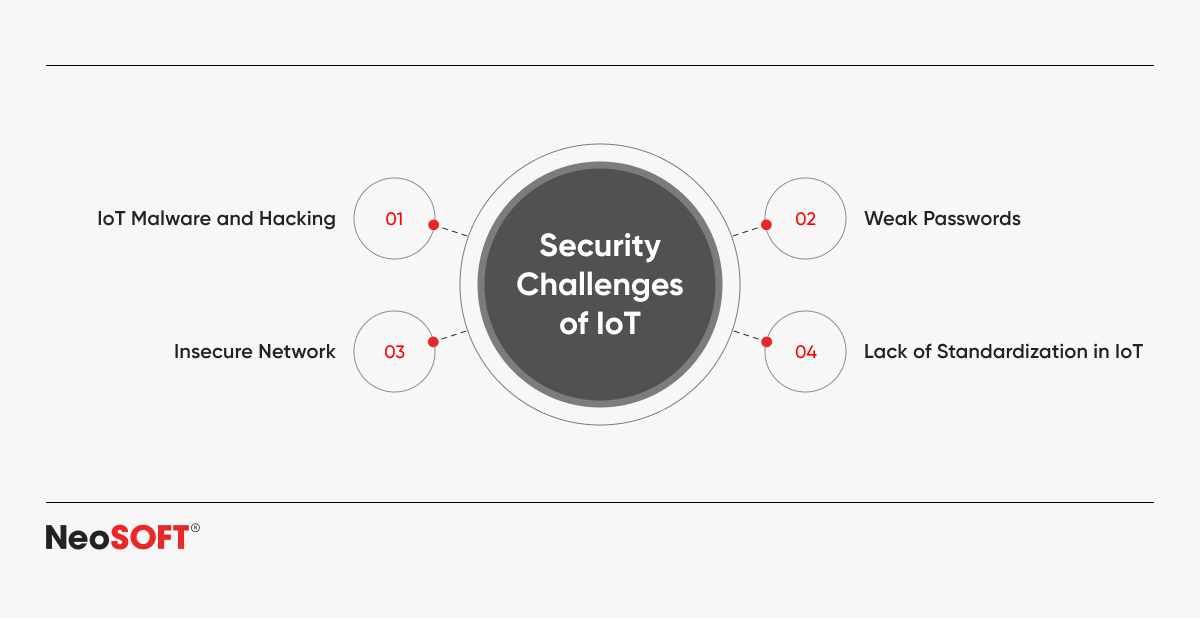
IoT has revolutionized several industries by enabling automation, boosting output, and fostering creativity. Still, there are several significant barriers to the rapid expansion of IoT ecosystems, such as:
Scalability – managing the ever-growing amount of interconnected devices.
Security – defending data and devices against unauthorized access and cyberattacks.
Data Integrity – ensuring that enormous volumes of information are reliable and accurate.
How can one tackle these issues should they arise? By integrating IoT with blockchain.
Blockchain technology is an immutable, decentralized digital ledger that is designed for safe data management and storage.
One of its primary characteristics is transparency, which ensures accountability because every transaction on the blockchain is transparent and verifiable. Another important feature is the aforementioned immutability, which ensures that data cannot be changed or removed once it has been recorded, maintaining its integrity. Furthermore, by doing away with the need for a central authority, decentralization lowers vulnerabilities and improves the overall safety and resilience of the system.
Blockchain provides a strong framework that enhances Internet of Things technologies by tackling fundamental issues like data security and authenticity. Integrity and traceability of information are guaranteed by its cryptographic foundations, and scalability and resilience are improved by decentralized consensus mechanisms.
When IoT and blockchain work together, they produce a potent synergy that opens doors to safe automation, efficient operations, and creativity in a future where systems are interconnected.
How Blockchain and IoT Can Revolutionize Businesses
The incorporation of blockchain technology tackles a number of significant issues that IoT systems encounter, including scalability and data security risks. Blockchain improves IoT ecosystems in the following ways:
Strengthening Security
IoT devices are vulnerable to malware, security breaches, cyber attacks, and illegal access since they often operate in environments that have limited resources and poor safeguards. By encrypting IoT data and keeping it on an immutable distributed ledger, blockchain reduces these vulnerabilities. This guarantees that the information is safe and impenetrable. IoT systems are more resilient and dependable thanks to decentralized consensus techniques, which also shield the network from malicious assaults and single points of failure.
Using Smart Contracts to Automate Procedures
Smart contracts, which are self-executing agreements maintained on the blockchain, can be used to automate Internet of Things operations thanks to blockchain technology. These agreements may, under specified circumstances, cause events like payments, maintenance notifications, or inventory adjustments. As a result, less manual intervention is required, errors are reduced, and operational efficiency is increased.
Ensuring Data Integrity
The significant amounts of real-time data generated by IoT can be easily manipulated or lost. By establishing a permanent record of each transaction, the decentralized networks of blockchain technology ensure the accuracy and legitimacy of this information. Through this decentralized structure, the possibility of illegal changes is removed, and data is maintained.
By tackling these issues, blockchain not only improves IoT system efficiency but also opens up new avenues for creativity, promoting dependability and trust in surroundings that are becoming more and more interconnected by the day.
Benefits of using Blockchain Technology in IoT
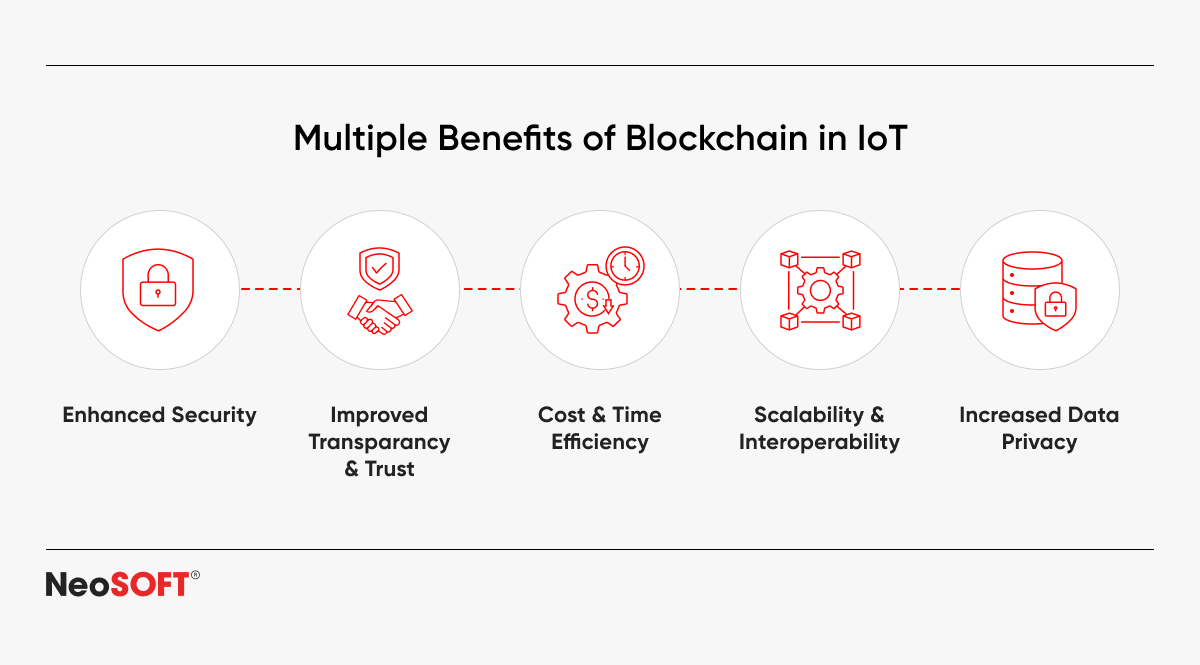
The addition of blockchain in IoT focuses on providing several benefits and enhancing the functionality and efficiency of IoT systems, thereby providing the following advantages:
Enhanced Security: Blockchain reduces the risk of cyberattacks and manipulation in IoT networks by ensuring the integrity of information and preventing unwanted access through encryption and decentralized consensus methods.
Decentralization: Blockchain increases the resilience of IoT systems and decreases single points of failure by doing away with the need for central authorities.
Transparency and Trust: A transparent record of all IoT transactions and interactions is made possible by blockchain’s immutable ledger, which promotes stakeholder confidence and improves accountability.
Cost Efficiency: By removing intermediaries, decentralized data exchange lowers transaction processing and management expenses.
Data Integrity: Data produced by IoT devices is guaranteed to remain accurate, dependable, and verifiable due to blockchain’s tamper proof nature.
Automation via Smart Contracts: Blockchain makes it possible for smart contracts to be used in IoT devices to automate tasks like making payments, updating documentation, or starting maintenance, which increases operational effectiveness and lowers human error.
Scalability: Blockchain technology is appropriate for scaling IoT applications because it facilitates smooth device communication across vast, dispersed systems supporting IoT networks.
These advantages establish blockchain as a game-changing technology for resolving IoT issues, encouraging creativity, and building ecosystems that are safer and more effective.
Real-World Applications of Blockchain IoT
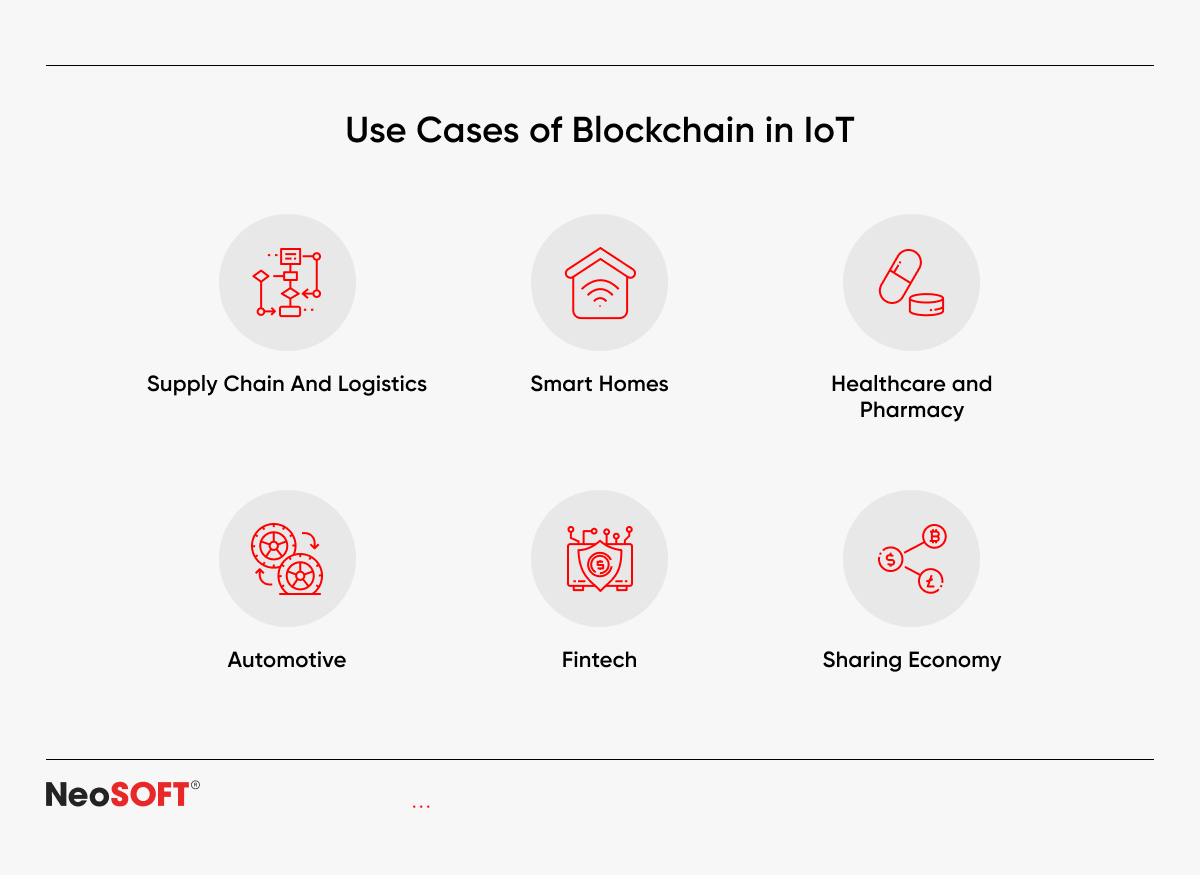
Blockchain and IoT are being used in a variety of industries to spur innovation and solve important problems. Listed below are some examples of practical uses:
Operational Maintenance
By safely storing real-time data on machinery and equipment, blockchain and IoT improve operational maintenance. Storing maintenance records on an immutable blockchain ledger guarantees safety compliance and minimizes downtime, while predictive analytics aids in identifying possible issues. This helps companies maintain secure data, improve the lifespan of their equipment, and prevent expensive disruptions.
Smart Cities
IoT’s data collection abilities and blockchain’s transparency both assist smart city infrastructure. Through safe platforms for voting and community participation, cities can boost citizen engagement and manage traffic better. For example, information on the use of public transportation and traffic patterns can be collected and analyzed to optimize transportation routes and traffic flow. Blockchain’s distributed ledger technology can also be used to provide safe and transparent blockchain-based platforms for community participation and voting. By leveraging this technology on municipal operations, cities may make well-informed decisions to improve the productivity and quality of life of their residents.
Smart Homes
Blockchain offers stronger smart home security by facilitating biometric authentication and decentralizing data storage. By doing this, user privacy and security are safeguarded and sensitive data gathered by IoT-connected devices is kept safe from unwanted access. Additionally, it guarantees the smooth integration of several smart devices for an improved user experience.
Supply Chain Management
Supply chains are made more transparent and accountable by integrating blockchain technology with IoT-connected devices such as RFID tags and IoT sensors. Every step of the product lifecycle can be safely tracked, and smart contracts guarantee efficiency and authenticity. As a result, the possibility of fraud is decreased, compliance is streamlined, and stakeholder trust is increased.
Logistics and Transportation
Blockchain technology combined with IoT-enabled sensors allows for real-time shipment tracking, providing location, temperature, and overall condition. It can also help to keep an eye on the arrival times and cargo status while in transit, which increases departmental association and responsibility in global supply chains. Such knowledge can also make predictive measures to reduce dangers during transit possible. This increases supply chain stakeholders’ cooperation, lowers delays, and improves logistical transparency.
Smart Wearables and Healthcare
In order to maintain privacy and regulatory compliance in the healthcare industry, wearable IoT sensors and other smart devices gather vital patient data and securely store it on blockchain networks. Automation of insurance and billing procedures lowers administrative burdens, while smart contracts improve operational effectiveness. Simplified hospital procedures and improved patient care are guaranteed by this integration.
Automotive Industry
The automotive industry sector is leveraging IoT and blockchain to drive automation and improve efficiency. IoT sensors paired with blockchain enable features like automatic parking spot detection and payments through crypto wallets and digital currency, enhancing user convenience. RFID tags also make inventory management easier, guaranteeing operational efficiency and transparency. As a result, both manufacturers and users can enjoy more intelligent and effective car systems.
The use cases above highlight the immense potential of IoT blockchain technology to revolutionize markets and enhance operations in a wide range of fields and across multiple industries.
What the Future Holds
Blockchain and IoT integration has revolutionary potential to promote creativity in interconnected ecosystems. These technologies can simplify procedures and open up new opportunities in a variety of industries by facilitating safe, open, and decentralized communication between devices. The future of technology-driven processes is changing as a result of their combined influence, whether it is by improving real-time decision-making, automating intricate tasks, or developing more intelligent, self-regulating systems.
IoT and blockchain are in a unique position to solve enduring issues involving data safety, scaling, and integrity in digital networks, in addition to spurring innovation. Owing to the immutability of blockchain technology and the capability of Internet of Things’ software to gather enormous volumes of data, strong, dependable systems that minimize vulnerabilities and inefficiencies can be created. In industries such as urban planning, healthcare, transportation, manufacturing, energy, and more, these capabilities can be extremely important for maintaining sustainability and promoting digital transformation.
Conclusion
IoT and blockchain integration are enabling tremendous opportunities across industries, promoting creativity, security, and operational effectiveness. Businesses may overcome significant obstacles involving safety, scalability, and data security by fusing blockchain’s transparency, immutability, and decentralization with IoT’s real-time data collection.
With new solutions and improved capabilities, this potent combination is revolutionizing a variety of industries, including logistics, healthcare, urban planning, and the automotive industry. Blockchain and IoT cooperation will open the door to more resilient, sustainable, and networked systems as technology develops. Leading this change are firms such as NeoSOFT, which offer customized solutions that enable companies to utilize emerging technologies fully.
NeoSOFT’s skilled developers can help you unleash the promise of blockchain and IoT. Improve your operations’ scalability, efficiency, and security. Get in touch with us now at info@neosofttech.com to spearhead technologies that will shape your industry in the future!
We use cookies on our website to give you the most relevant experience by remembering your preferences and repeat visits. By clicking “Accept All”, you consent to the use of ALL the cookies. However, you may visit "Cookie Settings" to provide a controlled consent.
This website uses cookies to improve your experience while you navigate through the website. Out of these, the cookies that are categorized as necessary are stored on your browser as they are essential for the working of basic functionalities of the website. We also use third-party cookies that help us analyze and understand how you use this website. These cookies will be stored in your browser only with your consent. You also have the option to opt-out of these cookies. But opting out of some of these cookies may affect your browsing experience.
Necessary cookies are absolutely essential for the website to function properly. These cookies ensure basic functionalities and security features of the website, anonymously.
Cookie
Duration
Description
cookielawinfo-checkbox-analytics
11 months
This cookie is set by GDPR Cookie Consent plugin. The cookie is used to store the user consent for the cookies in the category "Analytics".
cookielawinfo-checkbox-functional
11 months
The cookie is set by GDPR cookie consent to record the user consent for the cookies in the category "Functional".
cookielawinfo-checkbox-necessary
11 months
This cookie is set by GDPR Cookie Consent plugin. The cookies is used to store the user consent for the cookies in the category "Necessary".
cookielawinfo-checkbox-others
11 months
This cookie is set by GDPR Cookie Consent plugin. The cookie is used to store the user consent for the cookies in the category "Other.
cookielawinfo-checkbox-performance
11 months
This cookie is set by GDPR Cookie Consent plugin. The cookie is used to store the user consent for the cookies in the category "Performance".
viewed_cookie_policy
11 months
The cookie is set by the GDPR Cookie Consent plugin and is used to store whether or not user has consented to the use of cookies. It does not store any personal data.
Functional cookies help to perform certain functionalities like sharing the content of the website on social media platforms, collect feedbacks, and other third-party features.
Performance cookies are used to understand and analyze the key performance indexes of the website which helps in delivering a better user experience for the visitors.
Analytical cookies are used to understand how visitors interact with the website. These cookies help provide information on metrics the number of visitors, bounce rate, traffic source, etc.
Advertisement cookies are used to provide visitors with relevant ads and marketing campaigns. These cookies track visitors across websites and collect information to provide customized ads.